


They’re called discreet DNA samples, and the Elk Grove, California, genetic-testing company easyDNA says it can handle many kinds, from toothpicks to tampons.
Blood stains from bandages and tampons? Ship them in a paper envelope for paternity, ancestry or health testing. EasyDNA also welcomes cigarette butts (two to four), dental floss (“do not touch the floss with your fingers”), razor clippings, gum, toothpicks, licked stamps and used tissues if the more standard cheek swab or tube of saliva is not obtainable.
If the availability of such services seems like an invitation to mischief or worse — imagine a discarded tissue from a prospective employee being tested to determine whether she’s at risk for an expensive disease, for instance — the US Presidential Commission for the Study of Bioethical Issues agrees.
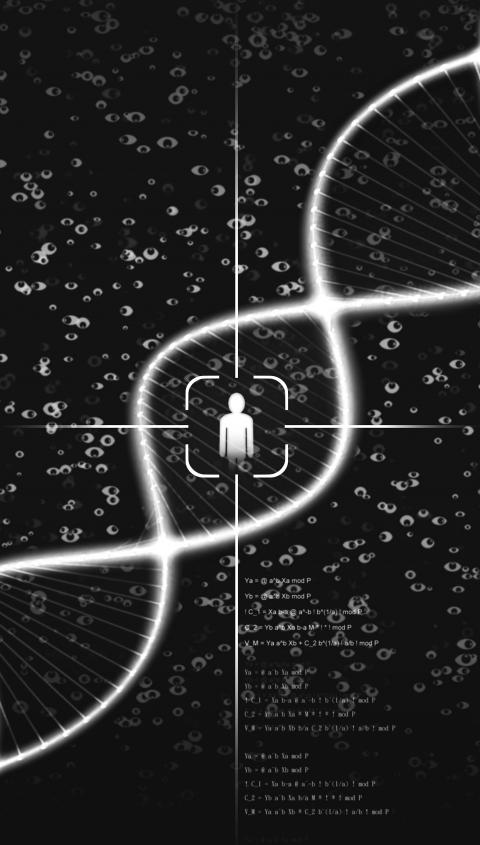
On Thursday it released a report on privacy concerns triggered by the advent of whole genome sequencing, determining someone’s complete DNA make-up. Although sequencing “holds enormous promise for human health and medicine,” commission chairwoman Amy Gutmann told reporters on Wednesday, there is a “potential for misuse of this very personal data.”
“In many states someone can pick up your discarded coffee cup and send it for [DNA] testing,” said Gutmann, who is also the president of the University of Pennsylvania.
“It’s not a fantasy to think about how, without baseline privacy protection, people could use this in a way that would be really detrimental,” such as by denying someone with a gene that raises their risk of Alzheimer’s disease long-term care insurance, or to jack up life insurance premiums for someone with an elevated genetic risk of a deadly cancer that strikes people in middle age.
“Those who are willing to share some of the most intimate information about themselves for the sake of medical progress should be assured appropriate confidentiality, for example, about any discovered genetic variations that link to increased likelihood of certain diseases, such as Alzheimer’s, diabetes, heart disease and schizophrenia,” Gutmann said.
The commission took on the issue because whole genome sequencing is poised to become part of mainstream medical care, especially by personalizing medical treatments based on a patient’s DNA.
$1,000 GENOME
That has been driven in large part by dramatic cost reductions, from US$2.5 billion per genome in the Human Genome Project of the 1990s and early 2000s to US$1,000 soon. Several companies, including Illumina and Life Technology’s Ion Torrent division, sell machines that can sequence a genome for a few hundred dollars, but that figure does not include the analysis to figure out what the string of 3 billion DNA “letters” means.
A three-year-old federal law prohibits discrimination in employment or health insurance based on someone’s genetic information, but does not address other potential misuses of the data. Without such privacy protection, Gutmann said, people may be reluctant to participate in genetic studies that do whole genome sequencing, for fear their genetic data will not be secure and could be used against them.
Recommendations from such panels are not binding, but have been used as the basis for policy and legislation.
One scenario the panel offers is a “contentious spouse” secretly having a DNA sample sequenced and using it in a custody battle “as evidence of unfitness to parent,” perhaps because the DNA showed a genetic risk for mental illness or alcoholism. There are no federal laws against that.
Or, the panel said, DNA information might be posted on a social networking site “by a malicious stranger or acquaintance,” possibly hurting someone’s “chance of finding a spouse, achieving standing in a community, or pursuing a desired career path.”
The bioethics panel recommends a dozen forms of privacy protection, including that “surreptitious commercial testing” be banned: No gene sequencing or other genetic testing should be permitted without consent from the person the DNA came from, it said. About US 25 states currently allow such DNA testing.
Critics of the lack of genetic privacy thought greater urgency was needed.
“The report lays out a lot of important best practices and does endorse further state and federal regulations, but it doesn’t offer a timeline,” said Jeremy Gruber, president of the Council for Responsible Genetics, a private group that monitors genetic issues. “What will inevitably happen is whole genome sequencing will enter greater use and we won’t have proper regulations to ensure privacy.”
A bill introduced in California, home to many DNA testing companies, by state Senator Alex Padilla would ban surreptitious testing, requiring written authorization from the person the genetic sample was taken from.
It is not clear how many labs are willing to analyze DNA without that authorization. In practice, well-known genetic testing companies such as privately held 23andMe test only saliva samples that are too large to acquire surreptitiously, such as from a drinking glass or licked stamp. “A person would really know that they are spitting into a tube,” 23andMe spokeswoman Jane Rubinstein said.
The full report from the presidential commission is available at www.bioethics.gov.
Recently, China launched another diplomatic offensive against Taiwan, improperly linking its “one China principle” with UN General Assembly Resolution 2758 to constrain Taiwan’s diplomatic space. After Taiwan’s presidential election on Jan. 13, China persuaded Nauru to sever diplomatic ties with Taiwan. Nauru cited Resolution 2758 in its declaration of the diplomatic break. Subsequently, during the WHO Executive Board meeting that month, Beijing rallied countries including Venezuela, Zimbabwe, Belarus, Egypt, Nicaragua, Sri Lanka, Laos, Russia, Syria and Pakistan to reiterate the “one China principle” in their statements, and assert that “Resolution 2758 has settled the status of Taiwan” to hinder Taiwan’s
Singaporean Prime Minister Lee Hsien Loong’s (李顯龍) decision to step down after 19 years and hand power to his deputy, Lawrence Wong (黃循財), on May 15 was expected — though, perhaps, not so soon. Most political analysts had been eyeing an end-of-year handover, to ensure more time for Wong to study and shadow the role, ahead of general elections that must be called by November next year. Wong — who is currently both deputy prime minister and minister of finance — would need a combination of fresh ideas, wisdom and experience as he writes the nation’s next chapter. The world that
The past few months have seen tremendous strides in India’s journey to develop a vibrant semiconductor and electronics ecosystem. The nation’s established prowess in information technology (IT) has earned it much-needed revenue and prestige across the globe. Now, through the convergence of engineering talent, supportive government policies, an expanding market and technologically adaptive entrepreneurship, India is striving to become part of global electronics and semiconductor supply chains. Indian Prime Minister Narendra Modi’s Vision of “Make in India” and “Design in India” has been the guiding force behind the government’s incentive schemes that span skilling, design, fabrication, assembly, testing and packaging, and
Can US dialogue and cooperation with the communist dictatorship in Beijing help avert a Taiwan Strait crisis? Or is US President Joe Biden playing into Chinese President Xi Jinping’s (習近平) hands? With America preoccupied with the wars in Europe and the Middle East, Biden is seeking better relations with Xi’s regime. The goal is to responsibly manage US-China competition and prevent unintended conflict, thereby hoping to create greater space for the two countries to work together in areas where their interests align. The existing wars have already stretched US military resources thin, and the last thing Biden wants is yet another war.


 RSS
RSS