


On Wednesday and Thursday last week, Typhoon Saola swept across the northeastern part of Taiwan, bringing strong winds and heavy rain that swelled rivers and wreaked havoc in mountain areas. There were scenes of devastation everywhere, and Taiwan suffered heavy losses from the storm. Newspaper reports estimate losses in the farming sector to be in excess of NT$1 billion (US$33.4 million).
In the three-way struggle between environment, development and survival, what solutions are available for Taiwan? Is there anything we can do to make natural disasters a little less terrifying? Let us consider some issues about land use and development in Taiwan — maybe some solutions can be drawn from them.
Many people have had the experience of traveling from Taipei to Kaohsiung on the high-speed railway, a journey that takes about an hour-and-a-half.Along the way, passengers can clearly observe the typical pattern of development in Taiwan, with industrial zones scattered among farmland, residential areas mixed in with industrial zones, and commercial activities occurring in residential areas. These sights portray a vivid impression of the nation’s vitality, and also bear witness to the changing patterns of land use that have accompanied Taiwan’s economic development over several decades.
In less than a century, Taiwan has gone first from an agricultural society to an industrial one, and then to a commercial one, and now it is moving toward a society rooted in knowledge-based services. Meanwhile, it faces the pressures of global climate change and globalization. The burden of these changes has long been more than this land can bear.
Only by repeatedly adjusting land policies, artificially improving the natural conditions and finding scientific and technical fixes to new problems have we been able to make the long-suffering land capable of supporting people’s aspirations and the state’s development plans.
In recent years, people have, thankfully, become more aware of environmental issues, and struggles between economic interests and ecological concerns are often present.
These situations, in which development and environmental protection are in conflict, are in fact the last battle that will decide whether Taiwan’s land can continue to support life and nurture civilization.
It was in agriculture that Taiwan scored its earliest economic successes. Then came industrialization. The 10 Major Construction Projects of the 1970s led the way for the development of large-scale industries, petrochemicals, export-processing zones and so forth. These developments allowed the nation to leap forward and take its place among the four Asian Tiger economies. However, in those days people did not have a good understanding of the need to protect the environment and control pollution. As a result, these great economic advances have regrettably brought in their wake environmental damage that we have still not been able to fix.
Another aspect to consider is that Taiwan has long been accustomed to building towns in a way that mixes housing and commerce in the same urban zones. This kind of urban planning allows commercial areas to be used for housing, and residential areas to be used for commercial activities. In fact even industrial zones can be used for housing. This pattern is an expression of Taiwan’s unique flexibility and resilience. It is these longstanding patterns of land use that give people the impression that our government is not very good at managing things, and maybe there is also an element of populism involved.
Under such circumstances, is the government’s advocacy of sustainable land and soil, ecologically sound cities, low-carbon communities and green buildings just so much hot air, or is it a panacea for saving the environment? If truth be told, the answer to this question lies within the hearts and minds of ordinary people.
To make our land and soil sustainable, various measures will have to be taken. Industrial zones will have to be concentrated so that pollution can be properly treated and effectively managed. Restrictions need to be imposed on areas that are not suitable for housing and development, and people living there must be compelled to move away. Transport and construction must be restricted for the purpose of closing off mountain areas, protecting forests and taking care of the land and soil. Some areas should be permanently designated as farmland only, meaning that they should never be allowed to be recategorized for other uses. The authorities should appropriate land for use as flood-control basins, or parks.
Livestock production and fish farming often require excessive use of groundwater that causes land subsidence. In such cases, the government should help producers to change to other lines of business. If the public cannot accept these and other necessary concrete measures, then there is no point in talking about making our land and soil sustainable.
Similarly, there are various measures that must be taken if we are to make Taiwan’s cities ecologically sound.
The government must allocate land and control the intensity of its use, for instance in terms of floor area ratio. It should make the use of private cars more costly, while improving existing public transport systems and building new ones. Residential zones can be concentrated by restricting the area of planned urban developments. The authorities should appropriate land, or adjust the allocation of urban land, in order to provide more parks and green spaces. The width of roads should be restricted or reduced, while mandating the provision of linear open spaces, sheltered corridors and sidewalks alongside streets to give people a comfortable environment for walking.
Empty properties should be taxed more heavily to spur the usage of existing urban residential units. If the public cannot accept these measures, then ecologically sound cities will be no more than a dream.
The development ideal that allows people to coexist with their environment can only be achieved if appropriate measures are taken. For instance, we should reduce window-to-wall area ratios, add more shade and improve natural ventilation so as to cut the amount of energy consumed by air conditioning. Minimum quotas should be set for open areas, trees and greenery.
Recycled and renewable building materials should be used extensively, because even though they are more expensive, they are environmentally friendly. Unsophisticated architectural styles should be encouraged so as to reduce the amount of materials used. When new large residential buildings are being constructed, they should be mandated to include rainwater collection systems, which make good use of water resources and help to retard floods.
Large-scale development zones should set aside a certain proportion of land for ecological nature reserves. Longer-lasting, though more expensive, lighting should be used, in conjunction with the optimum use of natural light. If the public cannot accept these measures and put them into practice, then low-carbon communities and green buildings will remain nothing more than empty slogans.
So, are sustainable land and soil, ecologically sound cities, low-carbon communities and green buildings just empty talk, or are they achievable solutions? If people are looking for an answer to that question, they need only delve into their own hearts.
Justin Sun is an associate professor in the department of land economics at National Chengchi University.
Translated by Julian Clegg
Minister of Labor Hung Sun-han (洪申翰) on April 9 said that the first group of Indian workers could arrive as early as this year as part of a memorandum of understanding (MOU) between the Taipei Economic and Cultural Center in India and the India Taipei Association. Signed in February 2024, the MOU stipulates that Taipei would decide the number of migrant workers and which industries would employ them, while New Delhi would manage recruitment and training. Employment would be governed by the laws of both countries. Months after its signing, the two sides agreed that 1,000 migrant workers from India would
In recent weeks, Taiwan has witnessed a surge of public anxiety over the possible introduction of Indian migrant workers. What began as a policy signal from the Ministry of Labor quickly escalated into a broader controversy. Petitions gathered thousands of signatures within days, political figures issued strong warnings, and social media became saturated with concerns about public safety and social stability. At first glance, this appears to be a straightforward policy question: Should Taiwan introduce Indian migrant workers or not? However, this framing is misleading. The current debate is not fundamentally about India. It is about Taiwan’s labor system, its
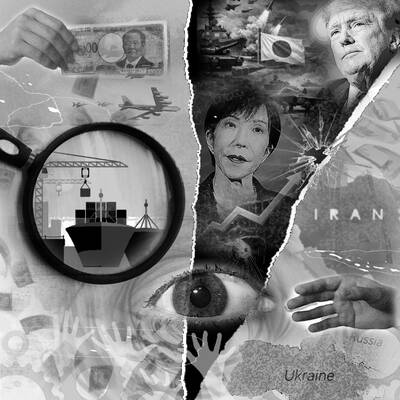
Japan’s imminent easing of arms export rules has sparked strong interest from Warsaw to Manila, Reuters reporting found, as US President Donald Trump wavers on security commitments to allies, and the wars in Iran and Ukraine strain US weapons supplies. Japanese Prime Minister Sanae Takaichi’s ruling party approved the changes this week as she tries to invigorate the pacifist country’s military industrial base. Her government would formally adopt the new rules as soon as this month, three Japanese government officials told Reuters. Despite largely isolating itself from global arms markets since World War II, Japan spends enough on its own
On March 31, the South Korean Ministry of Foreign Affairs released declassified diplomatic records from 1995 that drew wide domestic media attention. One revelation stood out: North Korea had once raised the possibility of diplomatic relations with Taiwan. In a meeting with visiting Chinese officials in May 1995, as then-Chinese president Jiang Zemin (江澤民) prepared for a visit to South Korea, North Korean officials objected to Beijing’s growing ties with Seoul and raised Taiwan directly. According to the newly released records, North Korean officials asked why Pyongyang should refrain from developing relations with Taiwan while China and South Korea were expanding high-level


 RSS
RSS