


President Ma Ying-jeou (馬英九) leaves today on a visit to three of Taiwan’s African allies, a long-overdue trip that has already been overshadowed by the cancelation last week of a planned stop in Sao Tome and Principe. Despite what the Ministry of Foreign Affairs and the Presidential Office have said, such a development does not bode well for Ma’s diplomatic efforts.
The reputed reason for the cancelation was that Sao Tomean President Manuel Pinto da Costa would be unable to play host to Ma because of a prior engagement in Cuba. Sao Tomean Minister of Foreign Affairs Manuel Salvador dos Ramos has been quoted as saying that it was simply a scheduling conflict, not an indication of strained relations, but that stretches credulity, given that the cancelation came just two weeks after the Ministry of Foreign Affairs in Taipei announced the trip.
State visits are always organized well in advance and meticulously scripted, so it is hard to believe that Pinto da Costa’s Cuba trip somehow just cropped up.
In addition, was it a coincidence that the March 27 announcement came just one day before officials from Sao Tome and Principe attended the Forum for Economic and Trade Cooperation Between China and Portuguese-speaking Countries, in Macau.
After all, Pinto da Costa maintained diplomatic ties with Beijing when he served as president from 1975 to 1991. Although diplomatic relations were established with Taipei in 1997, his re-election in August last year raised the question of ties to China.
Beijing has maintained something of a “hands-off Taipei’s diplomatic allies” policy since Ma was elected president in 2008 — in the interest of improved cross-strait relations — but that may not matter if it is Pinto da Costa pressing for a renewal of ties rather than simply a case of checkbook diplomacy or ally poaching.
For a nation with so few diplomatic allies, Taiwan has given its four African friends rather short shrift since Ma took office. His trip will be the first to that continent since former president Chen Shui-bian (陳水扁) visited in 2002.
In 2010 a trip tentatively set for July was scotched because Ma did not want to be abroad during typhoon season, while a trip later that year was out of the question because he wanted to be at home for the special municipality elections.
On Feb. 17 last year the foreign ministry announced that Ma would not make a planned trip to Africa because of domestic issues — though this year it blamed the delay on the earthquake and tsunami in Japan, which had not even occurred when the postponement was announced — and mass protests in North Africa.
Now that Ma has finally run out of excuses, he has a lot of time to make up. He will be visiting a variety of facilities that Taiwan has helped build — hospitals, schools and factories — and agricultural cooperative projects. Such visits may be just symbolic, but if Taiwan wants to retain the allies it has, it needs to remind them of their importance to the nation and Taiwan’s importance to them. This is best achieved through visits by high-level delegations, as well as enhanced day-to-day diplomatic contacts.
Ma has frequently promised to do all he can to broaden Taiwan’s international presence, but his emphasis on cross-strait affairs has only served to limit the nation’s international visibility. In that context, his all-too-rare overseas visits have only served to reinforce the impression that the only foreign relations that matter to him are the relations with China.
Ma may not be able to do much about Sao Tome and Principe, but let’s hope he impresses the other allies.

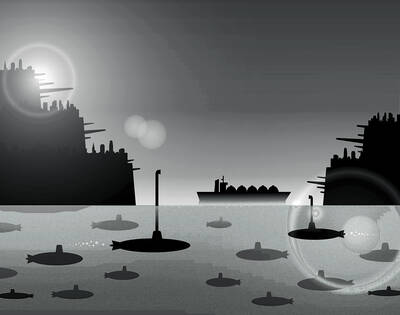
In the event of a war with China, Taiwan has some surprisingly tough defenses that could make it as difficult to tackle as a porcupine: A shoreline dotted with swamps, rocks and concrete barriers; conscription for all adult men; highways and airports that are built to double as hardened combat facilities. This porcupine has a soft underbelly, though, and the war in Iran is exposing it: energy. About 39,000 ships dock at Taiwan’s ports each year, more than the 30,000 that transit the Strait of Hormuz. About one-fifth of their inbound tonnage is coal, oil, refined fuels and liquefied natural gas (LNG),
On Monday, the day before Chinese Nationalist Party (KMT) Chairwoman Cheng Li-wun (鄭麗文) departed on her visit to China, the party released a promotional video titled “Only with peace can we ‘lie flat’” to highlight its desire to have peace across the Taiwan Strait. However, its use of the expression “lie flat” (tang ping, 躺平) drew sarcastic comments, with critics saying it sounded as if the party was “bowing down” to the Chinese Communist Party (CCP). Amid the controversy over the opposition parties blocking proposed defense budgets, Cheng departed for China after receiving an invitation from the CCP, with a meeting with
Chinese Nationalist Party (KMT) Chairwoman Cheng Li-wun (鄭麗文) is leading a delegation to China through Sunday. She is expected to meet with Chinese President Xi Jinping (習近平) in Beijing tomorrow. That date coincides with the anniversary of the signing of the Taiwan Relations Act (TRA), which marked a cornerstone of Taiwan-US relations. Staging their meeting on this date makes it clear that the Chinese Communist Party (CCP) intends to challenge the US and demonstrate its “authority” over Taiwan. Since the US severed official diplomatic relations with Taiwan in 1979, it has relied on the TRA as a legal basis for all
To counter the CCP’s escalating threats, Taiwan must build a national consensus and demonstrate the capability and the will to fight. The Chinese Communist Party (CCP) often leans on a seductive mantra to soften its threats, such as “Chinese do not kill Chinese.” The slogan is designed to frame territorial conquest (annexation) as a domestic family matter. A look at the historical ledger reveals a different truth. For the CCP, being labeled “family” has never been a guarantee of safety; it has been the primary prerequisite for state-sanctioned slaughter. From the forced starvation of 150,000 civilians at the Siege of Changchun


 RSS
RSS