


Dusk was falling on Edinburgh that mid-September Sunday when British Chancellor of the Exchequer Alistair Darling picked up the phone to speak to then US Treasury secretary Hank Paulson. The chancellor was in his constituency home; Paulson was hunkered down in the offices of the New York Federal Reserve, where he had spent the weekend trying to save Lehman Brothers, one of the US’ blue ribbon investment banks.
With time running out before the financial markets opened on Monday, Paulson wanted to know whether Darling would approve the takeover of at least part of Lehman by the British bank Barclays. The answer was not the one former US president George W. Bush’s Treasury secretary wanted to hear. The UK authorities had reservations — big reservations — about Barclays acting as the white knight for the Wall Street bank and would only agree to a deal on stringent terms.
In particular, the chancellor wanted to know what Barclays was letting itself in for with Lehman — an institution nursing huge losses from the US sub-prime mortgage market — and whether Paulson would sweeten a takeover with US taxpayers’ cash. Barclays also knew it would need US taxpayer funds to proceed with the takeover of an institution which had billions of dollars of outstanding trades that needed to be guaranteed before any deal could be completed.
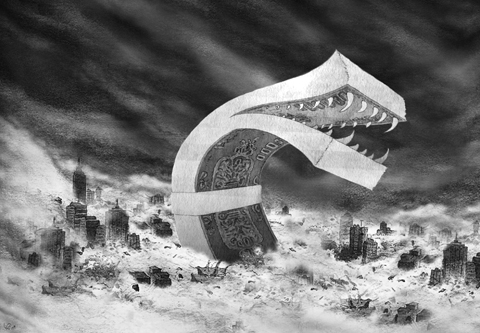
Paulson could not give Darling the assurances he sought and said he wished the chancellor had raised his questions earlier. Darling says the Americans had always known about London’s misgivings, which had been expressed countless times during a weekend that turned a slow-burn financial crisis into a full-blown global economic crash.
Even at that late stage, Darling and colleagues at the Bank of England and the Financial Services Authority, the City’s watchdog, believed the Americans would rescue Lehman. Had Paulson known what would happen next, it is likely he would have plumped for state ownership rather than letting the bank founder.
Up until Sept. 15 last year, the message of the year-long financial crisis was that governments would always offer a bailout to banks in trouble. Darling had nationalized Northern Rock seven months earlier; Paulson had orchestrated a takeover of Bear Stearns.
After Sept. 15, every bank — from HBOS in the UK to Goldman Sachs in the US — was perceived to be at risk. The financial markets were convulsed by a month of panic that saw bank shares drop precipitously, credit dry up and governments forced to abandon their free-market principles to save the system from collapse.
In Europe it quickly became apparent that the Americans lacked a plan to save Lehman. In the spring of 2007, when financial markets were still booming, the UK had proposed a four-country “war game” involving the financial authorities from the US, the UK, Switzerland and the Netherlands, so that the international community could respond to the possible failure of a big multinational bank. The idea foundered through lack of US cooperation.
The US Treasury and the New York Fed were overwhelmed by the scale of the crisis, which by the end of the weekend would also have claimed the independence of Merrill Lynch and ushered in the deepest slump in the world economy since the Great Depression. Lehman employees leaving their London office with their possessions crammed into cardboard boxes became, along with the lines of customers outside Northern Rock, an abiding image of the banking meltdown.
Sir John Gieve, then the deputy governor of the Bank of England responsible for financial stability, has no doubt that the US authorities botched the rescue attempt.
“It was a catastrophic error. It caused a loss of confidence in the [US] authorities’ ability to handle the financial crisis which really did change things and proved hugely costly,” he said.
Within a day of Lehman going bust, Britain’s biggest mortgage lender, HBOS, was on the brink of collapse and by early October so was Royal Bank of Scotland.
Trouble had been brewing at Lehman for at least a year. It was heavily involved in the US subprime mortgage debacle and had a complex web of international trading companies under its parent in the US. The biggest of these, Lehman International, was based in Canary Wharf, employing 5,500 people. It was the biggest dealer on the London stock market and a huge player on the City’s money markets.
By Friday, Sept. 12, Lehman was in a perilous position. Rumors of its problems were swirling around Wall Street and its rivals had stopped doing business with it. The previous day Paulson summoned Bob Diamond, the ambitious Barclays executive, to a summit of Wall Street’s main players in Manhattan in a desperate attempt to find a solution for a bank running out of time and money.
Diamond, who badly wanted a deal, flew to New York with his colleague Rich Ricci.
“We were interested in Lehman at a price, but not at any price,” said Ricci, who had made a presentation to the board in July. “We were concerned, having lost out on ABN Amro [to RBS], that we were going to be used as decoy to drive up the price. Bob told Paulson about this fear and he said get on a plane. So we got the next flight out.”
They need not have rushed. Paulson’s Plan A was for Lehman to be swallowed by Bank of America. When that fell through, he turned to Barclays. It was 11pm on Friday night, 4am in London and 5am in Nice, where Darling and Gieve were attending an informal meeting of EU finance ministers and central bank governors.
Going into the weekend, Paulson made a three-part gamble. By the end of the weekend, he would find a buyer for Merrill Lynch, which was also under severe financial pressure. He would then secure a bank willing to take on Lehman. Finally, he would pass the hat around Wall Street so that the “bad” parts of the banks being bailed out would not be borne by an increasingly unhappy US public.
On the Friday, when Bank of America came to the rescue of Merrill, there was still hope that he could pull off a spectacular accumulator. By Saturday night, however, it was clear that the gamble had not paid off.
Paulson’s first problem that Saturday was the reluctance of Wall Street to finance a lifeboat. With every institution racking up hefty losses, there was no appetite for a reprise of the deal struck by former Federal Reserve chairman Alan Greenspan to bail out Long-Term Capital Management, the New York hedge fund which had collapsed 10 years earlier. But that presented a second problem, because the UK authorities had said they were only prepared to sanction a Barclays bid for Lehman if there was a hefty financial guarantee, from either the private sector or the US Treasury. The Bank of England thought UK banks were seriously short of capital and that Barclays was taking on far more than it could chew.
“I thought the idea was crackers,” Gieve said.
Hector Sants, chief executive of the Financial Services Authority (FSA), had expressed rather less trenchant opposition to the attempt by Barclays to transform itself into a powerhouse on Wall Street through the acquisition of the non-toxic parts of Lehman. He had no principled objection to a deal, but in a conversation with John Varley, chief executive of Barclays, on the Saturday, the two men concluded no deal could be done without a US financial guarantee.
Varley told Sants that he would not take a proposal to the Barclays board without such an undertaking.
“The FSA’s view of what would be acceptable criteria were exactly the same as Barclays,” Sants said. “We agreed that it would not be appropriate for Barclays to buy even the ‘good’ Lehman without a funding provision being supplied from the US authorities.”
This proved to be the sticking point. Diamond wanted to do a deal at the right price and some senior government sources in Britain wonder whether the Barclays executive underplayed the caution being expressed by the authorities in London. Paulson has since sought to blame Darling for the breakdown, telling US reporters that the chancellor had refused to “import the cancer from US banks into Britain.”
Darling says he was never presented with a deal and denies ever using such words, saying that to have done so would have been supremely arrogant at a time when he knew many British banks were in a precarious state.
“My concern was always financial stability,” he said. “If a British bank was going to be involved, we wanted to know what they were letting themselves in for. British taxpayers could be standing behind an American bank.”
Events started to gather pace on the Saturday evening. At Rodings, a Chinese restaurant in the Essex village of Abridge, Tony Lomas took a call just as he was finishing his meal. The message for the insolvency expert at PricewaterhouseCoopers was simple, but somber. Preparations needed to be made for the bankruptcy of the UK arm of Lehman.
At a restaurant in Covent Garden, Gieve stepped out on to the pavement to speak quietly into his mobile. More than an hour later was still pacing up and down Great Queen Street. Gieve was getting the same message as Lomas: Lehman was at risk of going down.
Even so, there was still a firm expectation in London as Sunday dawned that something would be done to save Lehman. Darling, Sants, Gieve and Diamond remained confident that Paulson would come up with the guarantee being demanded by the FSA, the body responsible for regulating Barclays.
Had Barclays ever put an offer on the table, the chancellor would have demanded the reassurances the FSA was seeking. But in the end he did not need to exercise a veto, because Barclays saw Lehman as too hot to handle.
Barclays had a plan. Ricci says he and Diamond quickly realized that “Lehman had some big immovable illiquid assets,” which would be spun off into a “bad bank” where they would be underwritten by the rest of Wall Street. That would leave the “good bank” for Barclays to snap up. But to open on Monday, a guarantee of Lehman’s trades was required. Barclays could not guarantee the trades without shareholder approval, which would have taken more than a month to arrange. The US government was not prepared to offer the guarantee. To this day, Ricci does not know why Washington refused to do so.
FSA chairman Sir Callum McCarthy was in constant touch with the Americans on the Sunday morning, speaking to Tim Geithner, then chairman of the New York Fed, at lunchtime. Shortly afterwards, Varley called Sants and told him that Barclays was pulling out of the negotiations. It was 2pm and Lomas and his hit squad from PricewaterhouseCoopers were already combing the floors of Lehman’s headquarters at Canary Wharf.
Delicately Lomas said: “The call is to ask me to come and meet the board on Sunday, so that they can begin an exercise of planning the collapse of their company in the event that the discussion in New York didn’t get anywhere.”
Tension was palpable among more than 50 senior Lehman managers present to help channel information to negotiators in New York. Lomas needed to tread carefully.
“We had to work delicately with people and extract the information we needed without alarming them. It was tense because all eyes were looking across the Atlantic. When the final message came that the parent company would file [for bankruptcy] at the opening of business Monday morning New York time, there was disbelief, quiet contemplation of what it would mean,” he said.
Lomas, too, believes the US failure to save Lehman proved costly: “I was just amazed this was allowed to happen.”
While Lomas was beavering away, a dejected Diamond was going for dinner with his wife and daughter in Manhattan. On the way, his phone rang, and the name Bart McDade flashed on the screen. Diamond hesitated. McDade was the chief operating officer of Lehman, who had spent the last few days trying to find a savior for the failing bank.
He decided to be gallant in defeat and take the call. It was a decision that lifted his mood. “Would Barclays consider bidding for Lehman out of Chapter 11?” McDade asked.
Diamond slept on it. In the morning, just as Sants, Gieve and Darling had suspected, the financial markets were in freefall. Sants says he knew there would be big implications for the high-street banks.
“HBOS had been on the watch list for a very, very long time,” he said.
Unlike the Americans, UK authorities had learnt their lessons from the run on Northern Rock exactly a year earlier and had contingency plans for HBOS.
Lomas spent Monday trying to find a way of paying 5,500 Lehman staff, as its funds had been swept to New York on Friday night. Darling, Gieve and Sants spent the day working out how to shore up Britain’s biggest mortgage lender. Their worst nightmare had been realized.
The failure of Lehman had set off a tsunami of selling across the globe. For the next four weeks, the fear that any bank anywhere, no matter how big, could be at risk would stalk the markets.
Recently, China launched another diplomatic offensive against Taiwan, improperly linking its “one China principle” with UN General Assembly Resolution 2758 to constrain Taiwan’s diplomatic space. After Taiwan’s presidential election on Jan. 13, China persuaded Nauru to sever diplomatic ties with Taiwan. Nauru cited Resolution 2758 in its declaration of the diplomatic break. Subsequently, during the WHO Executive Board meeting that month, Beijing rallied countries including Venezuela, Zimbabwe, Belarus, Egypt, Nicaragua, Sri Lanka, Laos, Russia, Syria and Pakistan to reiterate the “one China principle” in their statements, and assert that “Resolution 2758 has settled the status of Taiwan” to hinder Taiwan’s
The past few months have seen tremendous strides in India’s journey to develop a vibrant semiconductor and electronics ecosystem. The nation’s established prowess in information technology (IT) has earned it much-needed revenue and prestige across the globe. Now, through the convergence of engineering talent, supportive government policies, an expanding market and technologically adaptive entrepreneurship, India is striving to become part of global electronics and semiconductor supply chains. Indian Prime Minister Narendra Modi’s Vision of “Make in India” and “Design in India” has been the guiding force behind the government’s incentive schemes that span skilling, design, fabrication, assembly, testing and packaging, and
Singaporean Prime Minister Lee Hsien Loong’s (李顯龍) decision to step down after 19 years and hand power to his deputy, Lawrence Wong (黃循財), on May 15 was expected — though, perhaps, not so soon. Most political analysts had been eyeing an end-of-year handover, to ensure more time for Wong to study and shadow the role, ahead of general elections that must be called by November next year. Wong — who is currently both deputy prime minister and minister of finance — would need a combination of fresh ideas, wisdom and experience as he writes the nation’s next chapter. The world that
As former president Ma Ying-jeou (馬英九) wrapped up his visit to the People’s Republic of China, he received his share of attention. Certainly, the trip must be seen within the full context of Ma’s life, that is, his eight-year presidency, the Sunflower movement and his failed Economic Cooperation Framework Agreement, as well as his eight years as Taipei mayor with its posturing, accusations of money laundering, and ups and downs. Through all that, basic questions stand out: “What drives Ma? What is his end game?” Having observed and commented on Ma for decades, it is all ironically reminiscent of former US president Harry


 RSS
RSS