


Ever thought that going “slow” at work could help you get more done? No? Me neither.
We live in a hectic, 24/7 society, full of power-walking workaholics, where Madonna sleeps with a BlackBerry under her pillow and slowing down is for losers.
One recent survey by the consumer research firm OTX found that many of us use high-tech gadgets to get 31 hours of work out of a 24-hour day — surely no mean feat.
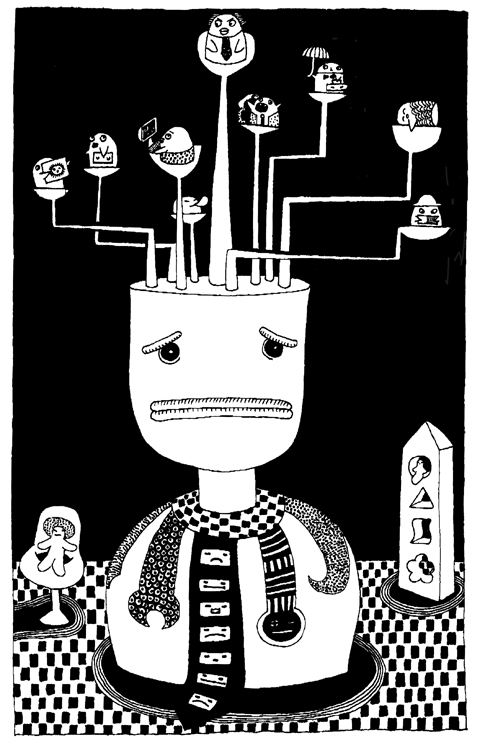
And with smarter phones in the pipeline, we may be able to add another couple of hours to that total. Achieving this might include driving with a Bluetooth earpiece so we can have a conference call while keeping one ear on the radio — and checking the satnav as we go.
So what could be less relevant to the working day than the “slow” movement? This came into being in Italy 20 years ago when fast-food chain McDonald’s tried to introduce Big Macs to the Piazza di Spagna in Rome. From this notion sprang the wider “slow” movement, which now includes slow travel, slow shopping and even slow design. But slow working? I don’t think so. Call me old-fashioned, but that used to be called “going on strike.”
In the UK, workers put in the longest hours in Europe, eat the most ready meals and even drink faster than our neighbors. “Full on” is the way they like it. What’s more, the average British boss is unlikely to warm to employees who suddenly start taking two hours for lunch. However, according to the experts, we’re not talking laziness here, but strategies for survival.
“Slow is very important in psychology in general,” said Gail Kinman, a reader in occupational health psychology at the University of Bedfordshire. “It gives you time for recovery from stress. Slowing down means you have time to let your body and mind get back to the baseline.”
“If you don’t, there is more wear and tear on your cardiovascular system. And eventually, not taking time to do this will have a negative effect on your immune system. Your long-term health may be at risk and you’re more likely to burn out early. We see this in football managers and stock exchange dealers,” she said.
What’s more, chasing around yelling “I need this yesterday!” isn’t even very efficient. We need to pace ourselves and give ourselves time to think clearly. A study carried out at the University of Michigan has found that because the human brain needs time to shift gears between tasks, we need to do one thing at a time.
The more switching back and forth we do — between, say, talking on the phone, scanning e-mail and thinking about the next meeting — the less impressive our performance will be. And high performance, not long hours, is what employers are looking for.
Kinman points out that the “24/7” philosophy is partly self-inflicted. Just because supermarkets are open 24 hours a day doesn’t mean we have to Google in the wee hours.
“A lot is the pressure we put on ourselves,” she said. “In the past you would write a letter, get it typed up then post it. When you had a reply, a few days later, you would think about it before responding.
“Now we expect ourselves to be in constant communication with others. You need to ask yourself: What do I expect of other people? And what do they expect of me? If you want a nice, long career, get into some good habits now,” she said.
Crikey. I decide that — for the purposes of this article — I will put in one day of slow working. But can I really break with my default style of getting things done? That involves logging on to my e-mails at 6am, tapping away at my PC till my 10-minute lunch break, then zapping through the afternoon powered by caffeine and carbohydrates.
So I take the chilled approach, seeking slow experts on the Web for an hour, then relaxing with some yoga moves. Instead of hunching over the keyboard, I stand up, take a deep breath and go into dog pose. Head down, bottom in the air, tuning into the eternal verities. This makes me feel dizzy, so I resort to a huddled fetal position on the floor. Then my e-mail pings.
It is Geir Bethelsen, creator of the World Institute of Slowness, who has responded to my request in about 20 minutes. He is certainly quick for a slowness guru. He stresses that slow working doesn’t just mean making time to relax — the key is to use your time to relate to colleagues.
Bethelsen cites the following “10 commandments for workplace slow”: speak to people, smile, call people by name, be friendly and helpful, be sincere, be really interested in people, be generous with praise, be careful with the feelings of others, respect their opinions and always be ready to help.
But getting in the right frame of mind is important.
“Each morning, sit down doing nothing or take a short walk, and think about what you want to accomplish that day,” he said. “And in the evening, use 10 minutes to think about what you achieved — and the high point of the day.”
Encouraged by this thought, I take another break and go out for a skinny cappuccino. Time to consider the bigger picture, think about what this article is really trying to achieve. But the world is against me. There’s a huge line in the cafe, they’ve run out of skimmed milk, and hordes of yummy-mummies are trilling at each other. I should have stayed in with a teabag. Back at my desk, I am now seriously frazzled, my inbox is full and I’ve had enough of slow working to last a lifetime.
Fortunately, another time-efficient expert on slow working is on the line.
Christopher Richards has set up a US Web site — www.slowdownnow.org — dedicated to slow working. He points out that anyone working in an office needs to think about whether they want to work at breakneck speed or whether they have a choice. Unfortunately, there is no easy way out here. Just slumping at your desk being “laid back” will make everyone hate you. The real answer is to redesign your working life.
“My interest is time poverty,” he said. “In America the anti-joy, puritan work ethic is strong. Hard work is necessary, but it is not a virtue in itself. We can either use technology or let it use us — and this takes a certain amount of self knowledge and clarification about our values.”
Richards believes we need to take a hard look at what we want work to do for us.
“In a work hierarchy, those at the bottom are powerless,” he said. “Debt means wage slavery. The way out is personal responsibility, of saving and only spending what you have. If you want more time, you may have to give up a shopping habit.”
So there you have it. Slow working means renegotiating your relationship with money, not coming in late telling your colleagues to chill. Looks like my days as a stress junkie aren’t quite over yet.
Recently, China launched another diplomatic offensive against Taiwan, improperly linking its “one China principle” with UN General Assembly Resolution 2758 to constrain Taiwan’s diplomatic space. After Taiwan’s presidential election on Jan. 13, China persuaded Nauru to sever diplomatic ties with Taiwan. Nauru cited Resolution 2758 in its declaration of the diplomatic break. Subsequently, during the WHO Executive Board meeting that month, Beijing rallied countries including Venezuela, Zimbabwe, Belarus, Egypt, Nicaragua, Sri Lanka, Laos, Russia, Syria and Pakistan to reiterate the “one China principle” in their statements, and assert that “Resolution 2758 has settled the status of Taiwan” to hinder Taiwan’s
The past few months have seen tremendous strides in India’s journey to develop a vibrant semiconductor and electronics ecosystem. The nation’s established prowess in information technology (IT) has earned it much-needed revenue and prestige across the globe. Now, through the convergence of engineering talent, supportive government policies, an expanding market and technologically adaptive entrepreneurship, India is striving to become part of global electronics and semiconductor supply chains. Indian Prime Minister Narendra Modi’s Vision of “Make in India” and “Design in India” has been the guiding force behind the government’s incentive schemes that span skilling, design, fabrication, assembly, testing and packaging, and
Singaporean Prime Minister Lee Hsien Loong’s (李顯龍) decision to step down after 19 years and hand power to his deputy, Lawrence Wong (黃循財), on May 15 was expected — though, perhaps, not so soon. Most political analysts had been eyeing an end-of-year handover, to ensure more time for Wong to study and shadow the role, ahead of general elections that must be called by November next year. Wong — who is currently both deputy prime minister and minister of finance — would need a combination of fresh ideas, wisdom and experience as he writes the nation’s next chapter. The world that
As former president Ma Ying-jeou (馬英九) wrapped up his visit to the People’s Republic of China, he received his share of attention. Certainly, the trip must be seen within the full context of Ma’s life, that is, his eight-year presidency, the Sunflower movement and his failed Economic Cooperation Framework Agreement, as well as his eight years as Taipei mayor with its posturing, accusations of money laundering, and ups and downs. Through all that, basic questions stand out: “What drives Ma? What is his end game?” Having observed and commented on Ma for decades, it is all ironically reminiscent of former US president Harry


 RSS
RSS