


Amid fuss over the Kaohsiung mayoral court case and the deliberations of the Central Election Commission on referendum protocol, one item of electoral news slipped by this week with barely a sound.
The Council of Indigenous Peoples has been lobbying, with limited success, for the implementation of autonomy laws that would allow Aborigines to take more control in their homelands.
In a boost for the council, and in the wake of the UN finally completing its declaration on indigenous rights, the Cabinet this week signed off on an autonomy bill that would redesignate Aboriginal territory as county-level administrative areas, a development with potentially far-reaching effects on the environment, the water supply, tourism, ethnic relations (thousands of non-Aborigines reside legally in these areas) and other matters of national importance.
This development caps off a largely suppressed campaign that started in the 1940s, when a number of Aboriginal activists advocated a single county-level district for their communities. Sadly, they were tortured and executed by the Chinese Nationalist Party (KMT) government for, among other things, having the temerity to believe the promise of equality in the Constitution of the Republic of China.
Today, every Aboriginal township belongs to a county with a majority Han population. And although Aboriginal townships enjoy representation in county councils, they simply do not have the numbers to effect changes -- especially those that could irritate the Han majority or vested interests -- or to express the diversity of opinion in Aboriginal Taiwan.
The Cabinet bill could change all that, though the formation of a new county or counties would require lengthy negotiation with county governments. Indeed, it is difficult to envisage a situation in which any county government would willingly cede most of its mountainous territory to a pan-ethnic enclave.
The real question is what the legislature will do with this bill. On paper, Aboriginal activists might express optimism at its prospects given that the KMT enjoys solid support from every one of Taiwan's ethnic minorities, Aboriginal or not. Unfortunately for them, the reality is harsher than it appears.
Before the legislature was downsized, eight seats were reserved for Aboriginal legislators -- four from "mountain" areas and four from "plains" areas. In addition, political parties tended to add Aboriginal candidates to legislator-at-large lists to appear ethnically diverse. Dramatic over-representation of Aborigines in proportional terms was the result.
With the halving of the legislature, the number of reserved Aboriginal seats dropped from eight to six, which only enhanced Aboriginal over-representation. But the most notable thing was what did not change: the discredited single-vote, multiple-member system.
The legislature elected not to make Aboriginal people vote for a sole legislator in one of six districts, a decision that benefits incumbent Aboriginal legislators. It is unclear why Aboriginal people were considered unfit for the new system, but it can be assumed that the KMT wanted to keep its existing Aboriginal legislators on side, and that the Democratic Progressive Party (DPP) wanted to retain a system that gives them a faint hope of slipping a DPP Aboriginal representative into the legislature.
This is a perfect example of vested interests of political parties and self-aggrandizing Aboriginal politicians defeating the interests of Aboriginal people in general. It is difficult to imagine that such a legislature will deal with Aboriginal autonomy in a manner befitting the people it is meant to benefit.
The legislature is thus likely to enact a watered-down law that will leave Aboriginal communities at the mercy of mining companies, the Forestry Bureau, the national parks administration, county governments and other agencies with a serious budget.
Minister of Labor Hung Sun-han (洪申翰) on April 9 said that the first group of Indian workers could arrive as early as this year as part of a memorandum of understanding (MOU) between the Taipei Economic and Cultural Center in India and the India Taipei Association. Signed in February 2024, the MOU stipulates that Taipei would decide the number of migrant workers and which industries would employ them, while New Delhi would manage recruitment and training. Employment would be governed by the laws of both countries. Months after its signing, the two sides agreed that 1,000 migrant workers from India would
In recent weeks, Taiwan has witnessed a surge of public anxiety over the possible introduction of Indian migrant workers. What began as a policy signal from the Ministry of Labor quickly escalated into a broader controversy. Petitions gathered thousands of signatures within days, political figures issued strong warnings, and social media became saturated with concerns about public safety and social stability. At first glance, this appears to be a straightforward policy question: Should Taiwan introduce Indian migrant workers or not? However, this framing is misleading. The current debate is not fundamentally about India. It is about Taiwan’s labor system, its
On March 31, the South Korean Ministry of Foreign Affairs released declassified diplomatic records from 1995 that drew wide domestic media attention. One revelation stood out: North Korea had once raised the possibility of diplomatic relations with Taiwan. In a meeting with visiting Chinese officials in May 1995, as then-Chinese president Jiang Zemin (江澤民) prepared for a visit to South Korea, North Korean officials objected to Beijing’s growing ties with Seoul and raised Taiwan directly. According to the newly released records, North Korean officials asked why Pyongyang should refrain from developing relations with Taiwan while China and South Korea were expanding high-level
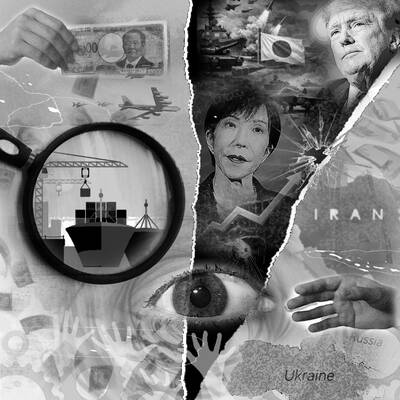
Japan’s imminent easing of arms export rules has sparked strong interest from Warsaw to Manila, Reuters reporting found, as US President Donald Trump wavers on security commitments to allies, and the wars in Iran and Ukraine strain US weapons supplies. Japanese Prime Minister Sanae Takaichi’s ruling party approved the changes this week as she tries to invigorate the pacifist country’s military industrial base. Her government would formally adopt the new rules as soon as this month, three Japanese government officials told Reuters. Despite largely isolating itself from global arms markets since World War II, Japan spends enough on its own


 RSS
RSS