


Try searching for a culprit in the 90 brands caught up in the recent recall of canned chili, stew and other products, and the trail weaves back to a single manufacturer.
That also was the case in recalls of spinach, pet food and frozen meat.
Companies increasingly are paying others to make the foods we eat -- or the ingredients in them -- and then selling it under multiple brand names. And that has prompted a growing debate about food safety.
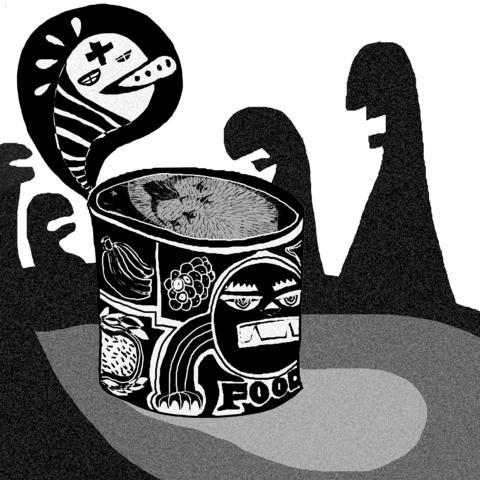
This spring's rolling series of recalls of cat and dog food made with chemically tainted ingredients from China began in mid-March and stretched to late May.
"If people cannot trace a product back to a supplier, the supplier has no incentives to keep their processes as clean and effective, in terms of food safety, as possible," said Caroline Smith DeWaal, director of food safety for the Center for Science in the Public Interest, a consumer group.
But the food industry and regulators chalk up to coincidence the rash of recent major food safety recalls and the consolidation of food production
"One reason we are seeing this is because it's becoming a common industry practice," said David Acheson, who leads the US Food and Drug Administration's (FDA) food safety efforts.
Acheson said he knew of no evidence that outsourcing production is inherently less safe than traditional arrangements in which companies make what they sell.
Outsourcing makes financial sense for companies unwilling or unable to establish or expand manufacturing operations. Established manufacturers can use excess capacity to fill orders for others.
For some specialty products that require expensive machinery -- like pet food -- a limited number of contract manufacturers, such as Menu Foods, make products that are sold under dozens of brands.
"Being able to develop a product without having to sink a lot of money into fixed, tangible capital is every entrepreneur's dream,'' said Michael Sykuta, director of the Contracting and Organizations Research Institute at the University of Missouri-Columbia.
Store-brand or private-label products account for much of the growth in the food outsourcing business. Supermarkets, drug stores and mass merchandisers ring up more than US$65 billion in store brand sales annually.
That amounts to one in every five items they sell, according to the Private Label Manufacturers' Association.
But critics of the outsourcing of production warn that it creates increased vulnerability of the food supply. The manufacturer no longer is directly accountable to consumers, but to other companies, they maintain.
That makes for a long supply chain with several stops before a product reaches consumers, said Jean Kinsey, codirector of the Food Industry Center at the University of Minnesota.
"And not everyone along the way has the same vested interest in its safety." Kinsey said.
The Grocery Manufacturers' Association counters that there would be no reason for co-manufacturers or co-packers to skimp on food safety.
"If we use the classic term, `barking up the wrong tree,' that would be the case here," said Craig Henry, who helps oversee scientific and regulatory activities at the industry group.
But some food safety advocates say that when problems arise with foods made under contract, sorting out who made what can delay recalls or public health warnings.
Last month, the FDA for hours delayed issuing a consumer warning about botulism contamination in canned food products, until it could sort out the brands under which the Castleberry's Food Co product was sold. The recall was further hampered by confusion over which brands were involved.
"I'm not telling you it is a system that is optimal for consumers. What we are trying to do is make the response part faster," Acheson said.
Generally, the identities of contract manufacturers remain secret for reasons of commercial confidentiality. So how can consumers learn where their food comes from?
"The truth of the matter is today, to a large degree, you can't ... and efforts to improve on it have been beaten back," said Jean Halloran, director of food policy initiatives for Consumers' Union.
For example, she said, there has been a long delay in requiring that imported fruit and vegetables be labeled with their country of origin.
The difficulty of linking a product back to a particular lot or manufacturer has been a major problem in some food safety cases, consumer advocates say.
When salmonella contamination led ConAgra Foods Inc to recall Peter Pan-brand peanut butter earlier this year, it also recalled Great Value peanut butter it made for Wal-Mart Stores Inc. The FDA said at the time that other Great Value peanut butter, made by other manufacturers, was not affected by the recall.
In the peanut butter case, the lids of the jars -- regardless of brand -- were consistently marked in a way that made it easy to find the specific product code being recalled, DeWaal said.
That's not always the case.
"Traceability is critical to ensuring processors use the highest standards of care," DeWaal said.
"When their identities are hidden behind multiple labels and poor traceability information, they can use whatever practices they want because they're probably not going to get caught." she said.
When I visited Taiwan last summer, I called on the nation to use its status as a technology superpower to build superweapons. It is obvious to me as I return a year later that Taiwan is now answering that call. By 2030, Taiwan envisions a domestic drone hub, capable of producing large quantities of drones per year. The nation continues to tighten cooperation across the private sector, scientific researchers and the elected government, on creating new and innovative production avenues for defense, while efforts to become central to the “democratic supply chain” are only increasing. Anduril is seeing all of these positive
Singaporean former Prime Minister and current senior minister Lee Hsien- Loong(李顯龍) last month stood on Chinese soil and told Beijing that Singapore cooperates because of “shared interests”, not because of common “ethnic descent,” a significant statement that has upended China’s cognitive warfare tactics of “ethnic nationalism.” Along with using its military buildup and economic growth to expand its international dominance, China has long deployed ethnic politics to promote the idea that all ethnic Chinese around the world, regardless of citizenship, share a tight bond with the Chinese motherland, by which it means the regime of the People’s Republic of China (PRC)
Chinese Nationalist Party (KMT) Chairwoman Cheng Li-wun (鄭麗文) in San Francisco on Tuesday last week said if she had not met with Chinese President Xi Jinping (習近平), she would have been “just a plain” and “even negligible” KMT chairperson, bluntly signaling the role she is playing in her visit to the US — Beijing’s messenger from Taiwan. Cheng and her delegation arrived in the US on Monday last week for a two-week visit across five major cities. Her party said the group is scheduled to meet with US lawmakers, officials, policy experts and businesspeople. Before departing, Cheng said her trip
In 1935, the German Reich led by the National Socialist Party officially created the Nuremberg Race Laws, a “legal cage”, for German Jews, stripping them of citizenship, criminalizing their personal relationships, barring them from public life, and transforming them into stateless subjects and isolating them from the rest of society. Similarly, in March 2026, the People’s Republic of China (PRC) National People’s Congress adopted the “Promoting Ethnic Unity and Progress” law, which represents the most significant shift in Chinese domestic governance since the era of Mao Zedong (毛澤東). Ostensibly designed as domestic legislation to manage China’s 56 officially recognized ethnic groups,


 RSS
RSS