


There is rightly growing concern among the public and policymakers about climate change and its consequences. Combating climate change is an enormous and truly global challenge, requiring local, national and international action. We must tackle it both effectively and urgently.
A key part of meeting our climate objectives is to minimize the harmful effects of transport on the environment. So-called "biofuels" such as bioethanol and biodiesel, as well as developing the next generation of biofuels, must play a part in this. After all, every liter of petrol that is replaced with biofuel benefits the environment.
Many countries around the world are producers or are emerging as producers of biofuels. Global production is rapidly increasing. World production of bioethanol, for example, doubled between 2000 and 2004. A further doubling is expected by 2010.
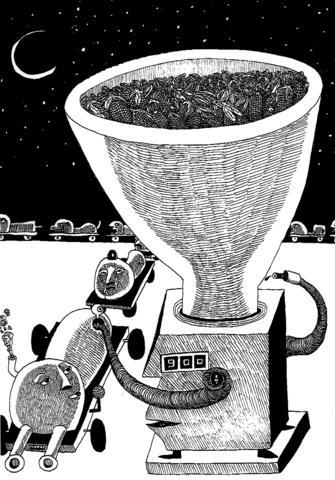
As output of biofuels increases, policymakers must ensure that global supplies are allocated effectively and smoothly between countries that produce and consume them. Free and open conditions for international trade are the most efficient way to allocate global resources, fully exploiting individual countries' comparative advantages. This principle also holds true for the emerging biofuels market.
Today, however, trade in biofuels is limited. According to the UN Conference on Trade and Development, global trade in bioethanol accounted for less than 10 percent of global production in 2004, suggesting the existence of a large untapped trade potential. Part of the explanation no doubt lies in the presence of significant trade barriers.
For example, high tariffs are often placed on biofuels and biofuel feedstock -- in some cases as high as 55 percent for bioethanol. At the same time, subsidies are widely used to encourage domestic production. Tax incentives are employed to stimulate use, as are mandatory blending requirements. In addition, different standards and certification requirements are applied.
While many of these measures are implemented for legitimate environmental policy reasons, they do pose challenges for trade in biofuels. As a first step toward eliminating unnecessary barriers, we must deepen our understanding of the effects on trade in biofuels of measures to promote their production and use.
Sweden and the Netherlands recently took the initiative in further analysis of this issue by the Organization for Economic Cooperation and Development. Sweden's starting point is the conviction that a more liberal trade regime, coupled with global standards, is needed. As a first measure, Sweden argues for the elimination of all tariffs on ethanol.
Apart from environmental considerations, there are other important benefits of expanding world trade in biofuels. Generally, international trade is a strong instrument for development. Several developing nations have a comparative advantage in producing ethanol -- and other biofuels, for that matter. Brazil, which is now the world's largest producer and exporter of ethanol, is a case in point.
But there are other developing countries that are exporters of biofuels, and still others that view it as an important source of future income. Trade policy should support, not undermine, these countries' ambitions.
Of course, some have raised concerns about the possible economic, social and ecological repercussions of a strong increase in demand for biofuels, and not least in developing countries. For example, diverting too much land from food production to biofuel crops would risk sharp increases in food prices, while adequate environmental standards must accompany large-scale production use of biofuels.
Such concerns also matter to consumers of biofuels, who will ultimately determine the demand for them. Appropriate national policies, as well as strong international cooperation, will be necessary to minimize the risks and exploit the benefits that biofuels markets imply for developing countries.
Creating an efficient market to expand world trade in biofuels is a policy for the future, one that is good for the environment and good for development. Increased trade, protection of the environment, and poverty reduction can, and must, go hand in hand.
Sten Tolgfors is the Swedish minister for foreign trade.
Copyright: Project Syndicate
Recently, China launched another diplomatic offensive against Taiwan, improperly linking its “one China principle” with UN General Assembly Resolution 2758 to constrain Taiwan’s diplomatic space. After Taiwan’s presidential election on Jan. 13, China persuaded Nauru to sever diplomatic ties with Taiwan. Nauru cited Resolution 2758 in its declaration of the diplomatic break. Subsequently, during the WHO Executive Board meeting that month, Beijing rallied countries including Venezuela, Zimbabwe, Belarus, Egypt, Nicaragua, Sri Lanka, Laos, Russia, Syria and Pakistan to reiterate the “one China principle” in their statements, and assert that “Resolution 2758 has settled the status of Taiwan” to hinder Taiwan’s
Singaporean Prime Minister Lee Hsien Loong’s (李顯龍) decision to step down after 19 years and hand power to his deputy, Lawrence Wong (黃循財), on May 15 was expected — though, perhaps, not so soon. Most political analysts had been eyeing an end-of-year handover, to ensure more time for Wong to study and shadow the role, ahead of general elections that must be called by November next year. Wong — who is currently both deputy prime minister and minister of finance — would need a combination of fresh ideas, wisdom and experience as he writes the nation’s next chapter. The world that
The past few months have seen tremendous strides in India’s journey to develop a vibrant semiconductor and electronics ecosystem. The nation’s established prowess in information technology (IT) has earned it much-needed revenue and prestige across the globe. Now, through the convergence of engineering talent, supportive government policies, an expanding market and technologically adaptive entrepreneurship, India is striving to become part of global electronics and semiconductor supply chains. Indian Prime Minister Narendra Modi’s Vision of “Make in India” and “Design in India” has been the guiding force behind the government’s incentive schemes that span skilling, design, fabrication, assembly, testing and packaging, and
Can US dialogue and cooperation with the communist dictatorship in Beijing help avert a Taiwan Strait crisis? Or is US President Joe Biden playing into Chinese President Xi Jinping’s (習近平) hands? With America preoccupied with the wars in Europe and the Middle East, Biden is seeking better relations with Xi’s regime. The goal is to responsibly manage US-China competition and prevent unintended conflict, thereby hoping to create greater space for the two countries to work together in areas where their interests align. The existing wars have already stretched US military resources thin, and the last thing Biden wants is yet another war.


 RSS
RSS