


This week Cisco Systems, a Silicon Valley heavyweight, plans to announce one of its most unusual deals -- it is buying the technology assets of Tribe.net, a mostly forgotten social networking site, according to people close to the firms' discussions.
It is a curious pairing. Cisco, with 38,000 employees, makes networking equipment for telecommunications providers and other big companies. Tribe.net, run by a company with eight employees, has been trampled by newer social sites like MySpace and Facebook.
But along with the recent purchase of a social network design firm, Five Across, the deal will give Cisco the technology to help large corporate clients create MySpace or YouTube-style services to bring their customers together online. And that ambition highlights a significant shift in the way companies and entrepreneurs are thinking about social networks.
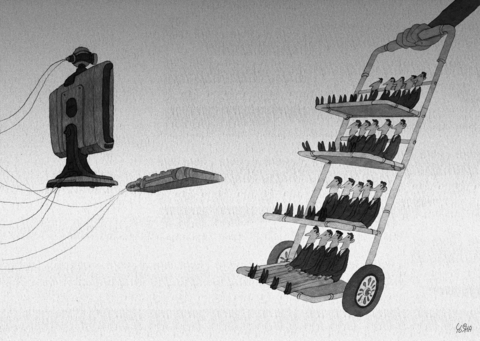
They see MySpace and Facebook, with their tens of millions of users, as walled-off destinations, similar to first-generation online services like America Online, CompuServe and Prodigy. These big Web sites attract masses of people who have dissimilar interests and, ultimately, little in common.
The new social networking players, which include Cisco and a multitude of startups like Ning, the latest venture of Netscape co-creator Marc Andreesson, think that social networks will soon be ubiquitous. They are aiming to create tools to let ordinary people, large firms and even presidential candidates create social Web sites tailored for their own customers, friends, fans and employees.
"The existing social networks are fantastic, but they put users in a straitjacket," said Andreesson, who this week reintroduced Ning, his third start-up, after a limited introduction last year.
"They are restrictive about what you can and can't do, and they were not built to be flexible. They do not let people build and design their own worlds, which is the nature of what people want to do online," he said.
Social networks are sprouting on the Internet like wild mushrooms. In the last few months, organizations as dissimilar as the Portland Trailblazers, the University of South Carolina and Nike have gotten their own social Web sites up and running, with the help of companies that specialize in building social networks.
Last month, Illinois Senator Barack Obama unveiled MyBarackObama.com, a social network created for his presidential campaign by the political consulting firm Blue State Digital.
Many of these new online communities cater to niche interests. Shelfari, a Seattle-based startup, recently began a service to let book lovers share their opinions. This week it received an investment from Amazon.com.
Ning, based in Palo Alto, California, is fashioning itself as a one-stop shop catering to this growing interest in social networks. Anyone can visit the site and set up a community on any topic, from the television show Battlestar Galactica to microbrew beers. Ning users choose the features they want to include in their networks, like videos, photos, discussion forums or blogs. Their sites can look like MySpace, YouTube, or the photo sharing site Flickr -- or they can be totally unique.
Those setting up Ning communities can pay US$20 a month if they want the site free of text advertisements delivered by Google. They also have the option of delivering their own advertising, as CBS does on Ning-based social networks for its shows CSI and The Class.
Andreesson said that even with its two acquisitions, Cisco might be underestimating the ease of combining technologies behind Tribe.net and its earlier acquisition, Five Across.
"The idea that Cisco is going to be a force in social networking is about as plausible as Ning being a force in optical switches," he said.
Tribe.net, which developed the technology that Cisco is now acquiring, almost led this new social networking phase. In 2004, the U2 singer Bono approached the company and asked it to create a separate network for his antipoverty campaign, One.org, according to several former employees.
Tribe.net, founded by Mark Pincus, a prominent Silicon Valley angel investor, decided to remain focused on building a destination site, like Friendster and MySpace.
Bono went on to create the One.org network with Yahoo. Pincus left Tribe.net in 2005 but repurchased the company from lenders last summer when it was nearly out of money. Today, Tribe.net is primarily used by artistic attendees of the annual Burning Man festival in the Nevada desert.
Executives at Cisco and Utah Street Networks, Tribe.net's parent company, declined to comment on their deal or its terms. But people close to the discussions said Tribe.net would remain an independent site, while its underlying technology would go to Cisco.
Several former employees have left Tribe.net to start their own firms offering social network tools. Alex Muldoven, who had been a product manager there, started a company called Crowd Factory to design social networks for large companies. He is now building services for several telecommunications customers and says the new model makes more sense for Internet users.
"If I'm into fly-fishing, that is where I'm going to spend my energy online," he said. "I don't think it is easy for MySpace and Facebook to adapt and bend to the needs of individual brands."
One challenge is getting users to join new social networks when there are few other members. For example, Google helped Nike design its soccer community site, called Joga.com, but it does not appear to have significantly attracted users.
"I think this will work for certain kinds of brands, and other brands are just barking up the wrong tree," said Paul Martino, a former Tribe.net chief technology officer who is now the chief executive of Aggregate Knowledge, a service that taps the online behavior of other users to provide shopping advice.
Another challenge is persuading users to enter their information over and over when they join new online communities. To solve the problem, several firms are pushing a standard called OpenID, which would let users sign on and easily transfer profile information between various social sites.
Marc Canter, a former Tribe.net consultant who has created his own social networking firm, People Aggregator, was an early supporter of OpenID.
"Humans are migratory beasts, and we do not want to re-enter our data every time we join a new site," he said. "Users own their data and should be able to move it around freely."
Cisco is positioning itself for the day when mainstream consumers are spending much of their time taking part in these online communities. With the acquisition of Tribe.net, it is also trying to further its quest to become a consumer-oriented company. In the last few years, it has purchased the wireless router company Linksys and the set-top-box maker Scientific Atlanta, giving it a significant presence in many US homes.
Dan Scheinman, the mergers and acquisition chief who led the Linksys and Scientific Atlanta purchases, now runs a new division at Cisco called the Media Solutions Group, which has been responsible for the deals for Five Across and Tribe.net.
After the Five Across acquisition, Scheinman said in an interview that US citizens were quickly changing their media consumption habits. He said his new group would let Cisco help its media customers, like TV networks, develop their sites and move more of their content onto the Web.
"Part of our job is to form a relationship with media companies and deliver technologies and services to them, so consumers can consume what they want online," he said.
Recently, China launched another diplomatic offensive against Taiwan, improperly linking its “one China principle” with UN General Assembly Resolution 2758 to constrain Taiwan’s diplomatic space. After Taiwan’s presidential election on Jan. 13, China persuaded Nauru to sever diplomatic ties with Taiwan. Nauru cited Resolution 2758 in its declaration of the diplomatic break. Subsequently, during the WHO Executive Board meeting that month, Beijing rallied countries including Venezuela, Zimbabwe, Belarus, Egypt, Nicaragua, Sri Lanka, Laos, Russia, Syria and Pakistan to reiterate the “one China principle” in their statements, and assert that “Resolution 2758 has settled the status of Taiwan” to hinder Taiwan’s
Singaporean Prime Minister Lee Hsien Loong’s (李顯龍) decision to step down after 19 years and hand power to his deputy, Lawrence Wong (黃循財), on May 15 was expected — though, perhaps, not so soon. Most political analysts had been eyeing an end-of-year handover, to ensure more time for Wong to study and shadow the role, ahead of general elections that must be called by November next year. Wong — who is currently both deputy prime minister and minister of finance — would need a combination of fresh ideas, wisdom and experience as he writes the nation’s next chapter. The world that
The past few months have seen tremendous strides in India’s journey to develop a vibrant semiconductor and electronics ecosystem. The nation’s established prowess in information technology (IT) has earned it much-needed revenue and prestige across the globe. Now, through the convergence of engineering talent, supportive government policies, an expanding market and technologically adaptive entrepreneurship, India is striving to become part of global electronics and semiconductor supply chains. Indian Prime Minister Narendra Modi’s Vision of “Make in India” and “Design in India” has been the guiding force behind the government’s incentive schemes that span skilling, design, fabrication, assembly, testing and packaging, and
Can US dialogue and cooperation with the communist dictatorship in Beijing help avert a Taiwan Strait crisis? Or is US President Joe Biden playing into Chinese President Xi Jinping’s (習近平) hands? With America preoccupied with the wars in Europe and the Middle East, Biden is seeking better relations with Xi’s regime. The goal is to responsibly manage US-China competition and prevent unintended conflict, thereby hoping to create greater space for the two countries to work together in areas where their interests align. The existing wars have already stretched US military resources thin, and the last thing Biden wants is yet another war.


 RSS
RSS