


Recent revelations that many corporate executives have backdated their stock options, ensuring excessive compensation even when their companies perform poorly, are merely the latest in a stream of examples of bad business behavior. In an era of evaporated pensions and benefits for the rank and file, piggish pay packets for chief executive officers have led a cynical public to wonder where big business has gone wrong.
The answer may be quite simple: Too many bosses have abandoned basic human values and embraced the credo famously uttered by Gordon Gekko in the movie Wall Street: "Greed is good."
But a growing body of research concludes that greed is not always good, and that moral values are a necessary element in the conduct of business.
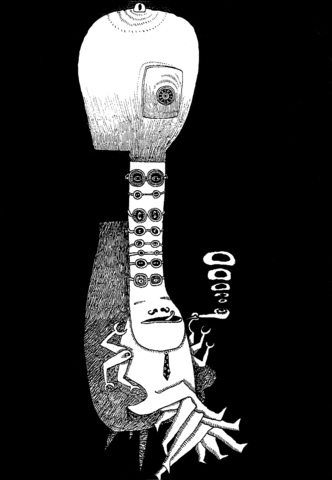
The Gordon Gekkos are predators who take the quick payoff. Although they do serve a useful purpose by keeping other players on their toes and raising efficiency through competition, market participants for the most part avoid them, preferring to do business with the Warren Buffetts -- hard-driving businessmen, but known for fair play and creating long-term value.
Consider the trip to the mall, where shoppers buy goods produced and shipped from around the world. This decentralized delivery of goods relies on employees working for two weeks before receiving a paycheck, companies offering each other lines of credit and banks offering bridge loans. Even though humans have engaged in exchange since before the birth of civilization, the impersonal system of trading is only around 1,000 years old. While legal remedies exist should this system break down, impersonal trading cannot occur unless most people share the values of fair play and reciprocal cooperation.
Even in impersonal market exchange, we cannot help but personalize transactions, say, with the grocery store cashier who smiles and thanks us, or the store greeter whose only purpose is to make us feel cared for. This personalization draws upon regions of the brain that evolved when our trading partners were members of small kin-based groups where moral violations were immediately identified and remedied.
Research by primatologists Sarah Brosnan and Frans de Waal at Emory University has shown that monkeys also have what look like moral values. When two monkeys work for food, a fair split is expected. If a fair division is not received, it elicits cries of outrage and hurled food by the wronged partner.
Moral values have powerful physiological representations in humans, too, and we feel them strongly when they are violated. The philosopher Josh Greene and his colleagues at Princeton University have shown that personal moral dilemmas (for example, whether you would directly kill one person to save seven others) use our emotions rather than higher cognition -- to the chagrin of many philosophers who claimed otherwise. The personal aspect of such decisions makes our hearts speed up and our palms sweat.
In neuroeconomics experiments that my lab has conducted, we have found that when a stranger places trust in another by making a considered monetary investment that can either be returned or stolen, our brains release an ancient mammalian hormone called oxytocin.
Oxytocin is what bonds mammals to their offspring, and in humans makes spouses care about and love each other. We have found that trust causes a spike in oxytocin and begets reciprocation -- the sharing of money. We are "wired" to cooperate, and we find it rewarding in the same way that our brains identify eating a good meal or sex.
Oxytocin is active in evolutionarily old areas of our brain, outside of our conscious awareness. We simply have a sense that sharing with someone who has trusted us is the right thing to do.
We have also found that about 2 percent of undergraduates we studied are pure non-cooperators. When they have an opportunity to share money with a stranger who has trusted him or her, non-cooperators keep all the money rather than share the largesse. The technical term in my lab for these people is "bastards."
Our evidence suggests that bastards' brains work differently. Their character traits are similar to those of sociopaths. They simply do not care about others the way most people do, and the dysfunctional processing of oxytocin in their brains appears to be one reason for this. Because bastards are out there, we still need government and personal enforcement of economic exchange.
Nevertheless, too much government regulation may "crowd out" moral behavior. When every offense has an associated penalty, transgressions cease to be moral violations, but are simply a way for wrongdoers to effectively "use the system" while facing some risk of getting caught and paying a fine.
These external penalties can displace the internal sanctions we feel when we do wrong. At Enron, this was accomplished by breaking down tasks into small chunks so that no one person was ultimately responsible for a decision and could claim ignorance when caught. Former Enron chief executive Jeffrey Skilling excused his behavior at his trial by saying: "I'm not an accountant."
Many people have been convinced that market exchange diminishes our humanity. Think of Charlie Chaplin's film Modern Times, in which the little tramp is literally a cog in the capitalist machine. That view, a residue of Marxist thinking, is wrong. On the contrary, working together, and trading with each other in markets, is morality in action.
Paul Zak is a fellow at the Gruter Institute and director of Claremont Graduate University's Center for Neuroeconomics Studies.
Copyright: Project Syndicate
Could Asia be on the verge of a new wave of nuclear proliferation? A look back at the early history of the North Atlantic Treaty Organization (NATO), which recently celebrated its 75th anniversary, illuminates some reasons for concern in the Indo-Pacific today. US Secretary of Defense Lloyd Austin recently described NATO as “the most powerful and successful alliance in history,” but the organization’s early years were not without challenges. At its inception, the signing of the North Atlantic Treaty marked a sea change in American strategic thinking. The United States had been intent on withdrawing from Europe in the years following
My wife and I spent the week in the interior of Taiwan where Shuyuan spent her childhood. In that town there is a street that functions as an open farmer’s market. Walk along that street, as Shuyuan did yesterday, and it is next to impossible to come home empty-handed. Some mangoes that looked vaguely like others we had seen around here ended up on our table. Shuyuan told how she had bought them from a little old farmer woman from the countryside who said the mangoes were from a very old tree she had on her property. The big surprise
The issue of China’s overcapacity has drawn greater global attention recently, with US Secretary of the Treasury Janet Yellen urging Beijing to address its excess production in key industries during her visit to China last week. Meanwhile in Brussels, European Commission President Ursula von der Leyen last week said that Europe must have a tough talk with China on its perceived overcapacity and unfair trade practices. The remarks by Yellen and Von der Leyen come as China’s economy is undergoing a painful transition. Beijing is trying to steer the world’s second-largest economy out of a COVID-19 slump, the property crisis and
Former president Ma Ying-jeou’s (馬英九) trip to China provides a pertinent reminder of why Taiwanese protested so vociferously against attempts to force through the cross-strait service trade agreement in 2014 and why, since Ma’s presidential election win in 2012, they have not voted in another Chinese Nationalist Party (KMT) candidate. While the nation narrowly avoided tragedy — the treaty would have put Taiwan on the path toward the demobilization of its democracy, which Courtney Donovan Smith wrote about in the Taipei Times in “With the Sunflower movement Taiwan dodged a bullet” — Ma’s political swansong in China, which included fawning dithyrambs


 RSS
RSS