


Tomorrow is the day to commemorate, if not actually remember, where it all started and offer thanks for the love and devotion that mothers provide.
But there is a very large group of women who will be doing their best to ignore it; many of those who cannot may well shed tears out of sight of friends and family, and are likely in their hundreds of thousands. They are the women who would have been mothers.
In this country, the abortion rate remains shockingly high. "Shocking" not because there is ever a pleasing rate of abortion, but because this is a developed country and that many more of these abortions are preventable.
The main villain is poor sex education. In most developed countries, teachers tend to be a progressive, liberal lot, and among their ranks in the education ministries and in the classrooms are those who are more than happy to provide education on sexual matters that most parents would wince at. In Taiwan, however, the education system has its roots in a mixture of social and political conservatism that encourages compliance rather than individual difference and cultivation. Though this is changing, the legacy of Chinese Nationalist Party (KMT) dogmatism and Democratic Progressive Party prudishness has not served young people well.
In a modern society, if parents are not educating their children and schools prefer to look the other way, then kids will learn about sex from their peers -- though this is not always a bad thing, because a child's wisdom is frequently underestimated.
There is one other major influence: the media and its facile TV dramas, explicit movies and leering exploitation in "family" newspapers and magazines. It would be unfair to say that there is no mention of birth control methods and sensible behavior in the media, but it is fair to say that it hardly competes.
The inevitable result of parental timidity or silence, school neglect and adventurous youth is a needlessly high rate of pregnancy. And in a society that still inflicts powerfully negative stigmas upon single mothers, abortion is the only practical solution for most.
It is pleasing to see that on matters of women's rights, there is frequently a bipartisan approach taken at the legislative level by female representatives, even if they rarely mobilize as a women's caucus.
Nonetheless, it is hoped there will be no more outrages such as school principals expelling pregnant students -- an act of gross misanthropy amplified by the fact that it takes place under state supervision.
The state that does not want to be labeled hypocritical or ill-willed must provide the following to students: mandatory, comprehensive sex education curriculums in all schools offering information on pregnancy, birth control and human relations; abortions on demand with counseling if requested; minimum standards of child support for single mothers and heavy punishment for individuals, companies or government agencies that discriminate against them.
One thing is clear: there is only delusion in the idea that modern society can exist without single parent births, and there is only misogyny in the approach of punishing women who do so -- while at the same time condemning them for escaping that fate and aborting their pregnancy.
A respectful, healthy society encourages all of its members to make the best of what they have and what they can do. It encourages women to have children secure in the knowledge that they will receive appropriate support and professional opportunity if the father does not meet his responsibilities. But it also delivers the option of safe abortion for women who cannot be given this guarantee and do not want to proceed.
Such a society can celebrate Mother's Day with a clear conscience, secure in the knowledge that all mothers will eventually have their day.
Minister of Labor Hung Sun-han (洪申翰) on April 9 said that the first group of Indian workers could arrive as early as this year as part of a memorandum of understanding (MOU) between the Taipei Economic and Cultural Center in India and the India Taipei Association. Signed in February 2024, the MOU stipulates that Taipei would decide the number of migrant workers and which industries would employ them, while New Delhi would manage recruitment and training. Employment would be governed by the laws of both countries. Months after its signing, the two sides agreed that 1,000 migrant workers from India would
In recent weeks, Taiwan has witnessed a surge of public anxiety over the possible introduction of Indian migrant workers. What began as a policy signal from the Ministry of Labor quickly escalated into a broader controversy. Petitions gathered thousands of signatures within days, political figures issued strong warnings, and social media became saturated with concerns about public safety and social stability. At first glance, this appears to be a straightforward policy question: Should Taiwan introduce Indian migrant workers or not? However, this framing is misleading. The current debate is not fundamentally about India. It is about Taiwan’s labor system, its
On March 31, the South Korean Ministry of Foreign Affairs released declassified diplomatic records from 1995 that drew wide domestic media attention. One revelation stood out: North Korea had once raised the possibility of diplomatic relations with Taiwan. In a meeting with visiting Chinese officials in May 1995, as then-Chinese president Jiang Zemin (江澤民) prepared for a visit to South Korea, North Korean officials objected to Beijing’s growing ties with Seoul and raised Taiwan directly. According to the newly released records, North Korean officials asked why Pyongyang should refrain from developing relations with Taiwan while China and South Korea were expanding high-level
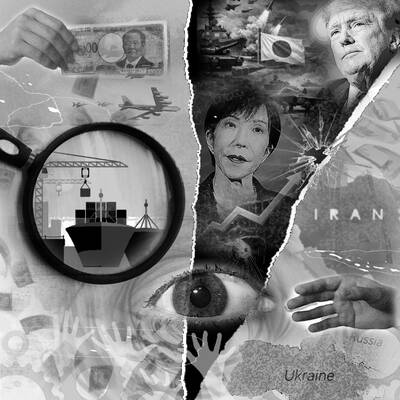
Japan’s imminent easing of arms export rules has sparked strong interest from Warsaw to Manila, Reuters reporting found, as US President Donald Trump wavers on security commitments to allies, and the wars in Iran and Ukraine strain US weapons supplies. Japanese Prime Minister Sanae Takaichi’s ruling party approved the changes this week as she tries to invigorate the pacifist country’s military industrial base. Her government would formally adopt the new rules as soon as this month, three Japanese government officials told Reuters. Despite largely isolating itself from global arms markets since World War II, Japan spends enough on its own


 RSS
RSS