


Weeks before the opening of its flagship store outside Moscow in 2000, Ikea was approached by employees of a local utility company. If the Swedish retailer wanted to have electricity for its grand opening, it had to pay a bribe.
Instead, Ikea rented diesel generators large enough to power a shopping mall. The generators roared to life in a loud rebuke to the corrupt executives who thought they had the retailer cornered and soon the utility turned on the power.
As Ikea opened stores across Russia, and became one of the most outspoken Western corporate critics of Russian corruption, renting generators to thwart extortion from power companies became standard practice. Ikea executives took great pride in their creative solution — renting generators “instead of putting ourselves into a squeeze,” as Christer Thordson, an Ikea board member and global director of legal affairs, put it in an interview.
But Russian graft may have proved more stubborn than Ikea.
The board of Ikea’s operating company, which is based in the Netherlands, has concluded that the Russian executive hired to manage the generators was taking kickbacks from the rental company to substantially inflate the price of the service. Ikea said that such a fraud could cost it about US$196 million over two years.
Ikea canceled the contract and sought redress in Russian civil court. But in rulings over the last two weeks, Ikea has lost another 5 million euros (US$7.3 million) in damages that the judges awarded the generator rental company for breach of contract.
Ikea disclosed the details of its loss to the New York Times last month, saying that it hoped publicity might compel the Russian authorities to investigate.
“We have encountered something here that is outside the scope of what we normally encounter,” Thordson said, describing the global retailer’s situation in Russia. “I have never experienced anything like this.”
The director of the generator rental company and the former Ikea employee accused of accepting bribes denied any wrongdoing.
Russia is a maddeningly opaque but potentially lucrative market of 140 million people, whose incomes are supported by trickle-down oil wealth. Many global businesses contend they must have a presence in Russia to remain competitive. On Thursday, Carrefour, the French hypermarket chain, opened its second store in Russia. Wal-Mart, the world’s largest retailer, has an advance team in Moscow but has yet to invest.
For Ikea, the argument for being in Russia is even more compelling: When it comes to household durables — the home furnishings that are Ikea’s bread and butter — Russia is a gold mine of need.
In more developed countries, such as the US, the challenge is to elicit a replacement purchase because most customers already own most standard pieces of furniture.
The company slyly acknowledged this in its advertisements in the US, encouraging Americans to “have more tables than spouses.” Ikea says the average North American changes both dining room tables and spouses only 1.5 times in a lifetime.
Russia, in contrast, has a lingering deficit of durable consumer goods, a hangover from the Soviet command economy.
As a result, Russia now accounts for 5 percent of Ikea’s business worldwide. Before the global economic crisis, Ikea’s business in Russia was growing at 20 percent a year, where its stores are wildly popular. So many Russians show up for store openings that Ikea has hired ambulances to be on hand in case of accidents.
Thordson acknowledged that executives were slow to notice soaring costs for generator rentals amid the company’s pell-mell rush to expand. When the scope of the expense came to light last year, the board hired a London-based private investigation company to examine its Russian operations.
The investigators secured a deposition from a former employee of the generator rental company detailing how an Ikea executive had been accepting weekly cash payments to influence management’s choice in the lucrative generator contract for two malls outside St Petersburg.
The ballooning costs built into these two deals were so large they eliminated all profit from Ikea’s business managing a dozen shopping centers in Russia last year, Thordson said.
Ikea built two furniture stores anchoring malls timed to open just before the year-end retail rush in 2006. Then, as before, the local electricity company dragged its feet. Ikea, by then familiar with the problem, had contracted for generators; both sites opened on time. But this time, the utility never switched on the power at either site. Three years later, the malls are still powered by diesel generators.
The contracts for these generators charged far more than market rates, and the Ikea executive who arranged them was receiving a portion, Thordson and lawyers for Ikea say.
The Russian courts have rejected Ikea’s claim of fraud. The director and co-owner of the generator rental company, Konstantin Ponomarev, denied in a telephone interview that his company, Sistemy Avtonomnovo Energosnabzhenia, paid an Ikea executive to secure the contract. Ikea, he said, had declined his offer to move the litigation to Sweden. Ikea officials said on Tuesday that they had never heard an offer to change venues.
The generator service was expensive, Ponomarev said, because it was intended for standby power but Ikea had used it to continually supply two huge shopping centers.
Yuri Volkov, the former Ikea executive accused in the deposition of taking payments, denied doing so and said Russian police had investigated the claim and cleared him. Volkov said Ikea’s country managers were seeking to conceal their own expensive incompetence by blaming Russian subordinates.
Ikea still operates in Russia, but has frozen future investment.
In June, an arbitration appellate court in Moscow awarded Ponomarev’s company 5 million euros in two judgments for breach of contract. Ikea appealed and, as a condition of suspending enforcement until the appeal was heard, deposited the amount of the damage claim in an escrow account with the court. The deposit was intended to be held by the court and paid to Ponomarev’s company only if the appeal were unsuccessful.
Yet, separately, a lower court judge issued an order to withdraw money directly from Ikea’s accounts at Citibank in Russia and pay it to Ponomarev. This happened over the last two weeks. In other words, Ikea is now out US$14.2 million, twice the damage award, even before its appeal has been heard.
Ikea lawyers, in a letter to the board of Ikea’s operating company, said the opposing lawyers seemed to know the outcome of these cases in advance, suggesting collusion with the judges. Calls on Tuesday and Wednesday to the public relations office of the Ninth Arbitration Court of Appeals in Moscow were not answered. Even if the appeal is successful, returning the money may be impossible.
“I can only suspect there have been some irregularities behind the scenes,” Thordson said.
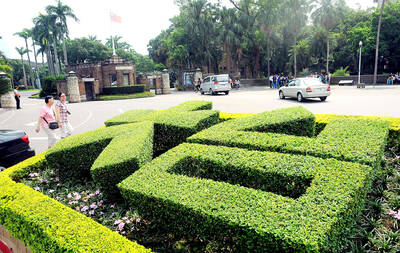
Taiwan has experienced its most significant improvement in the QS World University Rankings by Subject, data provided on Sunday by international higher education analyst Quacquarelli Symonds (QS) showed. Compared with last year’s edition of the rankings, which measure academic excellence and influence, Taiwanese universities made great improvements in the H Index metric, which evaluates research productivity and its impact, with a notable 30 percent increase overall, QS said. Taiwanese universities also made notable progress in the Citations per Paper metric, which measures the impact of research, achieving a 13 percent increase. Taiwanese universities gained 10 percent in Academic Reputation, but declined 18 percent
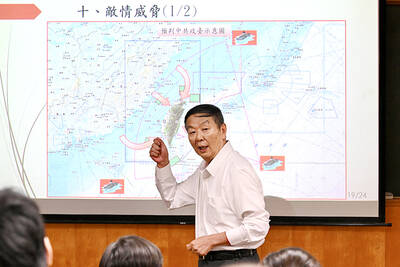
RETHINK? The defense ministry and Navy Command Headquarters could take over the indigenous submarine project and change its production timeline, a source said Admiral Huang Shu-kuang’s (黃曙光) resignation as head of the Indigenous Submarine Program and as a member of the National Security Council could affect the production of submarines, a source said yesterday. Huang in a statement last night said he had decided to resign due to national security concerns while expressing the hope that it would put a stop to political wrangling that only undermines the advancement of the nation’s defense capabilities. Taiwan People’s Party Legislator Vivian Huang (黃珊珊) yesterday said that the admiral, her older brother, felt it was time for him to step down and that he had completed what he
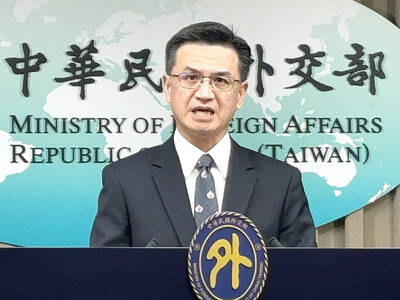
BULLY TACTICS: Beijing has continued its incursions into Taiwan’s airspace even as Xi Jinping talked about Taiwan being part of the Chinese family and nation China should stop its coercion of Taiwan and respect mainstream public opinion in Taiwan about sovereignty if its expression of goodwill is genuine, the Ministry of Foreign Affairs (MOFA) said yesterday. Ministry spokesman Jeff Liu (劉永健) made the comment in response to media queries about a meeting between former president Ma Ying-jeou (馬英九) and Chinese President Xi Jinping (習近平) the previous day. Ma voiced support for the so-called “1992 consensus,” while Xi said that although the two sides of the Taiwan Strait have “different systems,” this does not change the fact that they are “part of the same country,” and that “external
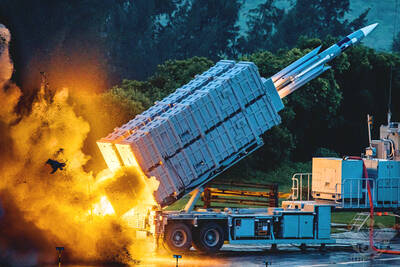
UNDER DISCUSSION: The combatant command would integrate fast attack boat and anti-ship missile groups to defend waters closest to the coastline, a source said The military could establish a new combatant command as early as 2026, which would be tasked with defending Taiwan’s territorial waters 24 nautical miles (44.4km) from the nation’s coastline, a source familiar with the matter said yesterday. The new command, which would fall under the Naval Command Headquarters, would be led by a vice admiral and integrate existing fast attack boat and anti-ship missile groups, along with the Naval Maritime Surveillance and Reconnaissance Command, said the source, who asked to remain anonymous. It could be launched by 2026, but details are being discussed and no final timetable has been announced, the source


 RSS
RSS