


With its slim white body and glowing amber tip, it can easily pass as a regular cigarette. It even emits what look like curlicues of white smoke.
The Ruyan V8, which produces a nicotine-infused mist absorbed directly into the lungs, is just one of a rapidly growing array of electronic cigarettes attracting attention in China, the US and elsewhere — and the scrutiny of world health officials.
Marketed as a healthier alternative to smoking and a potential way to kick the habit, the smokeless smokes have been distributed in swag bags at the British film awards and hawked at an international trade show.
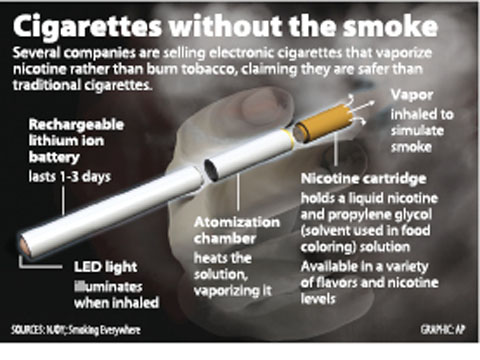
Because no burning is involved, makers say there’s no hazardous cocktail of cancer-causing chemicals and gases like those produced by a regular cigarette.
There’s no secondhand smoke, so they can be used in places where cigarettes are banned, the makers said.
Health authorities are questioning those claims.
The WHO issued a statement in September warning there was no evidence to back up contentions that e-cigarettes were a safe substitute for smoking or a way to help smokers quit.
It also said companies should stop marketing them that way, especially since the product may undermine smoking prevention efforts because they look like the real thing and may lure nonsmokers, including children.
“There is not sufficient evidence that [they] are safe products for human consumption,” Timothy O’Leary, a communications officer at the WHO’s Tobacco Free Initiative in Geneva, said this week.
The laundry list of WHO’s concerns includes the lack of conclusive studies and information about e-cigarette contents and their long-term health effects, he said.
Unlike other replacement therapies such as patches for slow delivery through the skin and some inhalers and nasal sprays, they have not gone through rigorous testing, O’Leary said.
Nicotine is highly addictive and causes the release of the “feel good” chemical dopamine when it goes to the brain. It also increases heart rate and blood pressure and restricts blood to the heart muscle.
Ruyan — which means “like smoking” — introduced the world’s first electronic cigarette in 2004. It has patented its ultrasonic atomizing technology, in which nicotine is dissolved in a cartridge containing propylene glycol, the liquid that is vaporized in smoke machines in nightclubs or theaters and is commonly used as a solvent in food.
When a person takes a drag on the battery-powered cigarette, the solution is pumped through the atomizer and comes out as an ultrafine spray that resembles smoke.
Hong Kong-based Ruyan contends the technology has been illegally copied by Chinese and foreign companies and is embroiled in several lawsuits. It’s also battling questions about the safety of its products.
Most sales take place over the Internet, where hundreds of retailers tout their products. Their easy availability, O’Leary warns, “has elevated this to a pressing issue given its unknown safety and efficacy.”
Prices range from about US$60 to US$240. Kits include battery chargers and cartridges that range in flavors from fruit to menthol and nicotine levels range from zero — basically a flavored mist — to 16mg, higher than a regular cigarette. The US National Institutes of Health says regular cigarettes contain about 10mg of nicotine.
On its Web site, Gamucci, a London-based manufacturer, features a woman provocatively displaying one of its e-cigarettes.
“They look like, feel like and taste like traditional tobacco, yet they aren’t,” the blurb reads. “They are a truly healthier and satisfying alternative. Join the revolution today!”
Smoking Everywhere, a Florida-based company, proclaims it “a much better way to smoke,” while a clip on YouTube features an employee of the NJoy brand promoting its e-cigarettes at CES, the international consumer technology trade show.
Online sales make it even more difficult to regulate the industry, which still falls in a gray area in many countries.
In the US, the Food and Drug Administration has “detained and refused” several brands of electronic cigarettes because they were considered unapproved new drugs and could not be legally marketed in the country, press officer Christopher Kelly said.
He did not give more details, but said the determination of whether an e-cigarette is a drug is made on a case-by-case basis after the agency considers its intended use, labeling and advertising.
In Australia, the sale of electronic cigarettes containing nicotine is banned. In the UK, the products appear to be unregulated and are sold in pubs.
Smoking is tightly woven into the fabric of daily life in Ruyan’s home turf of China, the world’s largest tobacco market where about 2 trillion cigarettes are sold every year.
Tobacco sales, the biggest source of government revenue, brought in US$61 billion in the first 11 months of last year, up 18 percent from 2007, the Chinese Communist Party’s People’s Daily newspaper said.
Ruyan is suing a Beijing newspaper for questioning its safety and for claiming in 2006 that its products have more nicotine than regular cigarettes.
Miu Nam, Ruyan’s executive director, blames the newspaper for a hit in sales and profits but declined to give details.
“We have to restore consumers’ confidence, we have to clean up people’s doubts,” Miu said.
An operator at the Beijing Times refused to transfer calls seeking comment on Friday to managers at the newspaper.
A reporter said she had heard of the case but would not give any details.
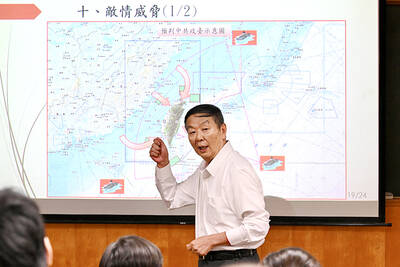
RETHINK? The defense ministry and Navy Command Headquarters could take over the indigenous submarine project and change its production timeline, a source said Admiral Huang Shu-kuang’s (黃曙光) resignation as head of the Indigenous Submarine Program and as a member of the National Security Council could affect the production of submarines, a source said yesterday. Huang in a statement last night said he had decided to resign due to national security concerns while expressing the hope that it would put a stop to political wrangling that only undermines the advancement of the nation’s defense capabilities. Taiwan People’s Party Legislator Vivian Huang (黃珊珊) yesterday said that the admiral, her older brother, felt it was time for him to step down and that he had completed what he
Taiwan has experienced its most significant improvement in the QS World University Rankings by Subject, data provided on Sunday by international higher education analyst Quacquarelli Symonds (QS) showed. Compared with last year’s edition of the rankings, which measure academic excellence and influence, Taiwanese universities made great improvements in the H Index metric, which evaluates research productivity and its impact, with a notable 30 percent increase overall, QS said. Taiwanese universities also made notable progress in the Citations per Paper metric, which measures the impact of research, achieving a 13 percent increase. Taiwanese universities gained 10 percent in Academic Reputation, but declined 18 percent
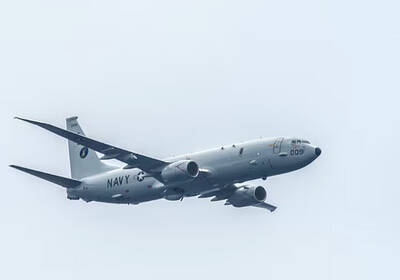
CHINA REACTS: The patrol and reconnaissance plane ‘transited the Taiwan Strait in international airspace,’ the 7th Fleet said, while Taipei said it saw nothing unusual The US 7th Fleet yesterday said that a US Navy P-8A Poseidon flew through the Taiwan Strait, a day after US and Chinese defense heads held their first talks since November 2022 in an effort to reduce regional tensions. The patrol and reconnaissance plane “transited the Taiwan Strait in international airspace,” the 7th Fleet said in a news release. “By operating within the Taiwan Strait in accordance with international law, the United States upholds the navigational rights and freedoms of all nations.” In a separate statement, the Ministry of National Defense said that it monitored nearby waters and airspace as the aircraft
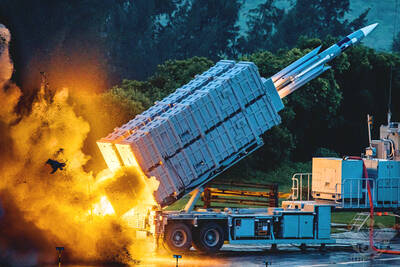
UNDER DISCUSSION: The combatant command would integrate fast attack boat and anti-ship missile groups to defend waters closest to the coastline, a source said The military could establish a new combatant command as early as 2026, which would be tasked with defending Taiwan’s territorial waters 24 nautical miles (44.4km) from the nation’s coastline, a source familiar with the matter said yesterday. The new command, which would fall under the Naval Command Headquarters, would be led by a vice admiral and integrate existing fast attack boat and anti-ship missile groups, along with the Naval Maritime Surveillance and Reconnaissance Command, said the source, who asked to remain anonymous. It could be launched by 2026, but details are being discussed and no final timetable has been announced, the source


 RSS
RSS