


Bold, frank and aggressive, millionaire drinks king Zong Qinghou (
The charismatic founder of Wahaha Group (娃哈哈), China's biggest drinks firm, remains locked in a months-long power struggle with Danone for control of their joint venture business that for over a decade brought both sides big profits.
With the case arousing huge global and national interest, Zong, 61, has in recent weeks stepped up his fiery rhetoric against Danone, while what was once a model business of Sino-foreign cooperation has been left to flounder.
Although the feud that emerged this year is an old-fashioned business fight about ownership, it also highlights the contrasting styles between Chinese and Western business methods.
Zong, a member of China's ruling Communist Party, is a man born in the fire and brimstone era of Mao Zedong's (毛澤東) revolution, a time when Chinese relied on personal ties to get things done.
"He is a traditional Chinese man who was deeply affected by Mao Zedong," said Tang Jing, Wahaha's human resources manager from 2000 to 2005.
To listen to Zong's version of how the partnership unravelled is to hear a tale where fact and emotion are presented with equal weight.
In a letter penned in April that revealed the extent of the rift between the two companies, Zong launched a diatribe against Danone, comparing their actions to colonial powers' military campaigns against China.
"I told them the Chinese have stood up and the era of invasions by eight-country armies is long gone," he said. "Chinese people have their own national character, you are always trying to threaten us, bully us, this is only making us angry."
That Wahaha has been bullied by Danone has also been a common theme in Zong's recent meetings with the press, as has his routine use of the phrase: "Danone has hurt the feelings of the Chinese people."
Government officials in China commonly used the phrase as a way of expressing displeasure for foreign methods.
It also taps into a vague but deeply held sentiment among many Chinese that the nation was wronged by foreign powers during its semi-colonial period 150 years ago.
For Zong, a chain smoker of foreign-brand cigarettes and a self-described workaholic, the split with Danone is also about a lack of respect for his abilities.
Joining forces with Danone in 1996, Zong said he had been eager to tap Danone's expertise but had been disappointed by the stifling restrictions.
"The regulations in the contracts and the limits the board placed on me meant that I could do nothing," Zong told a group of foreign reporters last week. "Most of the decisions had to be approved by Danone board members even though they would only show up at board meetings once every quarter. How you want me to run the business under such conditions?"
Indeed, for a man who oversaw all aspects of the Hangzhou-based firm, conflicts of interest between Zong and Danone came as no surprise to Tang.
"Zong had too many roles in the Wahaha Group," Tang said. "If Wahaha wanted to develop on its own then conflicts were going to emerge sooner or later."
Of humble origins, Zong is proud of the company he built without any government money and said he had always looked out for the interest of his workers.
Starting with paper cartons before moving to beverages, Zong was able to dramatically build his business when he acquired a canned food and drinks enterprise in 1991.
"I'm wealthy but I earned every penny," Zong said.
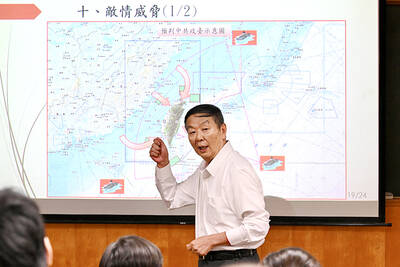
RETHINK? The defense ministry and Navy Command Headquarters could take over the indigenous submarine project and change its production timeline, a source said Admiral Huang Shu-kuang’s (黃曙光) resignation as head of the Indigenous Submarine Program and as a member of the National Security Council could affect the production of submarines, a source said yesterday. Huang in a statement last night said he had decided to resign due to national security concerns while expressing the hope that it would put a stop to political wrangling that only undermines the advancement of the nation’s defense capabilities. Taiwan People’s Party Legislator Vivian Huang (黃珊珊) yesterday said that the admiral, her older brother, felt it was time for him to step down and that he had completed what he
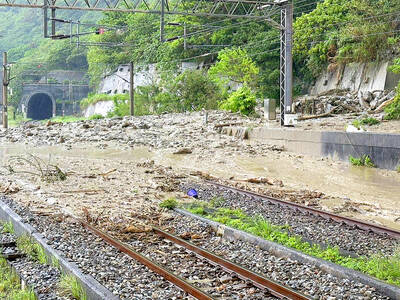
ROLLER-COASTER RIDE: More than five earthquakes ranging from magnitude 4.4 to 5.5 on the Richter scale shook eastern Taiwan in rapid succession yesterday afternoon Back-to-back weather fronts are forecast to hit Taiwan this week, resulting in rain across the nation in the coming days, the Central Weather Administration said yesterday, as it also warned residents in mountainous regions to be wary of landslides and rockfalls. As the first front approached, sporadic rainfall began in central and northern parts of Taiwan yesterday, the agency said, adding that rain is forecast to intensify in those regions today, while brief showers would also affect other parts of the nation. A second weather system is forecast to arrive on Thursday, bringing additional rain to the whole nation until Sunday, it

CONDITIONAL: The PRC imposes secret requirements that the funding it provides cannot be spent in states with diplomatic relations with Taiwan, Emma Reilly said China has been bribing UN officials to obtain “special benefits” and to block funding from countries that have diplomatic ties with Taiwan, a former UN employee told the British House of Commons on Tuesday. At a House of Commons Foreign Affairs Committee hearing into “international relations within the multilateral system,” former Office of the UN High Commissioner for Human Rights (OHCHR) employee Emma Reilly said in a written statement that “Beijing paid bribes to the two successive Presidents of the [UN] General Assembly” during the two-year negotiation of the Sustainable Development Goals. Another way China exercises influence within the UN Secretariat is
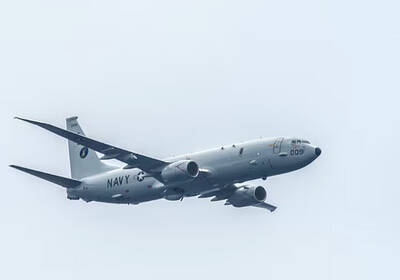
CHINA REACTS: The patrol and reconnaissance plane ‘transited the Taiwan Strait in international airspace,’ the 7th Fleet said, while Taipei said it saw nothing unusual The US 7th Fleet yesterday said that a US Navy P-8A Poseidon flew through the Taiwan Strait, a day after US and Chinese defense heads held their first talks since November 2022 in an effort to reduce regional tensions. The patrol and reconnaissance plane “transited the Taiwan Strait in international airspace,” the 7th Fleet said in a news release. “By operating within the Taiwan Strait in accordance with international law, the United States upholds the navigational rights and freedoms of all nations.” In a separate statement, the Ministry of National Defense said that it monitored nearby waters and airspace as the aircraft


 RSS
RSS