


Work is not play. But maybe it should be.
In fact, Paul Johnston has remade his company on the idea that business software will work better if it feels like a game. Johnston is not some awkward adolescent, but the polished president and chief executive of Entellium, which makes software for customer relationship management. Businesses spend billions of dollars on such software to try to track their sales staff, their marketers, their customer service -- anything that connects them with customers. Unfortunately, most of the software is the business equivalent of calorie counting. No one does it gladly. Worse, the software has a Big Brother aspect to it.
"CRM software is designed to let your manager peek at you," Johnston says.
He notes that even at Entellium, based in Seattle, he has had trouble getting his sales staff to update their data consistently. Reasoning that sales people are wildly competitive, he thought that they would respond to a program that showed where they stood against their goals -- or their peers'. Hence, Rave, which Entellium introduced last month.
Rave adapts a variety of gaming techniques. For instance, you can build a dossier of your clients and sales prospects that includes photographs and lists of their likes, dislikes and buying interests, much like the character descriptions in many video games. Prospects are given ratings, not by how new they are -- common in CRM programs -- but by how likely they are to buy something. All prospects are also tracked on a timeline, another gamelike feature.
Rave isn't the business version of Madden NFL, at least not yet. But Craig Hall, president of Logos Marketing Inc, a graphics firm in Albany, New York, said it reminded him of video games he had played, like Legend of Zelda. Hall, 31, says he likes the way Rave pops up information, including news that interests clients. He also said its use of sales stages and checklists, borrowed from the way games progress through levels, helped him rethink the way his firm operates.
Most people under 35 grew up playing video games. Many still do -- the average age of gamers is over 30 -- and the games have become mainstream entertainment. While "twitch" games like Doom or Quake remain popular, there are now huge games run in online virtual worlds. World of Warcraft has millions of players around the world who organize themselves into teams to accomplish complex tasks. In some games like EVE, these teams are called companies, and the politics would impress the most cutthroat executive.
Executives may find that software is not the most valuable thing they can get from video gaming. Jane McGonigal, an affiliate researcher and resident game designer at the Institute for the Future, said she had done research that showed the qualitative advantages companies gain when they hire gamers, including an enhanced ability to innovate rapidly and collaborate effectively, even across far-flung regions.
"Skills you develop in game worlds solve real-world problems," McGonigal said, adding that 70 corporate executives came to a recent institute gaming event.
Gamers also tend to be more loyal to their companies and more likely to want to work with others than nongamers, according to research by John Beck, a management consultant who runs the North Star Leadership Group, and Mitchell Wade, chief executive of Choice Humanitarian, a nonprofit group that seeks to end poverty in the developing world. Beck and Wade were co-authors of the book Got Game (paperback title: The Kids Are Alright).
Beck says children who grow up playing video games typically have to figure the games out for themselves, because adults don't know how to play.
That's quite unlike, say, children who play baseball, where the adults tell them what to do. One downside to managing the gaming generation is that it associates "bosses" with level bosses, the obstacle in their way to the next level in a game. (Beck tells managers to avoid this by becoming a strategy guide to their charges, something any gamer can appreciate.)
Beck says he sees a gaming generation gap in firms, but expects it to disappear in 10 years or so as gamers move up in management. He says that in the last three years, his reception from chief executives has gone from "Huh? That's crazy" to "Tell me more."
Of course, there's already plenty of gaming going on in business. Companies use simulation tools for product development and build games for marketing products, as well as for corporate training or education. Cold Stone Creamery, for instance, has used video games built by Persuasive Games to train ice cream servers, and Cisco Systems used Persuasive's games for its engineers. Corporate executives routinely develop skills through role-playing and other strategy games, said Ben Sawyer, a director of the Serious Games Initiative and head of Digitalmill Inc, a consultant group based in Portland, Maine, that works with businesses to carry out gaming strategies.
Sawyer said firms were beginning to see they could use games to develop skills and spread corporate culture, even to help employees understand how they could contribute to the firm's overall success. He said companies struggle to manage tens of thousands of people, of varying experience and skill levels, who are often dispersed around the globe. But the developers of games like World of Warcraft have created just that kind of environment.
Nobody knows how much gaming will affect business. But it's clear the game is changing.
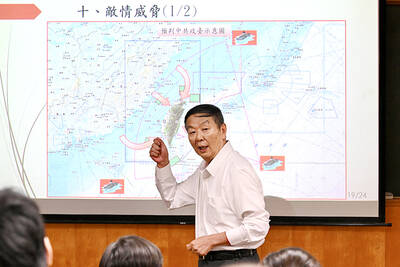
RETHINK? The defense ministry and Navy Command Headquarters could take over the indigenous submarine project and change its production timeline, a source said Admiral Huang Shu-kuang’s (黃曙光) resignation as head of the Indigenous Submarine Program and as a member of the National Security Council could affect the production of submarines, a source said yesterday. Huang in a statement last night said he had decided to resign due to national security concerns while expressing the hope that it would put a stop to political wrangling that only undermines the advancement of the nation’s defense capabilities. Taiwan People’s Party Legislator Vivian Huang (黃珊珊) yesterday said that the admiral, her older brother, felt it was time for him to step down and that he had completed what he

Taiwan has experienced its most significant improvement in the QS World University Rankings by Subject, data provided on Sunday by international higher education analyst Quacquarelli Symonds (QS) showed. Compared with last year’s edition of the rankings, which measure academic excellence and influence, Taiwanese universities made great improvements in the H Index metric, which evaluates research productivity and its impact, with a notable 30 percent increase overall, QS said. Taiwanese universities also made notable progress in the Citations per Paper metric, which measures the impact of research, achieving a 13 percent increase. Taiwanese universities gained 10 percent in Academic Reputation, but declined 18 percent
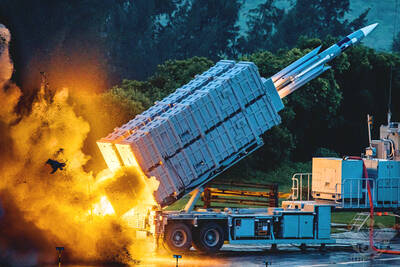
UNDER DISCUSSION: The combatant command would integrate fast attack boat and anti-ship missile groups to defend waters closest to the coastline, a source said The military could establish a new combatant command as early as 2026, which would be tasked with defending Taiwan’s territorial waters 24 nautical miles (44.4km) from the nation’s coastline, a source familiar with the matter said yesterday. The new command, which would fall under the Naval Command Headquarters, would be led by a vice admiral and integrate existing fast attack boat and anti-ship missile groups, along with the Naval Maritime Surveillance and Reconnaissance Command, said the source, who asked to remain anonymous. It could be launched by 2026, but details are being discussed and no final timetable has been announced, the source
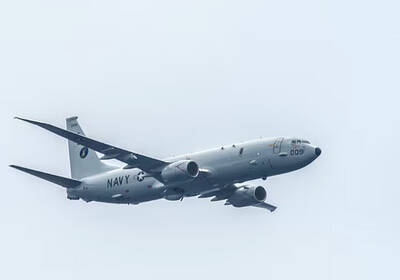
CHINA REACTS: The patrol and reconnaissance plane ‘transited the Taiwan Strait in international airspace,’ the 7th Fleet said, while Taipei said it saw nothing unusual The US 7th Fleet yesterday said that a US Navy P-8A Poseidon flew through the Taiwan Strait, a day after US and Chinese defense heads held their first talks since November 2022 in an effort to reduce regional tensions. The patrol and reconnaissance plane “transited the Taiwan Strait in international airspace,” the 7th Fleet said in a news release. “By operating within the Taiwan Strait in accordance with international law, the United States upholds the navigational rights and freedoms of all nations.” In a separate statement, the Ministry of National Defense said that it monitored nearby waters and airspace as the aircraft


 RSS
RSS