


China's red-hot stock markets soared to record highs this week as investors ignored concerns of a speculative bubble that could pop at any time amid fresh efforts to cool share prices.
The benchmark Shanghai Composite Index closed on Friday at 3,074.29 points, rising 4.91 percent in a week when Chinese regulators clamped down with new restrictions on firms investing share sale proceeds and an interest rate hike.
The regulatory actions were part of recent moves aimed at cooling a stock fever that has driven prices ever higher despite the government's repeated attempts to temper the enthusiasm.

PHOTO: EPA
A soaring stock market triggered the launch of 90 new mutual funds in China last year, with a total of 390 billion yuan (US$50 billion) raised, state media reported on Sunday.
"The country experienced a fund frenzy last year as retail investors shifted low-interest bank deposits into the bourses," the Xinhua news agency reported from an industry forum in Beijing.
China now has about 320 mutual funds, with a total of more than 1 trillion yuan under management, according to Xinhua.
The speculative binge has driven equity prices up by more than 150 percent over the last 15 months, with the gains in turn enticing more people, many of them with relatively limited means, to try their luck in stocks.
That exuberance has prompted officials to repeatedly warn that a major bubble has formed and that investors, especially inexperienced retail punters, stand to lose everything if the markets crash.
But investors have continued to sink in fresh funds so as not to miss out on the latest upturn only three weeks after a 9 percent slump in Shanghai sparked turmoil on global exchanges.
"The market is still in an upwards trend, being driven by capital," said Zhang Qi, an analyst with Haitong Securities based in Shanghai, who estimated that 100,000 new trading accounts were opened last week.
Setting aside any residual nervousness over the biggest single-day fall in 10 years on Feb. 27, investors shrugged off the central bank's decision to raise interest rates a week ago.
Rates
The central bank's hike in key rates -- its third in a year -- was the latest in a long campaign to slow the runaway growth in the Chinese economy, which last year expanded 10.7 percent.
The decision by the People's Bank of China came after a slew of economic data showed inflation on the rise, exports bounding ahead and another boom in bank lending.
In most stock markets a rate rise would have helped temper investment as it raises companies' borrowing costs, in turn impacting their profits.
Analysts partly attributed investors' defiance of economic logic to already built-in expectations that the central bank would hike rates.
But they also said the 27-basis point rise on one-year deposits to 2.79 percent and one-year lending to 6.39 percent would not be effective.
"A 27-basis point move is far too small to impact the market," said Shen Jun, an analyst at Shangzhenglian Consulting in Shanghai, adding that most investors had dismissed the possibility of another short-term move.
Appreciation
The rate increase has had the added effect of increasing the pace of the yuan's appreciation.
"The pressure for yuan appreciation will exist for a long time so there is little space for China to use interest rates as a tool," Northeast Securities said in a note to clients.
Investor expectations that the yuan will strengthen against the dollar renews the flow of speculative funds betting on the currency's appreciation, which in turn end up in the stock market.
"Hot money is the main power in the market now," Shen said.
"The risks are accumulating at the same time, but as long as liquidity is excessive, and the expectation toward the yuan appreciation is high, the power of the hot money will overlap the concern of future risks," said Shen.
The yuan ended the week at 7.7273 against the US dollar from a close of 7.7330 a week earlier.
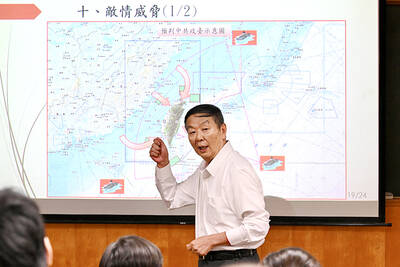
RETHINK? The defense ministry and Navy Command Headquarters could take over the indigenous submarine project and change its production timeline, a source said Admiral Huang Shu-kuang’s (黃曙光) resignation as head of the Indigenous Submarine Program and as a member of the National Security Council could affect the production of submarines, a source said yesterday. Huang in a statement last night said he had decided to resign due to national security concerns while expressing the hope that it would put a stop to political wrangling that only undermines the advancement of the nation’s defense capabilities. Taiwan People’s Party Legislator Vivian Huang (黃珊珊) yesterday said that the admiral, her older brother, felt it was time for him to step down and that he had completed what he
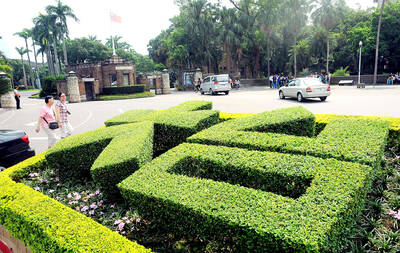
Taiwan has experienced its most significant improvement in the QS World University Rankings by Subject, data provided on Sunday by international higher education analyst Quacquarelli Symonds (QS) showed. Compared with last year’s edition of the rankings, which measure academic excellence and influence, Taiwanese universities made great improvements in the H Index metric, which evaluates research productivity and its impact, with a notable 30 percent increase overall, QS said. Taiwanese universities also made notable progress in the Citations per Paper metric, which measures the impact of research, achieving a 13 percent increase. Taiwanese universities gained 10 percent in Academic Reputation, but declined 18 percent

UNDER DISCUSSION: The combatant command would integrate fast attack boat and anti-ship missile groups to defend waters closest to the coastline, a source said The military could establish a new combatant command as early as 2026, which would be tasked with defending Taiwan’s territorial waters 24 nautical miles (44.4km) from the nation’s coastline, a source familiar with the matter said yesterday. The new command, which would fall under the Naval Command Headquarters, would be led by a vice admiral and integrate existing fast attack boat and anti-ship missile groups, along with the Naval Maritime Surveillance and Reconnaissance Command, said the source, who asked to remain anonymous. It could be launched by 2026, but details are being discussed and no final timetable has been announced, the source
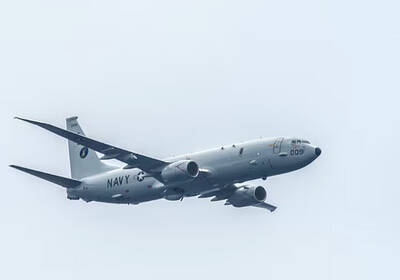
CHINA REACTS: The patrol and reconnaissance plane ‘transited the Taiwan Strait in international airspace,’ the 7th Fleet said, while Taipei said it saw nothing unusual The US 7th Fleet yesterday said that a US Navy P-8A Poseidon flew through the Taiwan Strait, a day after US and Chinese defense heads held their first talks since November 2022 in an effort to reduce regional tensions. The patrol and reconnaissance plane “transited the Taiwan Strait in international airspace,” the 7th Fleet said in a news release. “By operating within the Taiwan Strait in accordance with international law, the United States upholds the navigational rights and freedoms of all nations.” In a separate statement, the Ministry of National Defense said that it monitored nearby waters and airspace as the aircraft


 RSS
RSS