


Latin America's fixation with World Cup soccer over the next month is likely to hit volumes in regional financial markets, but opinions differ on whether it will cool the volatility that has rocked emerging markets.
With Brazil markets closing early on game days, Argentina's stock market bringing in a giant TV screen for matches investors' attention could drift unless global markets tremble, analysts said.
"Basically we see lower volumes on game days, especially when a country's [team] is playing but also throughout the tournament," said Clyde Wardle, HSBC emerging markets analyst.

PHOTO: EPA
"It's likely to translate into lower volatility but we could see some quiet spikes, that is you could see large movement but without a large amount of market noise," he said.
Of the 32 teams in the tournament that opened on Friday in Germany, six are from Latin America.
These include Brazil, Mexico and Argentina -- the region's biggest economies -- which have seen wide swings in the prices of their stocks, bonds and currencies recently.
The Brazilian real in the past month staged its biggest one-day gain and biggest one-day fall in four years, each more than 4 percent moves, as emerging markets globally were roiled by rising interest rates in the US, Europe and Asia.
The question is whether the distraction of the World Cup will calm the financial turbulence.
Brazil appears to be the only country which closes its markets early for World Cup games on trading days, scheduled so far for tomorrow and Thursday June 22.
Argentina also has matches during trading sessions, including this Friday and Wednesday June 21.
The World Bank, in a special World Cup feature posted with a link on its Web site, intoned, "Studies suggest that success or failure in football [or soccer] may affect a country's economy."
"I have no doubts at all that trading volume will dry out when Brazil and Argentina play, but I don't think this is likely to impact the market trend," said emerging market analyst Ricardo Amorim of West LB.
"What has driven volatility up in Latin American markets are equity markets globally and they're likely to remain in the driver's seat in upcoming weeks," he said. "Thus I don't think the World Cup will matter much in that sense."
Analysts note an increasing correlation between US and European stock markets and Latin American emerging market assets, as some investors tend to sell emerging markets as a group in times of risk aversion.
The World Cup could make buyers for bonds scarce in Latin America, notes IDEAglobal's emerging markets analyst Enrique Alvarez.
"All types of participation from south of the [US] border could dry up," he wrote, "as has been the norm in the market for the last three World Cups."
Meanwhile, new research, shows that equity prices fall by almost half of 1 percent when a team is knocked out of the World Cup.
After surveying more than 1,000 World Cup games, academics Alex Edmans, Diego Garcia and Oyvind Norli found that winning a match has little impact on share prices back home but losing causes an attack of the doldrums among investors.
The more important the match, the larger the negative effect the next day, according to the research, which is about to be published in the journal Behavioral Finance. On average, share prices drop by 0.1 percent when a team loses a World Cup qualifier, but 0.38 percent after a group game, and 0.49 percent after a knockout match.
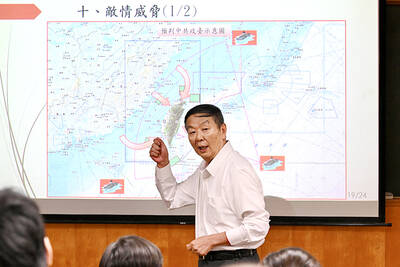
RETHINK? The defense ministry and Navy Command Headquarters could take over the indigenous submarine project and change its production timeline, a source said Admiral Huang Shu-kuang’s (黃曙光) resignation as head of the Indigenous Submarine Program and as a member of the National Security Council could affect the production of submarines, a source said yesterday. Huang in a statement last night said he had decided to resign due to national security concerns while expressing the hope that it would put a stop to political wrangling that only undermines the advancement of the nation’s defense capabilities. Taiwan People’s Party Legislator Vivian Huang (黃珊珊) yesterday said that the admiral, her older brother, felt it was time for him to step down and that he had completed what he
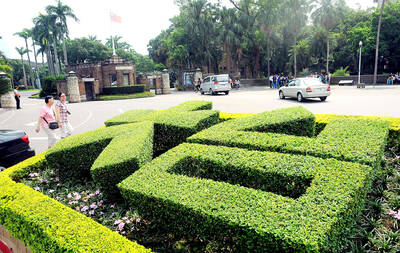
Taiwan has experienced its most significant improvement in the QS World University Rankings by Subject, data provided on Sunday by international higher education analyst Quacquarelli Symonds (QS) showed. Compared with last year’s edition of the rankings, which measure academic excellence and influence, Taiwanese universities made great improvements in the H Index metric, which evaluates research productivity and its impact, with a notable 30 percent increase overall, QS said. Taiwanese universities also made notable progress in the Citations per Paper metric, which measures the impact of research, achieving a 13 percent increase. Taiwanese universities gained 10 percent in Academic Reputation, but declined 18 percent
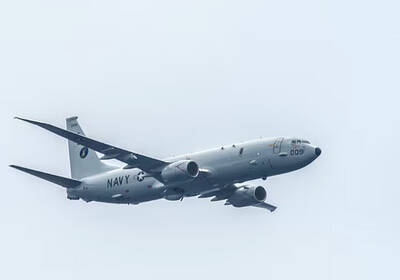
CHINA REACTS: The patrol and reconnaissance plane ‘transited the Taiwan Strait in international airspace,’ the 7th Fleet said, while Taipei said it saw nothing unusual The US 7th Fleet yesterday said that a US Navy P-8A Poseidon flew through the Taiwan Strait, a day after US and Chinese defense heads held their first talks since November 2022 in an effort to reduce regional tensions. The patrol and reconnaissance plane “transited the Taiwan Strait in international airspace,” the 7th Fleet said in a news release. “By operating within the Taiwan Strait in accordance with international law, the United States upholds the navigational rights and freedoms of all nations.” In a separate statement, the Ministry of National Defense said that it monitored nearby waters and airspace as the aircraft
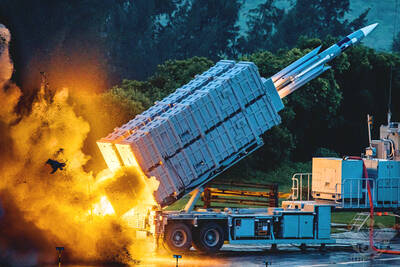
UNDER DISCUSSION: The combatant command would integrate fast attack boat and anti-ship missile groups to defend waters closest to the coastline, a source said The military could establish a new combatant command as early as 2026, which would be tasked with defending Taiwan’s territorial waters 24 nautical miles (44.4km) from the nation’s coastline, a source familiar with the matter said yesterday. The new command, which would fall under the Naval Command Headquarters, would be led by a vice admiral and integrate existing fast attack boat and anti-ship missile groups, along with the Naval Maritime Surveillance and Reconnaissance Command, said the source, who asked to remain anonymous. It could be launched by 2026, but details are being discussed and no final timetable has been announced, the source


 RSS
RSS