


If economic logic was all that counted, trade ministers could spare themselves a trip to the Gulf this week to talk about lowering barriers to global commerce.
Although the elixir of free trade works best if mixed with policies that promote economic stability, competition and good governance, it is a truism that permitting more imports translates over time into impressive income gains.
In a study prepared for the Nov. 9 to 13 meeting of the World Trade Organization (WTO) in Doha, Qatar, the World Bank calculated that coordinated steps to scrap trade barriers and promote allied reforms could lift an extra 320 million people out of poverty by 2015 by expanding global income by US$2.8 trillion.
"Trade and investment liberalization are part of the basics of getting things right," said Razeen Sally, a senior lecturer in international political economy at the London School of Economics (LSE).
"As a broad policy maxim, it really should be up there in lights because the overwhelming evidence ... and the weight of economic history do show that opening to trade as part of a wider combination of policies delivers much higher growth. And that in turn makes serious inroads into poverty reduction," Sally said.
Apart from the longer-term benefits, policy makers say there is a pressing need to agree in Qatar on the agenda of new trade talks in order to shore up confidence and fend off demands for import curbs spawned by a rare synchronized slowdown in the global economy.
After a 13.3 percent advance last year, growth in global trade is set to slow to a crawl of just 1 percent this year -- a record deceleration -- as import demand in the US, Europe and Japan drops hard, according to the World Bank.
"The biggest danger right now is that economic weakness will generate protectionist pressures, as it has in previous recessions," said Peter Sutherland, European chairman of investment bank Goldman Sachs.
Sutherland, who was the WTO's first director-general, noted that the US authorities were due to rule soon on remedies to shield the US steel industry from cut-price imports. A ruling that led to broad sanctions against other producers would undoubtedly sour the global trading environment, Sutherland said. "The launch of a trade round should have the effect of dampening pressures for protection -- or, at least, of making governments think twice before responding positively to those pressures," he wrote in Goldman's Global Economics Weekly.
A related danger is that failure in Qatar would further dent confidence in the multilateral trading system and the WTO itself, which has still not recovered from the collapse of an earlier agenda-setting conference in Seattle in December 1999.
This is especially the case because the sheer length of a trade-negotiating cycle -- the last one, the Uruguay Round, lasted seven years -- makes quick regional and bilateral deals attractive to businessmen working to ever-shorter product cycles.
"There is a perception that the business community is less engaged in supporting multilateral negotiations than it was in the lead-up to the Uruguay Round," Ken Heydon of the Organization for Economic Cooperation and Development's trade directorate wrote in the OECD Observer, an in-house magazine.
Mari Pangestu of Indonesia's Center for Strategic and International Studies said the steel stand-off, Japanese curbs on some Chinese farm imports and a spate of bilateral trade pacts showed the multilateral system was under strain even before the Sept. 11 attacks on the US deepened the global downturn.
"There was already great concern that if Doha failed to give momentum to multilateralism, countries would veer more towards regional trade agreements," she said.
"If it is considered a failure, it will send a very bad signal for confidence."
Japan is finalizing its first bilateral free trade agreement, with Singapore, and US Trade Representative Robert Zoellick served notice last week that, if the WTO falters, the US will turn to regional and country-by-country alternatives to trade liberalization.
But Zoellick said Washington very much preferred to launch global negotiations to help build on the 17-fold increase in world trade over the past 50 years overseen by the WTO's predecessor organization, the General Agreement on Tariffs and Trade.
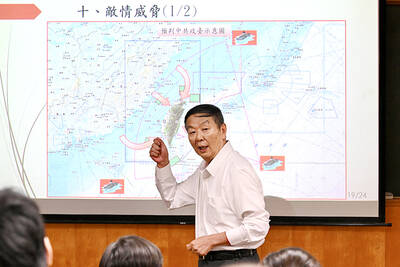
RETHINK? The defense ministry and Navy Command Headquarters could take over the indigenous submarine project and change its production timeline, a source said Admiral Huang Shu-kuang’s (黃曙光) resignation as head of the Indigenous Submarine Program and as a member of the National Security Council could affect the production of submarines, a source said yesterday. Huang in a statement last night said he had decided to resign due to national security concerns while expressing the hope that it would put a stop to political wrangling that only undermines the advancement of the nation’s defense capabilities. Taiwan People’s Party Legislator Vivian Huang (黃珊珊) yesterday said that the admiral, her older brother, felt it was time for him to step down and that he had completed what he
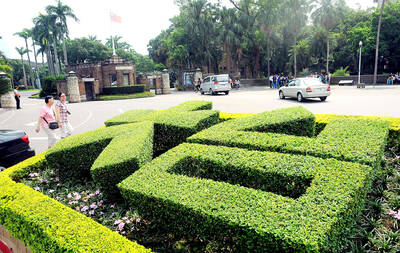
Taiwan has experienced its most significant improvement in the QS World University Rankings by Subject, data provided on Sunday by international higher education analyst Quacquarelli Symonds (QS) showed. Compared with last year’s edition of the rankings, which measure academic excellence and influence, Taiwanese universities made great improvements in the H Index metric, which evaluates research productivity and its impact, with a notable 30 percent increase overall, QS said. Taiwanese universities also made notable progress in the Citations per Paper metric, which measures the impact of research, achieving a 13 percent increase. Taiwanese universities gained 10 percent in Academic Reputation, but declined 18 percent
UNDER DISCUSSION: The combatant command would integrate fast attack boat and anti-ship missile groups to defend waters closest to the coastline, a source said The military could establish a new combatant command as early as 2026, which would be tasked with defending Taiwan’s territorial waters 24 nautical miles (44.4km) from the nation’s coastline, a source familiar with the matter said yesterday. The new command, which would fall under the Naval Command Headquarters, would be led by a vice admiral and integrate existing fast attack boat and anti-ship missile groups, along with the Naval Maritime Surveillance and Reconnaissance Command, said the source, who asked to remain anonymous. It could be launched by 2026, but details are being discussed and no final timetable has been announced, the source
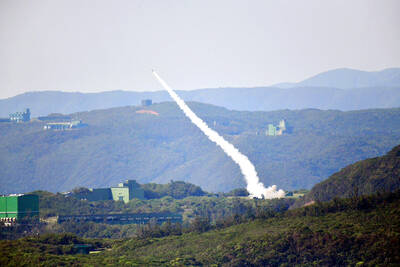
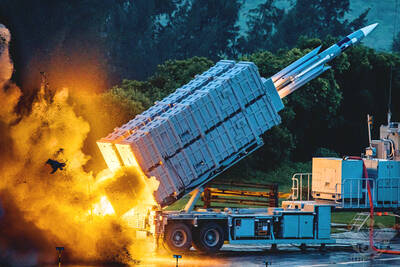
SHOT IN THE ARM: The new system can be integrated with Avenger and Stinger missiles to bolster regional air defense capabilities, a defense ministry report said Domestically developed Land Sword II (陸射劍二) missiles were successfully launched and hit target drones during a live-fire exercise at the Jiupeng Military Base in Pingtung County yesterday. The missiles, developed by the Chungshan Institute of Science and Technology (CSIST), were originally scheduled to launch on Tuesday last week, after the Tomb Sweeping Day holiday long weekend, but were postponed to yesterday due to weather conditions. Local residents and military enthusiasts gathered outside the base to watch the missile tests, with the first one launching at 9:10am. The Land Sword II system, which is derived from the Sky Sword II (天劍二) series, was turned


 RSS
RSS