


The mobile phone industry’s biggest event opened yesterday as it begins to emerge from the global economic crisis with the promise of new devices that will revolutionize the way people communicate.
South Korean mobile phone maker Samsung and Swedish-Japanese rival Sony Ericsson started the Mobile World Congress in Barcelona, Spain, a day early, unveiling new smartphones late on Sunday as they seek to boost their shares of this fast-growing segment of the industry.
But all eyes were to be on Microsoft yesterday when its chief executive Steve Ballmer was to host a press conference amid speculation that the US software giant will unveil its new Windows operating system for smartphones.
Attendance at the congress is expected to be about the same as last year but lower than the 55,000 people who attended the event in February 2008, prior to the crisis, said GSMA, the industry group that organizes the congress.
More than 47,000 people and 1,300 exhibitors are expected to attend the event this year, it said.
The Mobile World Congress comes as the industry begins to navigate away from a difficult period for the sector.
Global shipments of handsets had been falling every quarter since the third quarter of 2008, when the global financial crisis erupted, according to market research firm Strategy Analytics.
Shipments surged by 10 percent in the last three months of last year, “signaling an end to the industry’s year-long recession,” Strategy Analytics said in a Jan. 29 report.
Smartphones alone grew even faster in the fourth quarter, jumping 30 percent.
Sony Ericsson and Samsung, the world’s second-biggest mobile phone maker behind Nokia, have small slices of the smartphone segment, which is dominated by Nokia, iPhone-maker Apple and BlackBerry-maker Research in Motion.
Samsung unveiled its new touch-screen handset, the Samsung Wave, on Sunday, as part of its plans to triple its smartphone sales to 18 million units this year.
“This is a new era, the smartphone era,” Samsung’s mobile-business head J.K. Shin said at a launch party for the Wave.
“Samsung is committed to making the smartphone era available for everyone. We are committed to making the smartphone era a true democracy for billions of people on all continents in all corners of the world,” Shin said.
Meanwhile, Sony Ericsson unveiled three new smartphones as it seeks to overcome a “turbulent” year, company chief Bert Nordberg said.
While handsets have grabbed the headlines in Barcelona in the past, analysts say this year’s event might focus more on operating systems such as Google’s Android and applications that can be downloaded into smartphones.
“I think it’s probably going to be a slightly different show in terms of the focus, as far as historically it has been a lot about hardware,” said Carolina Milanesi, an analyst at information technology research firm Gartner.
“In the last couple of years you started to see more around services and definitely this year applications will have a huge part in the theme,” she said.
The newest, and less traditional, members of the mobile phone industry are also expected to make big headlines.
Google chief executive Eric Schmidt will attend the conference for the first time and deliver an address today that will be broadcast live online.
The Internet giant has made a splash in the mobile phone industry with its Android operating system, launched in 2007 in a direct challenge to Microsoft.
Google also entered the hardware business last month when it launched its own smartphone, Nexus One.
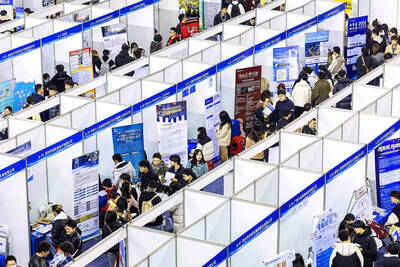
Stephen Garrett, a 27-year-old graduate student, always thought he would study in China, but first the country’s restrictive COVID-19 policies made it nearly impossible and now he has other concerns. The cost is one deterrent, but Garrett is more worried about restrictions on academic freedom and the personal risk of being stranded in China. He is not alone. Only about 700 American students are studying at Chinese universities, down from a peak of nearly 25,000 a decade ago, while there are nearly 300,000 Chinese students at US schools. Some young Americans are discouraged from investing their time in China by what they see
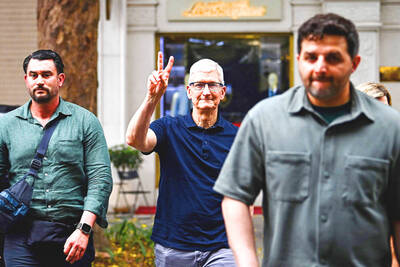
MAJOR DROP: CEO Tim Cook, who is visiting Hanoi, pledged the firm was committed to Vietnam after its smartphone shipments declined 9.6% annually in the first quarter Apple Inc yesterday said it would increase spending on suppliers in Vietnam, a key production hub, as CEO Tim Cook arrived in the country for a two-day visit. The iPhone maker announced the news in a statement on its Web site, but gave no details of how much it would spend or where the money would go. Cook is expected to meet programmers, content creators and students during his visit, online newspaper VnExpress reported. The visit comes as US President Joe Biden’s administration seeks to ramp up Vietnam’s role in the global tech supply chain to reduce the US’ dependence on China. Images on
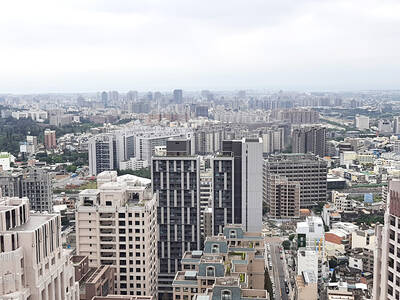
New apartments in Taiwan’s major cities are getting smaller, while old apartments are increasingly occupied by older people, many of whom live alone, government data showed. The phenomenon has to do with sharpening unaffordable property prices and an aging population, property brokers said. Apartments with one bedroom that are two years old or older have gained a noticeable presence in the nation’s six special municipalities as well as Hsinchu county and city in the past five years, Evertrust Rehouse Co (永慶房產集團) found, citing data from the government’s real-price transaction platform. In Taipei, apartments with one bedroom accounted for 19 percent of deals last
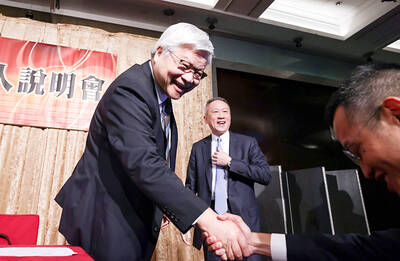
US CONSCULTANT: The US Department of Commerce’s Ursula Burns is a rarely seen US government consultant to be put forward to sit on the board, nominated as an independent director Taiwan Semiconductor Manufacturing Co (TSMC, 台積電), the world’s largest contract chipmaker, yesterday nominated 10 candidates for its new board of directors, including Ursula Burns from the US Department of Commerce. It is rare that TSMC has nominated a US government consultant to sit on its board. Burns was nominated as one of seven independent directors. She is vice chair of the department’s Advisory Council on Supply Chain Competitiveness. Burns is to stand for election at TSMC’s annual shareholders’ meeting on June 4 along with the rest of the candidates. TSMC chairman Mark Liu (劉德音) was not on the list after in December last


 RSS
RSS