


Although Taiwan ranked second in the world for medical services in a 2000 report by the Economist Intelligent Unit, inbound medical tourism remains a fledgling industry, lagging behind South Korea, Singapore and Thailand, which have promoted the sector for more than a decade.
Given the efforts to target visitors from Japan and China — two of Taiwan’s biggest sources of tourists — industry insiders say medical tourism could do more than bring in revenue, strengthening Taiwan’s prominence in the field of medicine as well.
Taiwan Medical Tourism Development Association (TMTDA, 台灣觀光醫療發展協會) head Allen Lee (李昆侖) said that if just 5 percent of an estimated 2.2 million Japanese and Chinese tourists over a one-year period spent NT$10,000 (US$305) each on having physicals in Taiwan, medical centers would earn NT$1.1 billion in income.
“Our share of the pie could be even bigger, given that the sector’s output is US$250 billion globally,” Lee said.
The niche market has become increasingly lucrative, with experts estimating that medical tourism could earn India as much as US$2.2 billion per year by 2012.
Singapore has set a goal of attracting 1 million “medical tourists” per year by 2012 and generating US$3 billion in revenue, or 1.6 percent of GDP. Thailand, meanwhile, has established itself as a regional center for spa treatments.
Lee said Taiwan was particularly well-positioned to vie for medical tourists from China, given the cultural proximity, common language and popularity of its tourist attractions.
A 40-year-old Beijing visitor surnamed Hsu (�?greed.
Hsu and 16 other members of a 32-person tour group from China’s capital received positron emission tomography (PET) examinations at Shin Kong Wu Ho-Su Memorial Hospital (新光醫院) last Monday at a cost of 6,000 yuan (US$878) each.
“The hospital’s services are very good and its equipment is pretty new,” he told the Taipei Times after undergoing the high-end health check.
Hsu said he had heard good things about Taiwan’s medical services by word of mouth after a group from Guangzhou, the first to visit Taiwan for medical tourism, were very satisfied with their experience in June.
The same PET check costs between 10,000 yuan and 12,000 yuan in China, said Beijing MJ Health Screening Co (美兆健檢中心), the organizer of the tour group.
The Beijing group, which wrapped up its six-day trip on Friday, was the second Chinese tour group to visit Taiwan for a combination of health checks, spa treatments and sightseeing since June.
Given Taiwan’s medical expertise and services, many middle and high-income Beijing residents should be interested in visiting Taiwan, despite the fact that hospitals and clinics in their home city offer an array of state-of-the-art medical equipment, said Li Ping (李萍), the administrator of Beijing MJ Health Screening, which has 30,000 members in Beijing alone.
“We look at Taiwan’s quality of medical services,” she said. “A price range of between 6,000 yuan and 8,000 yuan will be very acceptable for Chinese who want to get health checks.”
Li said Chinese are also impressed by the National Health Insurance, under which citizens and residents are covered by the kind of social safety net that Chinese authorities are considering implementing.
Eyeing the market’s potential, Shin Kong Hospital has signed an agreement with Shin Kong and HNA Life Insurance Co (新光海航人壽) — a 50-50 joint venture between China’s Hainan Airlines Co (海航集團) and Taiwan’s Shin Kong Life Insurance Co (新光人壽) — and Beijing-based MJ Health Screening and SweetMe Hotspring Resort (水美溫泉會館) to encourage policyholders and members of these companies to visit for medical tourism.
The business is still in its trial period, Beijing MJ Health Screening president Jack Tai (戴明哲) said, adding that three more medical tourist groups from Beijing would travel to Taiwan in the next three months.
“In future, we hope there will be a group of more than 30 members visiting Taiwan each month,” Tai said.
Leu Jyh-gang (呂至剛), chief of Shin Kong Hospital’s department of health management, said he was confident that Taiwan could tap into increasing health demand in China.
He said Taiwan had 30 PET scanners nationwide, two of which are owned by Shin Kong and cost around NT$60 million each. Beijing has four scanners out of a total of 40 in all of China.
Coming to Taiwan would mean easier access and less waiting time for potential patients, while Taiwanese prices are lower, he said.
More importantly, Leu said, Taiwanese doctors have greater expertise in reading scan results, which are pointless if misinterpreted.
Shin Kong Hospital’s scanners have helped detect cancer in more than 300 patients, or 1.3 percent of its total 28,000 patients since 2001, “all of whom are still alive as a result of early [detection and] treatment,” Leu said.
Moreover, the hospital reserves 20 scan slots per month for patients from abroad.
In addition to PET and other health checks, Taiwan’s medical services should be able to outperform other regional rivals in attracting tourists seeking micro cosmetic surgery, liver transplants, heart surgery and artificial joint replacements, said Mark Lee (李孟鴻), director of Jen Chi Hospital’s (仁濟醫院) dialysis center, which has been supporting tour trips by visiting dialysis patients.
In the case of Japanese tourists, dental implant surgery or Chinese medicine packaged with hot-spring treatments for a reasonable price are very attractive, Allen Lee said.
But local hospitals are lagging behind in terms of international marketing and resources to develop the industry, Mark Lee said. This, combined with tight regulations, poses a hurdle to the medical tourism sector, he said.
As the medical services sector is considered non-profit, government regulations bar hospitals from advertising their prices to attract foreign clients.
To appeal to potential medical tourists abroad, authorities need to loosen restrictions on advertising, Mark Lee said, adding that Taiwan must also simplify the visa application process for medical tourists.
Chen Shee-han (陳興漢), director of the international health center at Taoyuan-based Min-Sheng Healthcare Hospital (敏盛醫療), said hospitals were sending mixed signals by promoting medical services abroad without making the competitiveness of their prices known.
Min-Sheng is the first Joint Commission International accredited hospital in Taiwan, specializing in knee replacements. The procedure costs approximately one-fifth of the price in the US.

IN THE AIR: While most companies said they were committed to North American operations, some added that production and costs would depend on the outcome of a US trade probe Leading local contract electronics makers Wistron Corp (緯創), Quanta Computer Inc (廣達), Inventec Corp (英業達) and Compal Electronics Inc (仁寶) are to maintain their North American expansion plans, despite Washington’s 20 percent tariff on Taiwanese goods. Wistron said it has long maintained a presence in the US, while distributing production across Taiwan, North America, Southeast Asia and Europe. The company is in talks with customers to align capacity with their site preferences, a company official told the Taipei Times by telephone on Friday. The company is still in talks with clients over who would bear the tariff costs, with the outcome pending further
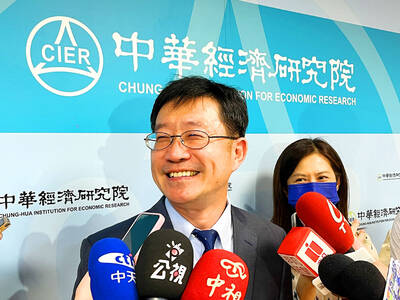
WEAKER ACTIVITY: The sharpest deterioration was seen in the electronics and optical components sector, with the production index falling 13.2 points to 44.5 Taiwan’s manufacturing sector last month contracted for a second consecutive month, with the purchasing managers’ index (PMI) slipping to 48, reflecting ongoing caution over trade uncertainties, the Chung-Hua Institution for Economic Research (CIER, 中華經濟研究院) said yesterday. The decline reflects growing caution among companies amid uncertainty surrounding US tariffs, semiconductor duties and automotive import levies, and it is also likely linked to fading front-loading activity, CIER president Lien Hsien-ming (連賢明) said. “Some clients have started shifting orders to Southeast Asian countries where tariff regimes are already clear,” Lien told a news conference. Firms across the supply chain are also lowering stock levels to mitigate
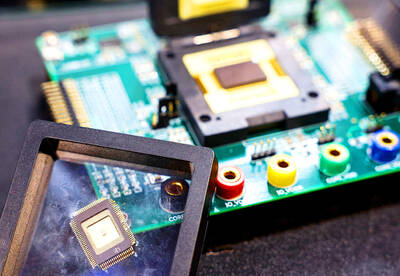
NEGOTIATIONS: Semiconductors play an outsized role in Taiwan’s industrial and economic development and are a major driver of the Taiwan-US trade imbalance With US President Donald Trump threatening to impose tariffs on semiconductors, Taiwan is expected to face a significant challenge, as information and communications technology (ICT) products account for more than 70 percent of its exports to the US, Chung-Hua Institution for Economic Research (CIER, 中華經濟研究院) president Lien Hsien-ming (連賢明) said on Friday. Compared with other countries, semiconductors play a disproportionately large role in Taiwan’s industrial and economic development, Lien said. As the sixth-largest contributor to the US trade deficit, Taiwan recorded a US$73.9 billion trade surplus with the US last year — up from US$47.8 billion in 2023 — driven by strong
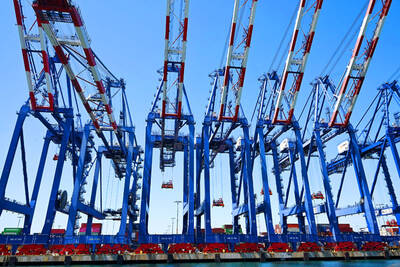
RESHAPING COMMERCE: Major industrialized economies accepted 15 percent duties on their products, while charges on items from Mexico, Canada and China are even bigger US President Donald Trump has unveiled a slew of new tariffs that boosted the average US rate on goods from across the world, forging ahead with his turbulent effort to reshape international commerce. The baseline rates for many trading partners remain unchanged at 10 percent from the duties Trump imposed in April, easing the worst fears of investors after the president had previously said they could double. Yet his move to raise tariffs on some Canadian goods to 35 percent threatens to inject fresh tensions into an already strained relationship, while nations such as Switzerland and New Zealand also saw increased


 RSS
RSS