


The freeze in private investment, consistently cited as the main drag on the nation’s economy this year, may prove less dismal in the second half after major domestic high-tech firms announced plans to raise capital spending, economists said yesterday.
The Directorate-General of Budget, Accounting and Statistics (DGBAS) forecast in May that private investment would contract 29.02 percent this year, pulling down GDP by 3.7 percentage points, while the economy was predicted to shrink 4.25 percent.
The gauge is expected to show modest improvement when the statistics agency revises major economic data around Aug. 20.
Jack Huang (黃蔭基), head of research at SinoPac Financial Holdings Co (永豐金控), said he spotted signs of thawing in private investment and his company would adjust the reading upward in one or two weeks.
Taiwan Semiconductor Manufacturing Co (TSMC, 台積電), the world’s biggest contract chipmaker, said on Wednesday it would boost its capital expenditure 53 percent for the year to US$2.3 billion to meet stronger-than-expected demand.
UMC
A day earlier, United Microelectronics Corp (UMC 聯電), the world’s second-largest contract chipmaker, said it would raise capital spending from US$400 million to US$500 million for the year.
Huang said the semiconductor sector was likely to see 20 percent growth this quarter from the second quarter, with the pickup in chipmaking momentum trickling down to downstream firms later.
“The improvement is slow but secure for the rest of the year with private investment data likely to turn positive in the final quarter,” Huang said by telephone.
Private investment is estimated to fall 29.05 percent this quarter after plunging 41 percent in the first three months and may have contracted another 34.4 percent last quarter, the DGBAS said. It put the decline for the fourth quarter at 6.52 percent.
Johnny Chen (陳擎宏), deputy manager of the economics and industry research department at First Commercial Bank (第一銀行), said the real figures would turn out better, when DGBAS releases the numbers later this month.
BRIGHTER OUTLOOK
Chen attributed the rising capital expenditure to brighter outlook for this quarter, but said it was unclear if the momentum could last into the fourth quarter as the world economy remained weak.
Chen said the economy at home and abroad was in “a jobless recovery,” and firms were ambivalent about expanding.
“Companies intent on growing have to make moves months ahead,” Chen said. “They are doing so uneasily because rising unemployment may dampen demand.”
Tony Phoo (符銘財), chief economist at Standard Chartered Bank, echoed the mixed sentiment.
Phoo said the nation’s economic state was slightly ahead of market expectation, but added that restocking has played the main driver. Phoo said demand from the US and Europe have to pick up for the momentum to continue in the fourth quarter.
“Jobless rates there continue to climb, making Christmas orders unpredictable,” Phoo said. “The picture will be clearer in September or October.”
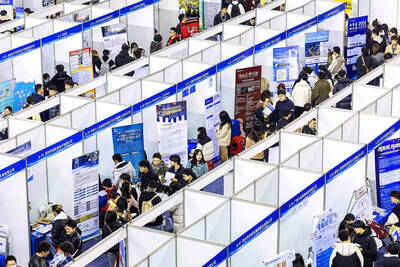
Stephen Garrett, a 27-year-old graduate student, always thought he would study in China, but first the country’s restrictive COVID-19 policies made it nearly impossible and now he has other concerns. The cost is one deterrent, but Garrett is more worried about restrictions on academic freedom and the personal risk of being stranded in China. He is not alone. Only about 700 American students are studying at Chinese universities, down from a peak of nearly 25,000 a decade ago, while there are nearly 300,000 Chinese students at US schools. Some young Americans are discouraged from investing their time in China by what they see

MAJOR DROP: CEO Tim Cook, who is visiting Hanoi, pledged the firm was committed to Vietnam after its smartphone shipments declined 9.6% annually in the first quarter Apple Inc yesterday said it would increase spending on suppliers in Vietnam, a key production hub, as CEO Tim Cook arrived in the country for a two-day visit. The iPhone maker announced the news in a statement on its Web site, but gave no details of how much it would spend or where the money would go. Cook is expected to meet programmers, content creators and students during his visit, online newspaper VnExpress reported. The visit comes as US President Joe Biden’s administration seeks to ramp up Vietnam’s role in the global tech supply chain to reduce the US’ dependence on China. Images on
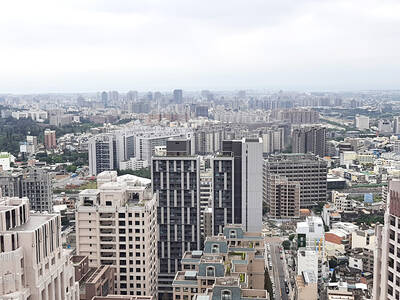
New apartments in Taiwan’s major cities are getting smaller, while old apartments are increasingly occupied by older people, many of whom live alone, government data showed. The phenomenon has to do with sharpening unaffordable property prices and an aging population, property brokers said. Apartments with one bedroom that are two years old or older have gained a noticeable presence in the nation’s six special municipalities as well as Hsinchu county and city in the past five years, Evertrust Rehouse Co (永慶房產集團) found, citing data from the government’s real-price transaction platform. In Taipei, apartments with one bedroom accounted for 19 percent of deals last
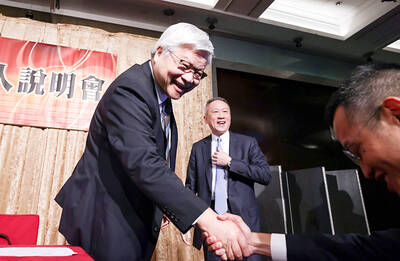
US CONSCULTANT: The US Department of Commerce’s Ursula Burns is a rarely seen US government consultant to be put forward to sit on the board, nominated as an independent director Taiwan Semiconductor Manufacturing Co (TSMC, 台積電), the world’s largest contract chipmaker, yesterday nominated 10 candidates for its new board of directors, including Ursula Burns from the US Department of Commerce. It is rare that TSMC has nominated a US government consultant to sit on its board. Burns was nominated as one of seven independent directors. She is vice chair of the department’s Advisory Council on Supply Chain Competitiveness. Burns is to stand for election at TSMC’s annual shareholders’ meeting on June 4 along with the rest of the candidates. TSMC chairman Mark Liu (劉德音) was not on the list after in December last


 RSS
RSS