


The advanced state of Japan’s mobile-phone system will make it harder for Google Inc to win converts to its Android system, which will be released in the country as early as next month, telecommunications analyst Neil Mawston said.
“Handsets in Japan have been smart for a number of years,” Mawston at Strategy Analytics Ltd said in Milton Keynes, England. “The West is playing catch-up rather than showing anything new.”
Google’s Android, which allows for services such as navigation with street-level views, will run HTC Corp’s (宏達電) Magic handset, due to go on sale in Japan next month or July for as low as ¥25,000 (US$262), said NTT DoCoMo Inc, the country’s biggest mobile-phone operator. It follows Apple Inc’s iPhone in seeking to achieve what global leaders Nokia Oyj and Samsung Electronics Co couldn’t: to challenge Japan’s phone makers.
Nokia, the world’s biggest maker of mobile phones, said on Nov. 27 it was quitting the Japanese mass market. Japan’s top six mobile-phone vendors accounted for 81 percent of handsets sold in the country in the year ended in March, Tokyo-based MM Research Institute Ltd said.
“We expect the HTC Magic to struggle just as the iPhone has,” Mawston said.
In 2001, Japan became the first country to start so-called third-generation (3G) wireless operations commercially, spurring demand for data services such as downloads of videos. The US introduced 3G technology commercially in October 2003.
Google started Android in 2007 to create a free software system for phones. Taiwan’s HTC became the first provider of a handset with Android when it began selling the G1 model in October.
Within three months, US and UK consumers bought more than 1 million G1 phones, HTC said.
“We are aware of some shortfalls in the iPhone’s sales in Japan, so we made quite an effort to localize our phone to fit the market and its language input system,” said David Kou, head of HTC’s sales and marketing in Japan. “We are positive about the sales prospects.”
Japan’s first Google-phone may sell about 100,000 units by year-end, said Suguru Kagawa, a researcher at Tokyo-based Yano Research Institute Ltd. He estimates about 800,000 iPhones were shipped in the country since its introduction in July through March 31.
“Just because it sells overseas doesn’t necessarily mean Japanese consumers will take to it,” said Michito Kimura, a Tokyo-based analyst at researcher IDC.
“It’s unlikely that Android will become an instant hit, but the platform has a lot of potential three to five years down the road,” he said.
Global shipments of smartphones — handsets with computer-like functions such as the iPhone or Research in Motion Ltd’s BlackBerry — will more than double to 449 million units in the five years ending in 2013, El Segundo, California-based researcher ISuppli Corp said.
Smartphones are likely to account for only one in 10 of handsets sold in Japan in the next five years, Yano’s Kagawa said.
“Over the past 10 years, the Japanese mobile-phone business has grown to provide ubiquitous access to the Internet, a coherent payment system and an impressive array of content combined with ease of use,” Kagawa said.
Although Google is popular in Japan, “it’s difficult to see what will drive the sales” of Android phones, he said.
More than 21 million i-mode users paid for Web services at the end of March, DoCoMo company spokeswoman Naoko Minobe said. About 33 million DoCoMo customers can use their phones to pay for train fares and convenience-store purchases, 18 million have access to satellite navigation and more than 16.6 million can watch digital TV, company data showed.
Apple’s iPhone 3G left Japanese users underwhelmed, which may bode ill for Android’s prospects, said Kenji Nishimura, a Tokyo-based analyst at Deutsche Bank AG.
Softbank, which released the iPhone in Japan to a media blitz last July, in February offered the 8 gigabyte model free for customers signing a two-year contract and slashed the 16-gigabyte model’s price 67 percent to attract buyers.
“The iPhone was innovative in the US market because it met a pent-up demand for mobile Internet, while in Japan sending e-mails and surfing the Web on a handset are nothing new,” Nishimura said. “The iPhone’s hardware and content are interesting, but hardly groundbreaking.”
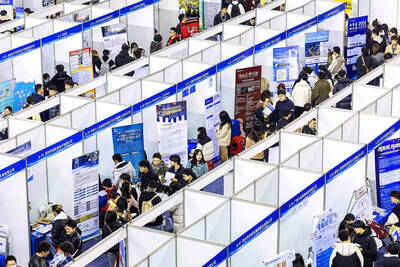
Stephen Garrett, a 27-year-old graduate student, always thought he would study in China, but first the country’s restrictive COVID-19 policies made it nearly impossible and now he has other concerns. The cost is one deterrent, but Garrett is more worried about restrictions on academic freedom and the personal risk of being stranded in China. He is not alone. Only about 700 American students are studying at Chinese universities, down from a peak of nearly 25,000 a decade ago, while there are nearly 300,000 Chinese students at US schools. Some young Americans are discouraged from investing their time in China by what they see
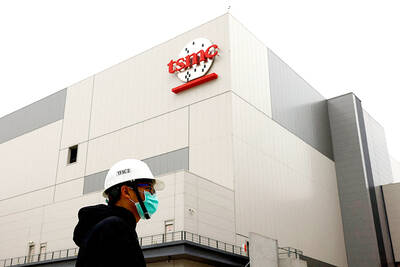
Taiwan Semiconductor Manufacturing Co (TSMC, 台積電), the world’s largest contract chipmaker, yesterday reported record sales for the first quarter, which analysts attributed to solid demand for emerging technologies. Consolidated revenue totaled NT$592.64 billion (US$18.51 billion) in the January-to-March period, up 16.5 percent from a year earlier, but down 5.26 percent from the previous quarter, TSMC said in a statement. The first-quarter revenue beat analysts’ average projection of NT$579.5 billion, Bloomberg News reported. That performance lends weight to expectations that the world’s most valuable chipmaker would return to solid growth this year after weathering a post-COVID-19-pandemic cratering of smartphone and computer sales. TSMC is budgeting
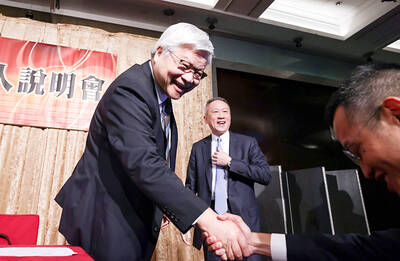
US CONSCULTANT: The US Department of Commerce’s Ursula Burns is a rarely seen US government consultant to be put forward to sit on the board, nominated as an independent director Taiwan Semiconductor Manufacturing Co (TSMC, 台積電), the world’s largest contract chipmaker, yesterday nominated 10 candidates for its new board of directors, including Ursula Burns from the US Department of Commerce. It is rare that TSMC has nominated a US government consultant to sit on its board. Burns was nominated as one of seven independent directors. She is vice chair of the department’s Advisory Council on Supply Chain Competitiveness. Burns is to stand for election at TSMC’s annual shareholders’ meeting on June 4 along with the rest of the candidates. TSMC chairman Mark Liu (劉德音) was not on the list after in December last
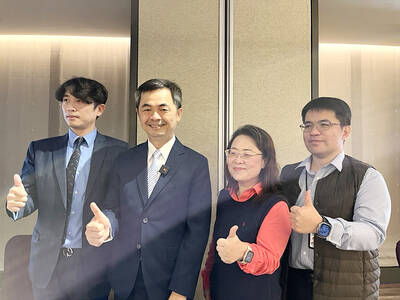
FIRST FORAY: The maker of EUV pods said it plans to begin the construction of the plant later this year, with mass production expected to start next year Gudeng Precision Industrial Co (家登精密), the sole extreme ultraviolet (EUV) pod supplier to Taiwan Semiconductor Manufacturing Co (TSMC, 台積電), plans to build a plant in Japan in an effort to help customers boost supply chain resiliency, it said yesterday. The NT$500 million (US$15.52 million) investment is a response to requests by key customers to build capacity outside Taiwan and China amid escalating geopolitical tensions, it said. The plant would be built in Fukuoka Prefecture’s Kurume, which is about a one-hour drive from TSMC’s fab in Kumamoto Prefecture’s Kikuyo, Gudeng said. Gudeng plans to begin the construction of its first overseas plant later this


 RSS
RSS