


Amid the protracted economic slowdown, many pundits have touted cost cutting, but 40-year-old Michael Lin (林潁穗), vice president of Huwei, Yunlin County-based Shing-Long Towel Industrial Co (興隆毛巾), said that innovation was the key to survival for the nation’s towel industry.
Lin is the brainchild behind the hot-selling Shing-Long “cake towel” — a repackaging and design idea to add value to traditional towels, which has reversed the fate of the once debt-ridden towel company that his parents founded in 1979.
The company’s newly developed “cake towel” business, launched in 2005, has helped quadruple revenues to NT$42 million (US$1.24 million) last year since 2004, when the company incurred a debt of NT$30 million.

PHOTO: JOYCE HUANG, TAIPEI TIMES
After repaying a NT$20 million debt, Lin said he believed the value-added towel business would now be the way forward for the company, although he said his old-fashioned parents still found the cake idea too fancy to sustain.
“I am sure we’re on the right track and if we miss out this time, we won’t have another opportunity,” he said.
Shing-Long is one of the remaining 50 towel companies in Huwei, down from a cluster of more than 200 before 2002, when the government opened the domestic market to low-priced China-made towels, which hurt the nation’s towel manufacturers.
“During that downturn, we managed to see a smaller-than-expected drop in sales of 10 [percent] to 20 percent, while the sales of most of our peers dropped by up to 80 percent,” Lin said.
Only when the government imposed a 204 percent anti-dumping tax on China-made towels in 2006 did domestic towel manufacturers begin to regain market share.
Today, there are about 100 towel manufacturers nationwide with an annual value of NT$5 billion, making up an 80 percent market share in Taiwan, Yunlin Towel Industrial Technology Development Association chairman Chou Ching-yuan (周清源) said.
But because of pricing, the industry has completely lost its export competitiveness, although the quality of towels made in Taiwan are much better than Chinese towels, some of which use the recycled byproducts of polluted medical waste in their cotton, Chou said, adding that his industry used to have a combined export and import value of NT$15 billion before the 1990s.
Despite the high quality of Taiwanese towels, the retail prices of Taiwan-made and China-made towels are about the same, whereas wholesale prices for Chinese towels are almost half those of Taiwanese towels because of the huge discrepancy in cost structures across the Strait.
For example, Lin said that plain-colored China-made towels cost around NT$100 per kilo, half the cost of Taiwan-made towels, which cuts into wholesalers’ profits when both are retailed at around NT$250 per kilogram.
“That is why many sales channels [once] shut Taiwan-made towels out of the market [a few years ago],” Lin said.
Chou said that the entire industry was worried about President Ma Ying-jeou’s (馬英九) plan to sign an economic cooperation framework agreement (ECFA) with China, which would allow the immediate re-entry of China-made towels. However, the industry will still have to face the threat of the re-entry China-made towels in one-and-half years time when the nation’s anti-dumping ban on the industry expires.
“We’re not afraid of competition. It’s the unfair competition that we’re concerned with,” Chou said, urging the government to clarify the trade pact’s contents.
Some Chinese towel makers used to trick consumers into believing their towels were made in Taiwan, which tainted the reputation of Taiwan-made towels because the quality of Chinese towels is mostly flawed, he said.
Several China-based Taiwanese manufacturers, such as Shan Ming Enterprise Co (森鳴實業), also suffered because domestic consumers shied away from products originating from China even though their quality was as good as their local peers, Chou said.
The chairman urged the government to advance contingency measures to protect traditional industries before signing an ECFA.
The government should strike free-trade deals with China on a sector-to-sector basis instead of signing a comprehensive pact so as to ensure that no industries suffer from the acceleration of cross-strait trade normalization, Chou said.
Lin agreed with Chou, saying the government should reinforce the towel industry’s competitiveness.
But he also said signing the trade pact with China was inevitable because the high-tech sector wanted to tap into Chinese markets.
He said he was confident that Shing-Long’s new-found “cake towel” brand would help the company avoid cut-throat price competition that would come with future imports of Chinese towels.
“The beauty of branding is that some of our customers are loyal and ask for no other brand but Shing-Long’s ‘cake towel’ for both its cute look and quality,” Lin said.
Intel Inc, the world’s largest semiconductor company, was one of many businesses that placed orders for tailor-made eight-inch “towel cakes” to give away to its top-tier business partners during its 30th anniversary in 2006. The “towel cake” business has also helped triple the 25-employee company’s profit margin to 15 percent, while creating well-paid jobs.
In comparison, a plain towel with no value-added processing only earns a 5 percent margin.
Lin, a medical laboratory science major, never thought of following in his parents’ footsteps until he took a break from his dot-com career in 2003, which turned out to be a turning point for Shing-Long.
His experience in online marketing and Web site management laid a solid foundation for him to turn Shing-Long around. He came across the cake idea by accident during a family chat and spent a month creating a feasible business plan for the concept, although Japanese cake towels also provided a reference.
He then spent days brainstorming a way to make towels look like sliced cake, Swiss rolls, lollipops, ice cream and a three-layer, 600mm birthday cake out of towels half as tall as a man to put on display.
“I enjoyed the R&D [research and development] process a lot and was deeply touched when customers told me how much they liked our products,” said Lin, who was awarded with seven patents for his products.
But, as the Japanese experience shows, some colleagues worried that the fancy “cake towel” idea might only have a product life cycle of two years, although Lin’s new business has already outlasted that cycle.
The biggest challenge for Lin is to transform his business idea into a profitable business model supported by marketing strategies and the accumulation of technical know-how so as to maintain its leading position while keeping copycats out, advised Vicky Can (甘葳璣), a senior specialist at the department of industrial technology under the Ministry of Economic Affairs.
She lauded Lin’s innovation, saying “many just can’t help but fall in love with these boutique towels.”
However, there was room for improvement because many customers still didn’t know where they could buy the company’s “cake towels,” Can said.
Nevertheless, Lin isn’t rushing toward rapid expansion, although he is thinking ahead and has hammered out three five-year plans.
Even before the current five-year phase ends, he has diversified his products to include animal images such as elephants, rabbits and crocodiles.
By refurbishing a Huwei towel factory into a dessert shop-like tourist attraction in December, Lin kick-started his second five-year plan ahead of schedule while expanding the company’s marketing and retail channels on top of bulk orders from enterprises and existing distribution points.
In the next stage, he will hold talks with neighboring manufacturers, including his hard-headed parents, in the hope of joining forces with them to turn the neighborhood into a towel park.
Like some of the nation’s high-tech parks, the towel park, if realized, will be a powerful manufacturing base and marketing stronghold for the towel industry to upgrade skills and tout both import and export business, he said.
But before that step is taken, Lin is taking time to look after visitors to his factory.
He said he couldn’t have been happier when, in front of his hand-made three-layer cake, an elderly man visiting from Tainan told his group of companions: “Come on, let’s sing Happy Birthday now” as younger women giggled and took photos by his side.
An elderly woman added: “I really want to have a piece of the cake.”
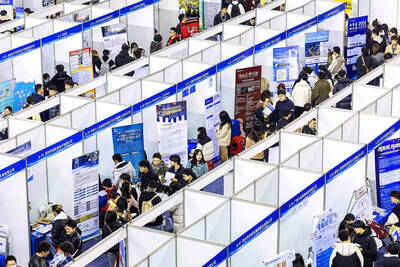
Stephen Garrett, a 27-year-old graduate student, always thought he would study in China, but first the country’s restrictive COVID-19 policies made it nearly impossible and now he has other concerns. The cost is one deterrent, but Garrett is more worried about restrictions on academic freedom and the personal risk of being stranded in China. He is not alone. Only about 700 American students are studying at Chinese universities, down from a peak of nearly 25,000 a decade ago, while there are nearly 300,000 Chinese students at US schools. Some young Americans are discouraged from investing their time in China by what they see
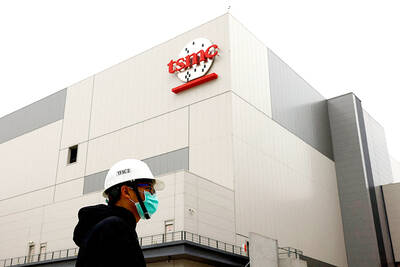
Taiwan Semiconductor Manufacturing Co (TSMC, 台積電), the world’s largest contract chipmaker, yesterday reported record sales for the first quarter, which analysts attributed to solid demand for emerging technologies. Consolidated revenue totaled NT$592.64 billion (US$18.51 billion) in the January-to-March period, up 16.5 percent from a year earlier, but down 5.26 percent from the previous quarter, TSMC said in a statement. The first-quarter revenue beat analysts’ average projection of NT$579.5 billion, Bloomberg News reported. That performance lends weight to expectations that the world’s most valuable chipmaker would return to solid growth this year after weathering a post-COVID-19-pandemic cratering of smartphone and computer sales. TSMC is budgeting
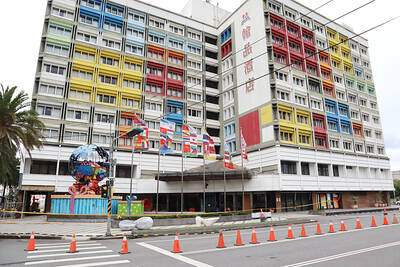
HUALIEN BRANCH: The company had been planning to rebuild the hotel before it was damaged in the quake and vowed to give affected employees the option to transfer The owner of Chateau de Chine Hualien (花蓮翰品酒店) is planning to lay off 86 workers after shutting down the hotel due to damage it sustained in a powerful earthquake on Wednesday last week, the Ministry of Labor said yesterday. The hotel has submitted a layoff report to the Hualien County Government and expects to let 69 workers go this month and 17 next month, the ministry said. LDC Hotels & Resorts Group (雲朗觀光集團), the owner of Chateau de Chine Hualien, confirmed the layoff plan in a statement yesterday. LDC said the hotel has been closed since Wednesday last week when the temblor occurred
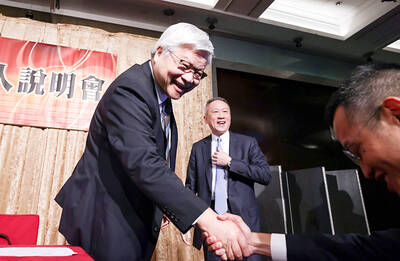
US CONSCULTANT: The US Department of Commerce’s Ursula Burns is a rarely seen US government consultant to be put forward to sit on the board, nominated as an independent director Taiwan Semiconductor Manufacturing Co (TSMC, 台積電), the world’s largest contract chipmaker, yesterday nominated 10 candidates for its new board of directors, including Ursula Burns from the US Department of Commerce. It is rare that TSMC has nominated a US government consultant to sit on its board. Burns was nominated as one of seven independent directors. She is vice chair of the department’s Advisory Council on Supply Chain Competitiveness. Burns is to stand for election at TSMC’s annual shareholders’ meeting on June 4 along with the rest of the candidates. TSMC chairman Mark Liu (劉德音) was not on the list after in December last


 RSS
RSS