


Many classes of bonds are being punished for the problems of subprime mortgage debt, but at least one segment of the market is expected to perform well this year -- long-term, investment-grade municipal bonds.
The US$2.6 trillion municipal bond market is generally considered safe as Treasuries because most local governments make debt payments their top fiscal priority. Even New Orleans met obligations on its bonds after Hurricane Katrina.
Munis, as they are known, are issued by cities, counties, states, water districts, schools and hospitals. They are popular because of their safety premium and because they create funding for favorite local projects. But their biggest selling point probably is many are not taxable.
"If you want to buy a defensible asset that hasn't rallied, munis are the place to be," said RJ Gallo, a portfolio manager at Federated Investment Management Co.
Investors are also buying munis because they are aware that assets backed by bad mortgage debt remain unattractive.
But muni prices have come under pressure of late, as they get tarred with the same brush as riskier credits. Many analysts think munis are unfairly being caught up in the problems of the insurers that back about 40 percent of this market.
Bond insurers like Ambac Financial Group Inc and MBIA Inc remain in limbo as they scramble for the financing that would allow them to operate as usual, while FGIC is considering a split that will separate the healthy municipal bonds it backs from subprime assets.
The market's problems have also contaminated an unlikely niche of the municipal market, auction-rate securities. This US$330 billion short-term muni bond market segment normally performs like clockwork. But this week queasy buyers went on strike, leading to hundreds of auction failures, because troubled insurers back many of these deals.
The auction failures were unprecedented and left short-term financing in disarray at schools, student loan companies and transportation authorities around the country. An auction failure does not throw the securities into default, but it does drive up borrowing rates severely, since the interest rate on such instruments changes every time they are sold -- and soars if they are not sold.
In the last few days, the Port Authority of New York and New Jersey saw its short-term interest rate on some notes increase fivefold to 20 percent after a failed auction, while a Michigan student loan program suspended operations to avoid the higher rate.
Yet throughout the insurers' drama, strong demand persisted for top-quality munis. This is because the selloffs sent prices lower and yields higher, making them a good buy.
Investors' comfort with munis sometimes is enhanced by the fact that they finance local institutions and projects they can track.
About 35 percent of municipal bonds are purchased by investors with direct knowledge of local issuers, Gallo said.

Taiwan Transport and Storage Corp (TTS, 台灣通運倉儲) yesterday unveiled its first electric tractor unit — manufactured by Volvo Trucks — in a ceremony in Taipei, and said the unit would soon be used to transport cement produced by Taiwan Cement Corp (TCC, 台灣水泥). Both TTS and TCC belong to TCC International Holdings Ltd (台泥國際集團). With the electric tractor unit, the Taipei-based cement firm would become the first in Taiwan to use electric vehicles to transport construction materials. TTS chairman Koo Kung-yi (辜公怡), Volvo Trucks vice president of sales and marketing Johan Selven, TCC president Roman Cheng (程耀輝) and Taikoo Motors Group

Among the rows of vibrators, rubber torsos and leather harnesses at a Chinese sex toys exhibition in Shanghai this weekend, the beginnings of an artificial intelligence (AI)-driven shift in the industry quietly pulsed. China manufactures about 70 percent of the world’s sex toys, most of it the “hardware” on display at the fair — whether that be technicolor tentacled dildos or hyper-realistic personalized silicone dolls. Yet smart toys have been rising in popularity for some time. Many major European and US brands already offer tech-enhanced products that can enable long-distance love, monitor well-being and even bring people one step closer to
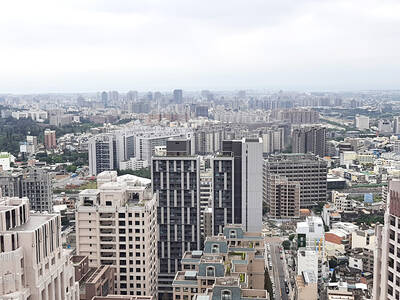
New apartments in Taiwan’s major cities are getting smaller, while old apartments are increasingly occupied by older people, many of whom live alone, government data showed. The phenomenon has to do with sharpening unaffordable property prices and an aging population, property brokers said. Apartments with one bedroom that are two years old or older have gained a noticeable presence in the nation’s six special municipalities as well as Hsinchu county and city in the past five years, Evertrust Rehouse Co (永慶房產集團) found, citing data from the government’s real-price transaction platform. In Taipei, apartments with one bedroom accounted for 19 percent of deals last

RECORD-BREAKING: TSMC’s net profit last quarter beat market expectations by expanding 8.9% and it was the best first-quarter profit in the chipmaker’s history Taiwan Semiconductor Manufacturing Co (TSMC, 台積電), which counts Nvidia Corp as a key customer, yesterday said that artificial intelligence (AI) server chip revenue is set to more than double this year from last year amid rising demand. The chipmaker expects the growth momentum to continue in the next five years with an annual compound growth rate of 50 percent, TSMC chief executive officer C.C. Wei (魏哲家) told investors yesterday. By 2028, AI chips’ contribution to revenue would climb to about 20 percent from a percentage in the low teens, Wei said. “Almost all the AI innovators are working with TSMC to address the


 RSS
RSS