


The world's top finance leaders said on Friday that order was returning to financial markets but warned of lingering instability likely to dampen world economic growth as they turned up the heat on China to ease its currency restrictions.
Representing Britain, Canada, France, Germany, Italy, Japan and the US, G7 ministers convened on the 20th anniversary of the Wall Street stock market crash, and US Treasury Secretary Henry Paulson said today's financial market upheavals were very much on their minds.
"The general feeling around the table was that there are some markets returning to normalcy as risk has been reassessed and repriced," Paulson told a news conference after the talks. "In other markets, that reassessment will take longer."
While the global economy is now in the fifth year of "robust" momentum, "recent financial market turbulence, high oil prices, and weakness in the US housing sector will likely moderate this growth," the ministers and central bankers warned in a statement.
They noted that the functioning of financial markets was improving after having been rocked by a credit crisis, a byproduct of the meltdown in the US subprime -- or high-risk -- mortgage market.
The upbeat assessment however came with a note of caution.
"Strong global fundamentals and well-capitalized financial institutions provide a sound and resilient basis but uneven conditions are likely to persist for some time and will require close monitoring," the ministers said.
The meeting in addition called for action to prevent future turmoil, stressing that market players had to police themselves.
"We expect market participants to address many of the shortcomings that were exposed by recent events," the statement said.
The G7 put forward no proposals of its own to improve market operations, preferring instead to await a report from another body, the Financial Stability Forum, that is expected in April.
The US has come under criticism for allowing loose lending practices to flourish in a climate of low interest rates, which fueled a years-long housing boom, speculation and the emergence of little-understood complex financial instruments backed by mortgages.
The real estate bubble burst last year, triggering loan defaults and foreclosures as well as a credit crunch that spread worldwide, roiling markets in August.
"Our response to recent financial turbulence must be based on full analysis of its causes," the G7 finance chiefs said.
The G7 in its closely scrutinized final communique said it welcomed steps by China to increase the flexibility of the yuan.
But it added: "In view of its rising current account surplus and domestic inflation we stress its need to allow an accelerated appreciation of its effective exchange rate."
The US and several of its trading partners have repeatedly urged China to adopt a more flexible currency regime, contending that the yuan is being held artificially low and thereby giving Chinese exports an unfair advantage on world markets.
Earlier in the day, deputy governor of the Chinese central bank Wu Xiaoling (吳曉靈) insisted that Beijing was indeed moving to reform its exchange rate mechanism.
"Moving the exchange rates in the absence of economic restructuring policies will hurt China," Wu told a forum at the Peterson Institute of International Economics.
"Since China is one of the driving forces of the global economy, this will accordingly hurt the global economy. Therefore China's authorities decided to reform the foreign exchange regime in a controlled manner on its own initiative and in a gradual fashion," Wu said.
China in 2005 ended the fixed peg of the yuan to the dollar by allowing it to float within a relatively narrow range but the move has failed to stem pressure from US and European officials for faster action.
The ministers made no mention in their final statement of the steadily eroding dollar, notably against the euro.
The US dollar on Friday plunged to an historic low as the euro rose to a record US$1.4319, largely on fears for the continued good health of the US economy in the face of surging oil prices.
But Paulson, repeating Washington's oft-stated conviction, declared: "I believe a strong dollar is in our nation's interest."

Taiwan Transport and Storage Corp (TTS, 台灣通運倉儲) yesterday unveiled its first electric tractor unit — manufactured by Volvo Trucks — in a ceremony in Taipei, and said the unit would soon be used to transport cement produced by Taiwan Cement Corp (TCC, 台灣水泥). Both TTS and TCC belong to TCC International Holdings Ltd (台泥國際集團). With the electric tractor unit, the Taipei-based cement firm would become the first in Taiwan to use electric vehicles to transport construction materials. TTS chairman Koo Kung-yi (辜公怡), Volvo Trucks vice president of sales and marketing Johan Selven, TCC president Roman Cheng (程耀輝) and Taikoo Motors Group
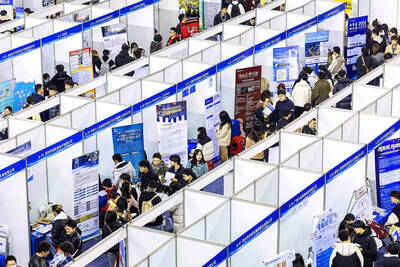
Stephen Garrett, a 27-year-old graduate student, always thought he would study in China, but first the country’s restrictive COVID-19 policies made it nearly impossible and now he has other concerns. The cost is one deterrent, but Garrett is more worried about restrictions on academic freedom and the personal risk of being stranded in China. He is not alone. Only about 700 American students are studying at Chinese universities, down from a peak of nearly 25,000 a decade ago, while there are nearly 300,000 Chinese students at US schools. Some young Americans are discouraged from investing their time in China by what they see

MAJOR DROP: CEO Tim Cook, who is visiting Hanoi, pledged the firm was committed to Vietnam after its smartphone shipments declined 9.6% annually in the first quarter Apple Inc yesterday said it would increase spending on suppliers in Vietnam, a key production hub, as CEO Tim Cook arrived in the country for a two-day visit. The iPhone maker announced the news in a statement on its Web site, but gave no details of how much it would spend or where the money would go. Cook is expected to meet programmers, content creators and students during his visit, online newspaper VnExpress reported. The visit comes as US President Joe Biden’s administration seeks to ramp up Vietnam’s role in the global tech supply chain to reduce the US’ dependence on China. Images on
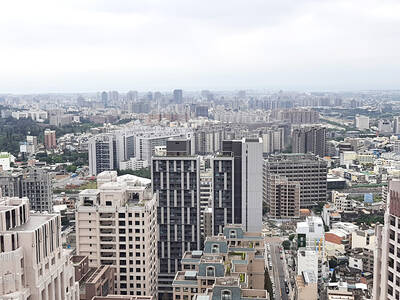
New apartments in Taiwan’s major cities are getting smaller, while old apartments are increasingly occupied by older people, many of whom live alone, government data showed. The phenomenon has to do with sharpening unaffordable property prices and an aging population, property brokers said. Apartments with one bedroom that are two years old or older have gained a noticeable presence in the nation’s six special municipalities as well as Hsinchu county and city in the past five years, Evertrust Rehouse Co (永慶房產集團) found, citing data from the government’s real-price transaction platform. In Taipei, apartments with one bedroom accounted for 19 percent of deals last


 RSS
RSS