


The loss-making Taiwan-US venture Sino Swearingen Aircraft Corp (SSAC) should stay in business or it will face the risk of litigation, outgoing chairman and chief executive Kuo Ching-chiang (郭清江) told the Taipei Times on Sunday.
"From my perspective, any deal is better than shutting down the company, because shutting it down will have huge legal implications, the owners will likely get nothing out of it and it will damage Taiwan's reputation," Kuo said in an e-mail.
Kuo didn't specify what the legal implications would be, but an industry source said on condition of anonymity that this could include legal disputes between the Taiwanese government and its US partners as well as between SSAC and its suppliers and customers.
Kuo's remarks came at a time when a delegation led by state-run Aerospace Industrial Development Corp (AIDC,
Kuo, who has a doctorate in aeronautics and astronautics from the Massachusetts Institute of Technology, took over as SSAC chief executive officer in September 2005 after serving as former vice chairman of the Public Construction Commission.
He offered his resignation in mid-April this year over differences with the Ministry of Economic Affairs regarding the financial management at the firm, he said. The ministry controls Yao Hua Glass Co (耀華玻璃) which is a major stakeholder of SSAC.
new chairman
The ministry accepted Kuo's resignation last week and the board elected AIDC president Max Lo (
"If there is proper funding, SSAC will have a bright future," Kuo said. "We have already built a solid foundation for the company to move forward once the fundraising is complete."
SSAC delivered its first seven-seat, twin-engine SJ30-2 jet to San Antonio businessman Douglas Jaffe last October. The second airplane is waiting for the installation of the interior and to be painted before delivery, Kuo said, without giving an exact timeframe.
The jet maker has more than 290 orders for SJ30s on its books, with a price tag of approximately US$6.2 million a jet.
Responding to Taiwanese criticism that SSAC's management is poor and that the company does not know how to control costs, Kuo said no firm could ramp up to production without a budget allocation.
"The Taiwanese authorities never allocated a budget for the mass production phase of the program," he said.
The budget would be for building infrastructure such as facilities, production tools and assembly lines. The company would also allocate part of the budget to purchasing parts, training workers and production planning.
Instead, "SSAC was only given a US$60 million contingency fund to cover the anticipated losses from producing the first thirty aircraft. The cost of mass production had to come from new equity fund raising. In the meantime, the major owners loaned the company money to keep it going before the fundraising could be concluded," he said in the e-mail.
deficit
Last week, Vice Minister of Economic Affairs Shih Yen-hsiang (
"That `deficit' is a reference to the original budget allocation, so there is no deficit," he said.
The ministry has reportedly held talks with several investment groups, including Wachovia Corp, with the aim of raising funds for the jet venture, but its efforts have born no fruit so far. The ministry was looking for a US buyer to acquire a 50 percent stake in SSAC, Shih said earlier this year.
Kuo said it was his understanding the ministry had received an independent and fair offer in mid-April. He said negotiations started early last month but that the deal was suddenly called off without an explanation.
The AIDC delegation is expected to submit a final assessment to the ministry by the end of this month following the inspection trip. The delegation, however, may first have to deal with SSAC's low morale and its immediate financial situation caused by the lack of investment.
Later in a telephone interview on Sunday night, Kuo said he would stay around to smooth the transition before traveling to visit his family in California.
"Now I feel relieved," he said.
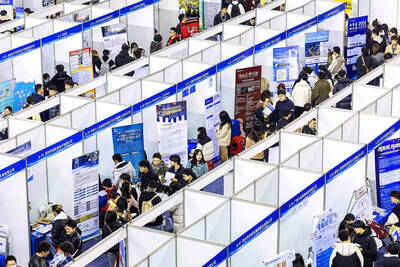
Stephen Garrett, a 27-year-old graduate student, always thought he would study in China, but first the country’s restrictive COVID-19 policies made it nearly impossible and now he has other concerns. The cost is one deterrent, but Garrett is more worried about restrictions on academic freedom and the personal risk of being stranded in China. He is not alone. Only about 700 American students are studying at Chinese universities, down from a peak of nearly 25,000 a decade ago, while there are nearly 300,000 Chinese students at US schools. Some young Americans are discouraged from investing their time in China by what they see

MAJOR DROP: CEO Tim Cook, who is visiting Hanoi, pledged the firm was committed to Vietnam after its smartphone shipments declined 9.6% annually in the first quarter Apple Inc yesterday said it would increase spending on suppliers in Vietnam, a key production hub, as CEO Tim Cook arrived in the country for a two-day visit. The iPhone maker announced the news in a statement on its Web site, but gave no details of how much it would spend or where the money would go. Cook is expected to meet programmers, content creators and students during his visit, online newspaper VnExpress reported. The visit comes as US President Joe Biden’s administration seeks to ramp up Vietnam’s role in the global tech supply chain to reduce the US’ dependence on China. Images on
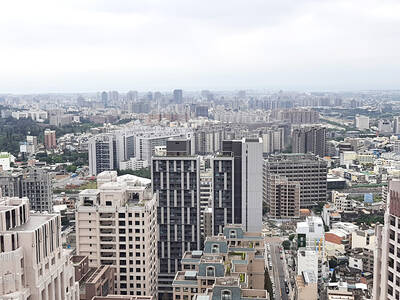
New apartments in Taiwan’s major cities are getting smaller, while old apartments are increasingly occupied by older people, many of whom live alone, government data showed. The phenomenon has to do with sharpening unaffordable property prices and an aging population, property brokers said. Apartments with one bedroom that are two years old or older have gained a noticeable presence in the nation’s six special municipalities as well as Hsinchu county and city in the past five years, Evertrust Rehouse Co (永慶房產集團) found, citing data from the government’s real-price transaction platform. In Taipei, apartments with one bedroom accounted for 19 percent of deals last
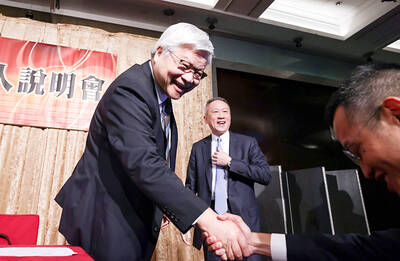
US CONSCULTANT: The US Department of Commerce’s Ursula Burns is a rarely seen US government consultant to be put forward to sit on the board, nominated as an independent director Taiwan Semiconductor Manufacturing Co (TSMC, 台積電), the world’s largest contract chipmaker, yesterday nominated 10 candidates for its new board of directors, including Ursula Burns from the US Department of Commerce. It is rare that TSMC has nominated a US government consultant to sit on its board. Burns was nominated as one of seven independent directors. She is vice chair of the department’s Advisory Council on Supply Chain Competitiveness. Burns is to stand for election at TSMC’s annual shareholders’ meeting on June 4 along with the rest of the candidates. TSMC chairman Mark Liu (劉德音) was not on the list after in December last


 RSS
RSS