


Taipei Times: The Central Deposit Insurance Corp (CDIC, 中央存保) earlier this month announced the auction rules for Taitung Business Bank (
Johnson Chen (
We plan to sell Enterprise Bank of Hualien as a whole unit with the bid to be opened on May 31, while planning to divide Taitung Business Bank into a "good bank" (branch channels) and "bad bank" (non-performing loans) and auctioning them off separately on June 7.
TT: Is the government likely to fully recover the takeover cost through the sales?
Chen: We hope competition in the open auctions will stimulate bidding prices, which can help reduce our cost. The sales of Kaohsiung Business Bank (高雄企銀) and Chung Shing Bank (中興銀行) [in 2004] showed us that competition plus the attractiveness of a distribution network made much more difference than we had thought.
TT: Taiwan Ratings Corp (
Ray Dawn (
It is our duty to monitor these lenders' daily operations, and what we know is that they are now in talks with potential local and foreign investors about providing funds, as the government has urged. I think we will see the results in the next few months.
Chen: We have requested preview agendas for all of these banks' board meetings and are supervising their cash flow to prevent possible ethical hazards associated with the widening financial gaps related to management's personal gain. As we understand it, these lenders are in close talks with overseas investors that are planning to tap into China's financial market by using Taiwanese banks as a platform.
TT: The CDIC is planning to revamp the differential premium system into five grades from the current three grades in accordance with the operating risk of insured institutions. How will you do this?
Chen: The CDIC will be introducing the differential premium rate system in July to boost the reserve pool.
So far, we have two options: one with premium rates from 0.03 percent to 0.07 percent, and the other with rates from 0.04 percent to 0.08 percent.
As the premium calculation base will expand total deposit balance, instead of the amount insured as before [which means rising premium cost for foreign banks], we are also mulling to lower the rates to between 0.02 percent and 0.06 percent to prevent an excessive leap in banks' insurance cost.
Annual premium income is expected to double to NT$8 billion (US$241 million), if we go for the first option with rates starting at 0.03 percent, while the amount would grow by only 50 percent to NT$6 billion with rates starting at 0.02 percent.
The reserve would increase to NT$200 billion in 10 years from the present NT$15.1 billion. Yet the final decision depends on further discussions with the industry.
TT: Some foreign banks in Taiwan have voiced opposition to the change and claimed the new system was unfair to them, considering their small, yet rich customer bases are made up of corporate accounts containing huge deposits. They claim the change could lead to enormous increases in premium cost. What's your opinion?
Chen: We are fully aware of the situation. The dissidents are a minority and mainly foreign wholesale banks whose deposits are mostly foreign funds used to invest in the local stock market. But the deposit insurance system underpins the stability of the banking sector, and no one should enjoy these benefits for free. We will continue to communicate with them to reach agreement.
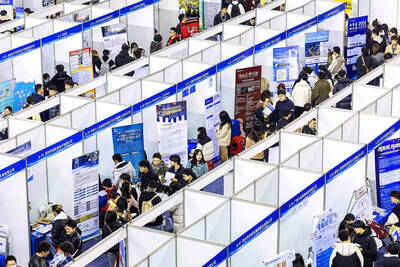
Stephen Garrett, a 27-year-old graduate student, always thought he would study in China, but first the country’s restrictive COVID-19 policies made it nearly impossible and now he has other concerns. The cost is one deterrent, but Garrett is more worried about restrictions on academic freedom and the personal risk of being stranded in China. He is not alone. Only about 700 American students are studying at Chinese universities, down from a peak of nearly 25,000 a decade ago, while there are nearly 300,000 Chinese students at US schools. Some young Americans are discouraged from investing their time in China by what they see

MAJOR DROP: CEO Tim Cook, who is visiting Hanoi, pledged the firm was committed to Vietnam after its smartphone shipments declined 9.6% annually in the first quarter Apple Inc yesterday said it would increase spending on suppliers in Vietnam, a key production hub, as CEO Tim Cook arrived in the country for a two-day visit. The iPhone maker announced the news in a statement on its Web site, but gave no details of how much it would spend or where the money would go. Cook is expected to meet programmers, content creators and students during his visit, online newspaper VnExpress reported. The visit comes as US President Joe Biden’s administration seeks to ramp up Vietnam’s role in the global tech supply chain to reduce the US’ dependence on China. Images on
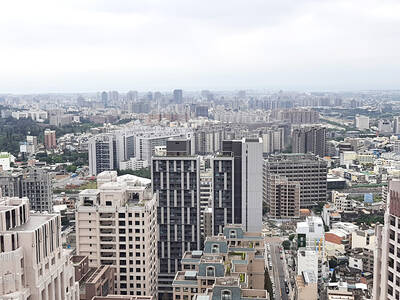
New apartments in Taiwan’s major cities are getting smaller, while old apartments are increasingly occupied by older people, many of whom live alone, government data showed. The phenomenon has to do with sharpening unaffordable property prices and an aging population, property brokers said. Apartments with one bedroom that are two years old or older have gained a noticeable presence in the nation’s six special municipalities as well as Hsinchu county and city in the past five years, Evertrust Rehouse Co (永慶房產集團) found, citing data from the government’s real-price transaction platform. In Taipei, apartments with one bedroom accounted for 19 percent of deals last
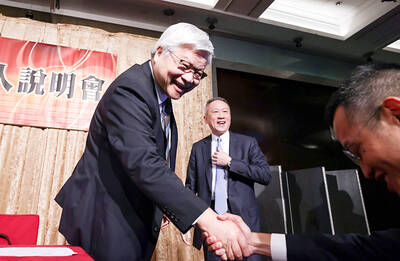
US CONSCULTANT: The US Department of Commerce’s Ursula Burns is a rarely seen US government consultant to be put forward to sit on the board, nominated as an independent director Taiwan Semiconductor Manufacturing Co (TSMC, 台積電), the world’s largest contract chipmaker, yesterday nominated 10 candidates for its new board of directors, including Ursula Burns from the US Department of Commerce. It is rare that TSMC has nominated a US government consultant to sit on its board. Burns was nominated as one of seven independent directors. She is vice chair of the department’s Advisory Council on Supply Chain Competitiveness. Burns is to stand for election at TSMC’s annual shareholders’ meeting on June 4 along with the rest of the candidates. TSMC chairman Mark Liu (劉德音) was not on the list after in December last


 RSS
RSS