


A federal judge has tossed out an antitrust lawsuit filed against seven memory chip makers, but left the door open for the complaining customers to revive the case with more detailed price-fixing allegations.
Sun Microsystems Inc spokeswoman Kathy Engle said on Monday that the company would refile the lawsuit.
Sun and Unisys Corp sued South Korea-based Hynix Semiconductor Inc and six other companies on Sept. 1, accusing the dynamic random access memory (DRAM) chip makers of conspiring to charge artificially high prices from 1997 to 2002.
US District Judge Phyllis Hamilton ruled on Thursday that the lawsuit needs to precisely detail and separate allegations of damages that occurred inside and outside the US. Hamilton gave Unisys and Sun until May 4 to file an amended lawsuit.
Sun and Unisys also named in their lawsuit Taiwanese manufacturers Mosel Vitelic Inc (茂矽), Nanya Technology Corp (南亞科技) and Winbond Electronics Corp (華邦電子); Japan's Elpida Memory Inc and Mitsubishi Electric Corp; and Germany's Infineon Technologies AG.
"We would like to refrain from making any comment that may affect the suit," said Harumasa Hirano, a spokesman for Mitsubishi Electric.
Hideki Saito, a spokesman for Elpida Memory, said his company could not comment on the case.
Unisys also declined comment.
The DRAM chips are used in an array of gadgets, including personal computers, printers, digital cameras, video recorders, video game equipment and cellular phones.
The US Justice Department has been investigating price-fixing allegation in the DRAM market ever since prices soared 95 percent in less than two months in late 2001. Four companies including Hynix and 17 people have been charged and the Justice Department has secured fines totaling more than US$731 million in the probe.
Four executives each from Hynix, Samsung Electronics Ltd and Infineon have pleaded guilty or agreed to do so.
Hynix, the world's No. 2 DRAM manufacturer, has been involved in a rash of litigation and international disputes over chip production.
Last month, the Icheon, South Korea-based company and Japan's Toshiba Corp ended a lengthy legal feud over NAND flash memory chips by signing agreements to share semiconductor patents and products.
NAND chips are used in digital cameras, music players including Apple Inc's iPod Nano, handheld computers and memory cards.
In 2003, the US levied a duty of 44.29 percent and the EU slapped a 34.8 percent tariff on Hynix's DRAM chips, alleging that government-affiliated banks had subsidized Hynix's production via low-interest loans.
The WTO ruled in 2005 that some of the South Korean government's financial support for Hynix was illegal, citing restructuring loans and debt-for-equity swaps made by state-controlled banks when the company was on the verge of collapse.
South Korea and Japan are also locking horns at the WTO after Tokyo last year imposed import duties on Hynix DRAM chips.
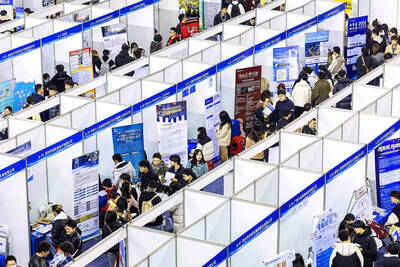
Stephen Garrett, a 27-year-old graduate student, always thought he would study in China, but first the country’s restrictive COVID-19 policies made it nearly impossible and now he has other concerns. The cost is one deterrent, but Garrett is more worried about restrictions on academic freedom and the personal risk of being stranded in China. He is not alone. Only about 700 American students are studying at Chinese universities, down from a peak of nearly 25,000 a decade ago, while there are nearly 300,000 Chinese students at US schools. Some young Americans are discouraged from investing their time in China by what they see

MAJOR DROP: CEO Tim Cook, who is visiting Hanoi, pledged the firm was committed to Vietnam after its smartphone shipments declined 9.6% annually in the first quarter Apple Inc yesterday said it would increase spending on suppliers in Vietnam, a key production hub, as CEO Tim Cook arrived in the country for a two-day visit. The iPhone maker announced the news in a statement on its Web site, but gave no details of how much it would spend or where the money would go. Cook is expected to meet programmers, content creators and students during his visit, online newspaper VnExpress reported. The visit comes as US President Joe Biden’s administration seeks to ramp up Vietnam’s role in the global tech supply chain to reduce the US’ dependence on China. Images on
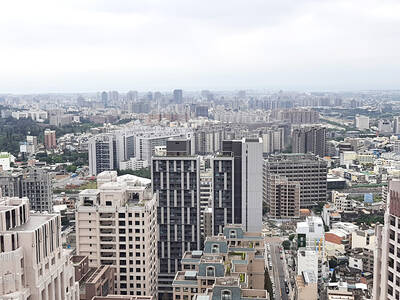
New apartments in Taiwan’s major cities are getting smaller, while old apartments are increasingly occupied by older people, many of whom live alone, government data showed. The phenomenon has to do with sharpening unaffordable property prices and an aging population, property brokers said. Apartments with one bedroom that are two years old or older have gained a noticeable presence in the nation’s six special municipalities as well as Hsinchu county and city in the past five years, Evertrust Rehouse Co (永慶房產集團) found, citing data from the government’s real-price transaction platform. In Taipei, apartments with one bedroom accounted for 19 percent of deals last
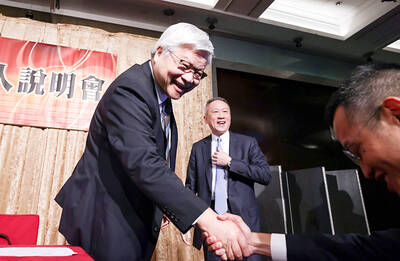
US CONSCULTANT: The US Department of Commerce’s Ursula Burns is a rarely seen US government consultant to be put forward to sit on the board, nominated as an independent director Taiwan Semiconductor Manufacturing Co (TSMC, 台積電), the world’s largest contract chipmaker, yesterday nominated 10 candidates for its new board of directors, including Ursula Burns from the US Department of Commerce. It is rare that TSMC has nominated a US government consultant to sit on its board. Burns was nominated as one of seven independent directors. She is vice chair of the department’s Advisory Council on Supply Chain Competitiveness. Burns is to stand for election at TSMC’s annual shareholders’ meeting on June 4 along with the rest of the candidates. TSMC chairman Mark Liu (劉德音) was not on the list after in December last


 RSS
RSS