


The European Chamber of Commerce Taipei (ECCT) yesterday slammed the nation's financial regulator for requiring that banks disclose bad loan accounts, saying that it would negatively impact on corporate governance at the multinational banks.
The Financial Supervisory Commission (FSC) announced on March 1 that all banks were required to disclose details of customers who have defaulted on loans exceeding NT$100 million (US$3 million) on their Web sites today.
"The regulator did not consult with the industry beforehand and made the decision unilaterally," Lawrance Liang (梁敬思) -- one of the ECCT's board directors who also chairs ING Bank N.V.'s Taipei branch -- told the Taipei Times during the chamber's lunch yesterday.
The order to publicly identify bad debtors within the prescribed time would have negative effects on corporate governance and confidentiality practice of international banks, Liang said.
The disclosure may also lead debtors to think that banks have written off those loans and to decide not to pay them off, Liang said.
The banking committees of the ECCT and the American Chamber of Commerce in Taipei (AmCham) were scheduled to hold a joint meeting today to discuss the mandatory disclosure, as well as some regulations governing foreign banks that violate the nation's WTO commitments.
The two issues will be included in the chamber's annual position paper, slated to be released in May, with advice on government policies and the nation's business environment, the ECCT said.
The chamber will also brief an EU delegation that is scheduled to visit Taiwan soon about the regulations governing foreign businesses, Liang said.
The FSC's disclosure initiative was triggered by the discovery that management of Rebar Asia Pacific Group (
The discovery led to a government takeover of the lender in January.
The government has since taken measures in order to crack down on bad debtors to win back public confidence.
"The entire decision-making process was too careless and brutal and was just meant to serve political interests," said an executive of a foreign bank in Taiwan, who asked to remain anonymous.
The short notice given to banks did not allow for enough time for certified accountants to verify the data on major debtors before the deadline, the executive said.
In response, the FSC said foreign banks should comply with regulations in their host country.
Overseas branches and business units of Taiwanese banks always comply with the regulations where they operate.
By the same principle, international banks doing business here should follow Taiwanese rules, said Lin Tung-liang (
The disclosure will continue as planned, Lin said by telephone yesterday.
Local banks' overseas branches and business units are exempted from the requirement, because they must comply with confidentiality rules abroad, the official added.
Meanwhile, local banks said they had been working around the clock to prepare data in time for the deadline.
"Our staff and accountants have been working hard over the past two weeks and we should be able to make the disclosure on time as demanded," said Chou Wu-shiung (
The Bank of Taiwan estimated that it had between 80 and 90 bad loan accounts to disclose.
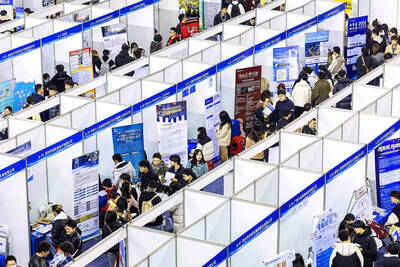
Stephen Garrett, a 27-year-old graduate student, always thought he would study in China, but first the country’s restrictive COVID-19 policies made it nearly impossible and now he has other concerns. The cost is one deterrent, but Garrett is more worried about restrictions on academic freedom and the personal risk of being stranded in China. He is not alone. Only about 700 American students are studying at Chinese universities, down from a peak of nearly 25,000 a decade ago, while there are nearly 300,000 Chinese students at US schools. Some young Americans are discouraged from investing their time in China by what they see
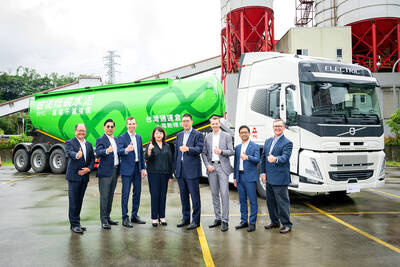
Taiwan Transport and Storage Corp (TTS, 台灣通運倉儲) yesterday unveiled its first electric tractor unit — manufactured by Volvo Trucks — in a ceremony in Taipei, and said the unit would soon be used to transport cement produced by Taiwan Cement Corp (TCC, 台灣水泥). Both TTS and TCC belong to TCC International Holdings Ltd (台泥國際集團). With the electric tractor unit, the Taipei-based cement firm would become the first in Taiwan to use electric vehicles to transport construction materials. TTS chairman Koo Kung-yi (辜公怡), Volvo Trucks vice president of sales and marketing Johan Selven, TCC president Roman Cheng (程耀輝) and Taikoo Motors Group

MAJOR DROP: CEO Tim Cook, who is visiting Hanoi, pledged the firm was committed to Vietnam after its smartphone shipments declined 9.6% annually in the first quarter Apple Inc yesterday said it would increase spending on suppliers in Vietnam, a key production hub, as CEO Tim Cook arrived in the country for a two-day visit. The iPhone maker announced the news in a statement on its Web site, but gave no details of how much it would spend or where the money would go. Cook is expected to meet programmers, content creators and students during his visit, online newspaper VnExpress reported. The visit comes as US President Joe Biden’s administration seeks to ramp up Vietnam’s role in the global tech supply chain to reduce the US’ dependence on China. Images on
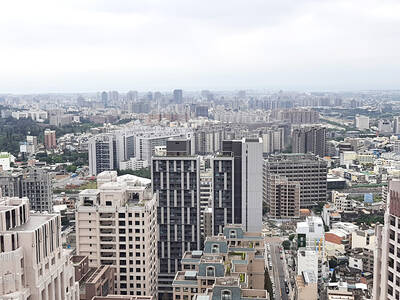
New apartments in Taiwan’s major cities are getting smaller, while old apartments are increasingly occupied by older people, many of whom live alone, government data showed. The phenomenon has to do with sharpening unaffordable property prices and an aging population, property brokers said. Apartments with one bedroom that are two years old or older have gained a noticeable presence in the nation’s six special municipalities as well as Hsinchu county and city in the past five years, Evertrust Rehouse Co (永慶房產集團) found, citing data from the government’s real-price transaction platform. In Taipei, apartments with one bedroom accounted for 19 percent of deals last


 RSS
RSS