


The nation's already hot property market will continue to expand this year on the launch of the high-speed railway, the anticipated opening up to Chinese tourism, as well as incentives to be offered by the government for next year's presidential election.
"This year will be key for the [real estate] industry," Mu Chun-sung (穆椿松), chairman of the Taiwan Construction Development Federation (台灣建築開發聯合會), said at a press conference yesterday.
Mu said that property prices started to edge up after SARS scare in 2003 -- when the prices of some houses and apartments tumbled by 50 percent -- and reached a high last year.
The uptrend will continue this year he said.
The highest-priced apartments in Taipei City, for example, cost about NT$1.3 million (US$39,500) per ping (3.3m2). Compared with the price of the most expensive properties in Hong Kong of NT$5.6 million per ping, the Taiwanese market still has room for growth, Mu said.
Another factor pushing prices higher is the soaring cost of raw materials, given the huge demand from emerging markets such as China and India, which have tightened supply, Mu said.
The best-selling residential buildings are top-grade luxurious apartments measuring more than 80 pings each, the federation's statistics showed.
Mu said that the demand for high-quality and luxury housing has been rising among Taiwan's top 20 percent highest income earners, as the nation marches toward becoming a so-called "M-shaped society" -- where the income curve has two peaks, one in the lower middle class, and one in the highest income bracket, a trend noticeable in many industrial societies.
He warned that a shrinking middle class would mean that more people would find it harder to buy a home, which poses a problem that the government and constructors should address.
As for the commercial property market, the lifting of restrictions on Chinese tourists would boost Taiwan's retail service sector, which could add NT$200 billion to the real estate business as retailers scramble for storefronts, Mu said.
The launch of the high-speed railway has made properties in central and southern Taiwan more attractive, both residential and commercial, said Lin Ching-hua (
Rapid transportation, lower prices and a perceived higher quality of life have lured some China-based Taiwanese businesspeople to buy homes there, Lin said.
Low rental costs have also attracted many franchisees from the northern part of the country to expand their businesses to the south, making storefronts in downtown areas the hottest products, he said.
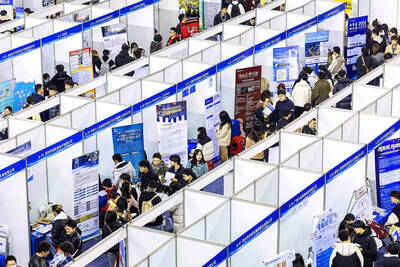
Stephen Garrett, a 27-year-old graduate student, always thought he would study in China, but first the country’s restrictive COVID-19 policies made it nearly impossible and now he has other concerns. The cost is one deterrent, but Garrett is more worried about restrictions on academic freedom and the personal risk of being stranded in China. He is not alone. Only about 700 American students are studying at Chinese universities, down from a peak of nearly 25,000 a decade ago, while there are nearly 300,000 Chinese students at US schools. Some young Americans are discouraged from investing their time in China by what they see
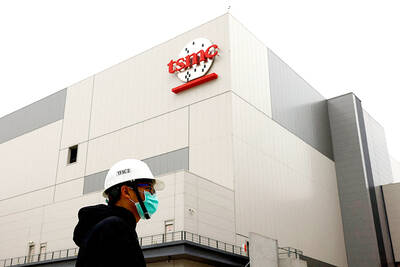
Taiwan Semiconductor Manufacturing Co (TSMC, 台積電), the world’s largest contract chipmaker, yesterday reported record sales for the first quarter, which analysts attributed to solid demand for emerging technologies. Consolidated revenue totaled NT$592.64 billion (US$18.51 billion) in the January-to-March period, up 16.5 percent from a year earlier, but down 5.26 percent from the previous quarter, TSMC said in a statement. The first-quarter revenue beat analysts’ average projection of NT$579.5 billion, Bloomberg News reported. That performance lends weight to expectations that the world’s most valuable chipmaker would return to solid growth this year after weathering a post-COVID-19-pandemic cratering of smartphone and computer sales. TSMC is budgeting

MAJOR DROP: CEO Tim Cook, who is visiting Hanoi, pledged the firm was committed to Vietnam after its smartphone shipments declined 9.6% annually in the first quarter Apple Inc yesterday said it would increase spending on suppliers in Vietnam, a key production hub, as CEO Tim Cook arrived in the country for a two-day visit. The iPhone maker announced the news in a statement on its Web site, but gave no details of how much it would spend or where the money would go. Cook is expected to meet programmers, content creators and students during his visit, online newspaper VnExpress reported. The visit comes as US President Joe Biden’s administration seeks to ramp up Vietnam’s role in the global tech supply chain to reduce the US’ dependence on China. Images on
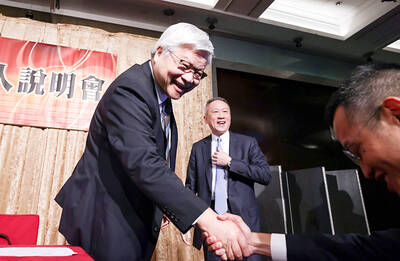
US CONSCULTANT: The US Department of Commerce’s Ursula Burns is a rarely seen US government consultant to be put forward to sit on the board, nominated as an independent director Taiwan Semiconductor Manufacturing Co (TSMC, 台積電), the world’s largest contract chipmaker, yesterday nominated 10 candidates for its new board of directors, including Ursula Burns from the US Department of Commerce. It is rare that TSMC has nominated a US government consultant to sit on its board. Burns was nominated as one of seven independent directors. She is vice chair of the department’s Advisory Council on Supply Chain Competitiveness. Burns is to stand for election at TSMC’s annual shareholders’ meeting on June 4 along with the rest of the candidates. TSMC chairman Mark Liu (劉德音) was not on the list after in December last


 RSS
RSS