


Waving fake DVDs and pirated books, officials from Hollywood and the US publishing industry complained to US lawmakers on Thursday that the rampant counterfeiting problem in China was wreaking havoc on their businesses.
At a Congressional hearing on Beijing's enforcement of intellectual property (IP) rights, the US pharmaceutical industry also highlighted its losses -- at a "conservative" estimate of US$3.4 billion annually -- from the manufacture and sale of fake medicine in China and exports of fakes from China.
"More than nine of every 10 DVDs in the China market is fake," Dan Glickman, chairman of the Motion Picture Association of America, lamented at the hearing in the House of Representatives. "Regrettably, to coin a phrase, if you did not see a counterfeit DVD, you were not in China."
The world's film industry lost US$2.7 billion in China in 2005, according to research commissioned by the association, whose members themselves took a blow of US$244 million that year, Glickman said.
But he pointed out that even though one could see -- in pirated form -- any US film in China, the legitimate market was one of the world's most restricted.
The US motion picture industry, he said, poured millions of dollars in fighting piracy in China but the effort would be worthless unless it "has fair access to a fair China market."
Piracy in China affects film makers around the world, he said.
"Our research indicates that almost half the pirated product is actually Chinese. We also find stolen copies of Japanese, Korean, French and Indian movies in China," he said.
In addition, the association's analysis of pirated DVDs seized from around the world traced their production back to more than 50 plants in China.
A pirated disc made in China can, in a day or two, be on the streets of Los Angeles.
Patricia Schroeder, president of the Association of American Publishers, said US publishers in China last year suffered an estimated US$52 million in losses because of piracy on the Internet.
Book piracy also includes illegal commercial scale photocopying of academic materials, print piracy and unauthorized translations as well as trademark counterfeiting, Schroeder said.
Her association's 300 members include most of the key US commercial book publishers and chalk up an annual turnover of more than US$25 billion.
She said representatives of the American publishers had "routinely seen" pirated books sold by street vendors outside the venue of the Beijing International Book Fair, China's largest and most respected book expo.
Bestsellers such as the Harry Potter series, Dan Brown's novels and political autobiographies are pirated in English and Chinese within days of their home country releases, Schroeder said.
Geralyn Ritter, senior vice-president of the Pharmaceutical Research and Manufacturers of America, said while the Chinese government had taken steps to combat drug counterfeiting, the prevalence of fake drugs from China was a "substantial concern."
"Indeed, China is believed to be the world's leading exporter of counterfeit drugs and bulk chemicals," she said.
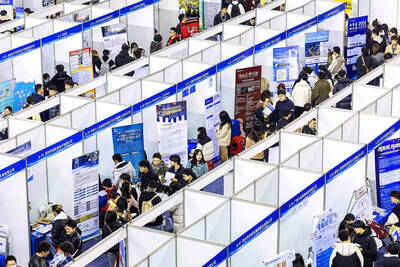
Stephen Garrett, a 27-year-old graduate student, always thought he would study in China, but first the country’s restrictive COVID-19 policies made it nearly impossible and now he has other concerns. The cost is one deterrent, but Garrett is more worried about restrictions on academic freedom and the personal risk of being stranded in China. He is not alone. Only about 700 American students are studying at Chinese universities, down from a peak of nearly 25,000 a decade ago, while there are nearly 300,000 Chinese students at US schools. Some young Americans are discouraged from investing their time in China by what they see

MAJOR DROP: CEO Tim Cook, who is visiting Hanoi, pledged the firm was committed to Vietnam after its smartphone shipments declined 9.6% annually in the first quarter Apple Inc yesterday said it would increase spending on suppliers in Vietnam, a key production hub, as CEO Tim Cook arrived in the country for a two-day visit. The iPhone maker announced the news in a statement on its Web site, but gave no details of how much it would spend or where the money would go. Cook is expected to meet programmers, content creators and students during his visit, online newspaper VnExpress reported. The visit comes as US President Joe Biden’s administration seeks to ramp up Vietnam’s role in the global tech supply chain to reduce the US’ dependence on China. Images on
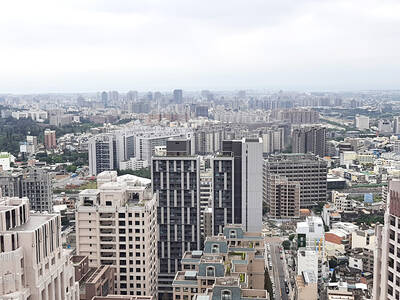
New apartments in Taiwan’s major cities are getting smaller, while old apartments are increasingly occupied by older people, many of whom live alone, government data showed. The phenomenon has to do with sharpening unaffordable property prices and an aging population, property brokers said. Apartments with one bedroom that are two years old or older have gained a noticeable presence in the nation’s six special municipalities as well as Hsinchu county and city in the past five years, Evertrust Rehouse Co (永慶房產集團) found, citing data from the government’s real-price transaction platform. In Taipei, apartments with one bedroom accounted for 19 percent of deals last
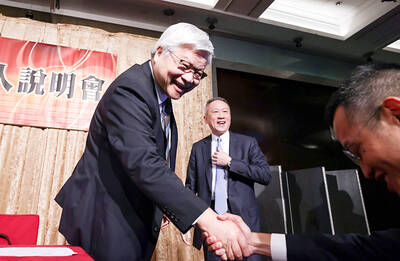
US CONSCULTANT: The US Department of Commerce’s Ursula Burns is a rarely seen US government consultant to be put forward to sit on the board, nominated as an independent director Taiwan Semiconductor Manufacturing Co (TSMC, 台積電), the world’s largest contract chipmaker, yesterday nominated 10 candidates for its new board of directors, including Ursula Burns from the US Department of Commerce. It is rare that TSMC has nominated a US government consultant to sit on its board. Burns was nominated as one of seven independent directors. She is vice chair of the department’s Advisory Council on Supply Chain Competitiveness. Burns is to stand for election at TSMC’s annual shareholders’ meeting on June 4 along with the rest of the candidates. TSMC chairman Mark Liu (劉德音) was not on the list after in December last


 RSS
RSS