


Mainland Chinese tourists were happy spenders in Hong Kong yesterday as the yuan strengthened past the local dollar for the first time in 13 years, boosting local business.
On a visit to the Convention Center, a popular harborfront sightseeing spot, Zhang Weili was able to pay to have the obligatory photograph taken in yuan, instead of the local Hong Kong dollar, with no problems.
"Before we came here, my wife said to me that we should be changing [yuan] for some Hong Kong money," said Zhang, who came from neighboring Guangdong Province.
"But I said -- there's no need now. Most shops will happily take our money because it has got stronger," he said.
firm
As of yesterday, the yuan was trading on the firm side of 7.800 to the US dollar, the level at which the Hong Kong dollar has been pegged since 1983 when Britain sought to bolster local confidence during talks with Beijing on the return of the colony to Chinese rule in 1997.
The yuan was itself pegged to the US dollar until 2005 when Beijing decided to revalue it by 2.1 percent and place the unit in a currency basket, allowing a greater but still very tightly controlled margin of flexibility.
The yuan has since slowly but steadily risen in value on the back of China's booming economy and the breaching of the 7.80 level inevitably sparked concerns the US dollar peg could be dropped in favor of the mainland unit.
Hong Kong officials over the years have insisted that the US dollar peg would not be dropped and have repeated that line while most analysts agree that there is nothing to be gained from such a change.
At the same time, they have downplayed any threat that the rise in the yuan could stoke local inflation pressures since Hong Kong imports so much of its basic needs from mainland China.
better
Meanwhile, Hong Kong people, long used to hopping across the border into China for cheap goods and services, are finding that their mainland compatriots may be now getting the better deal.
"We can't deny that mainland tourists will find that things have suddenly got cheaper and they can afford to spend more," said Vincent Kwan, chief economist for Hang Seng Bank.
The photographer who took the picture for Zhang, said his customers, most of them from the mainland, appeared to be more willing to spend.
"I haven't seen a major impact on my business yet but the mainland tourists tend to be more willing to spend their money," said the photographer who asked not to be named.
Wong Ka-ngai, union secretary of the Hong Kong Tour Guides General Union and a local tour guide for Chinese tourists, said the stronger Chinese currency has had more of a psychological impact so far on visitors from the mainland.
"The difference between the two currencies isn't that much but this definitely makes it more convenient for the Chinese tourists," Wong said.
Yang Mingxing, a frequent visitor to the southern Chinese territory, agreed.
"Many people may feel that things in Hong Kong are cheaper and shop more, but in reality, it's more or less the same. I think it has more of a psychological impact than material," Yang said.
"If the yuan rises more, I'll see more benefits but for now, I'm not rushing to spend all my money here," he added.
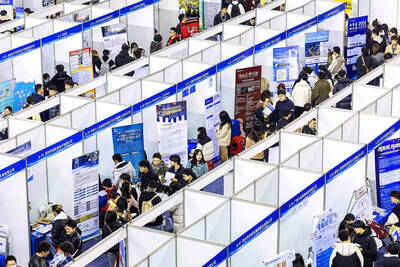
Stephen Garrett, a 27-year-old graduate student, always thought he would study in China, but first the country’s restrictive COVID-19 policies made it nearly impossible and now he has other concerns. The cost is one deterrent, but Garrett is more worried about restrictions on academic freedom and the personal risk of being stranded in China. He is not alone. Only about 700 American students are studying at Chinese universities, down from a peak of nearly 25,000 a decade ago, while there are nearly 300,000 Chinese students at US schools. Some young Americans are discouraged from investing their time in China by what they see

MAJOR DROP: CEO Tim Cook, who is visiting Hanoi, pledged the firm was committed to Vietnam after its smartphone shipments declined 9.6% annually in the first quarter Apple Inc yesterday said it would increase spending on suppliers in Vietnam, a key production hub, as CEO Tim Cook arrived in the country for a two-day visit. The iPhone maker announced the news in a statement on its Web site, but gave no details of how much it would spend or where the money would go. Cook is expected to meet programmers, content creators and students during his visit, online newspaper VnExpress reported. The visit comes as US President Joe Biden’s administration seeks to ramp up Vietnam’s role in the global tech supply chain to reduce the US’ dependence on China. Images on
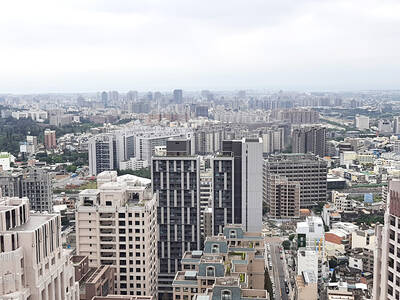
New apartments in Taiwan’s major cities are getting smaller, while old apartments are increasingly occupied by older people, many of whom live alone, government data showed. The phenomenon has to do with sharpening unaffordable property prices and an aging population, property brokers said. Apartments with one bedroom that are two years old or older have gained a noticeable presence in the nation’s six special municipalities as well as Hsinchu county and city in the past five years, Evertrust Rehouse Co (永慶房產集團) found, citing data from the government’s real-price transaction platform. In Taipei, apartments with one bedroom accounted for 19 percent of deals last
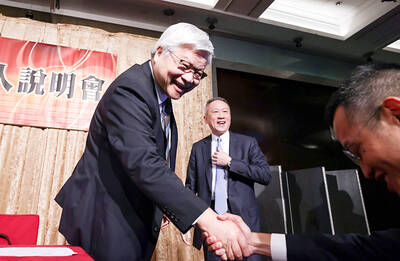
US CONSCULTANT: The US Department of Commerce’s Ursula Burns is a rarely seen US government consultant to be put forward to sit on the board, nominated as an independent director Taiwan Semiconductor Manufacturing Co (TSMC, 台積電), the world’s largest contract chipmaker, yesterday nominated 10 candidates for its new board of directors, including Ursula Burns from the US Department of Commerce. It is rare that TSMC has nominated a US government consultant to sit on its board. Burns was nominated as one of seven independent directors. She is vice chair of the department’s Advisory Council on Supply Chain Competitiveness. Burns is to stand for election at TSMC’s annual shareholders’ meeting on June 4 along with the rest of the candidates. TSMC chairman Mark Liu (劉德音) was not on the list after in December last


 RSS
RSS