


While few doubt the importance of the Sept. 11, 2001, terrorist attacks, analysts say China's entry into the WTO three months later may eventually be seen as having had even greater reverberations.
When China joined the WTO on Dec. 11, 2001, it submitted to a universal set of rules, signing off sovereignty it had defended fiercely for millennia, said David Zweig at Hong Kong's University of Science and Technology.
"China basically accepted the fact that the outside world could tell it what it could and couldn't do domestically," said Zweig, who heads the university's Center on China's transnational relations.

PHOTO: AFP
"Unless the war on terror continues for a long time and has implications in terms of further foreign policy intervention by the US, then the long-term impact of China's entry into the WTO is greater," he said.
As the world's most populous nation marks the fifth anniversary of its entry into the global trade body, it is time for both the 1.3 billion Chinese themselves and the rest of the world to take stock of the changes.
For the well-heeled resident of Beijing or Shanghai, the advantages of WTO membership are obvious:imported Mercedes cars are cheaper; local Citibank branches offer more services; Wal-Mart sells a wider variety of products.
But China's entry into the WTO has not just created winners. Reduced tariffs on agricultural produce have threatened the live-lihoods of hundreds of millions of farmers.
Beyond affecting the individual lives of the Chinese, the WTO has also profoundly and irreversibly changed the Chinese economy as a whole.
"The biggest transformation has been in the volume of trade," said Li Zhongzhou (
Overall trade as a percentage of the GDP, a widely used measure of an economy's openness to the outside world, has risen from 44 percent in 2001 to 72 percent today.
By comparison, the value of US trade with the rest of the world is just 21 percent of its GDP.
The greater openness that WTO membership has entailed has brought net advantages to the Chinese, but they may soon have to wave goodbye to the early, easy benefits of accession to the global trading system.
"Since China joined the WTO, its exports have grown at an average rate of 29 percent per year," said David Dollar, the World Bank country director for China.
"Part of that is an adjustment to a more open system. But it's very unlikely that exports can continue to grow at that rate, now that China is a very large player in the world market," he said.
Much has been made of the unemployment that China creates elsewhere with its hyper-efficient, hyper-cheap labor force. But China, too, has had to pay.
"In this period of expanding trade, every country has to make some adjustments. Some of its industries expand and other industries tend to contract," Dollar said.
"In China, for example, more than 100,000 people have been released from state-owned banks, as the state-owned banks adjust to this more competitive environ-ment," he added.
Anti-dumping cases against China have soared after its entry into the WTO, and it now accounts for one third of global cases, according to a recent count.
Some observers see this as the last defense put up by dying industries in the rich world before they succumb to the Chinese juggernaut.
"When you look at some of the cases against China, you do see very, very dramatic changes," said Cliff Stevenson, a British-based consultant.
"The industries on overseas markets suddenly find themselves with massive losses in market share. Sometimes that can be very disruptive," he said.
China's entry into the WTO has brought about monumental changes in global trade flows that will take a long time to absorb, Stevenson said.
The anti-dumping cases are part of a painful transition period as the world grapples with the one-off challenge of accommodating China's uniquely sized economy.
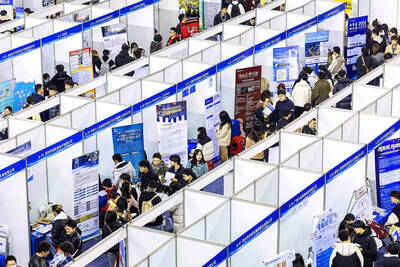
Stephen Garrett, a 27-year-old graduate student, always thought he would study in China, but first the country’s restrictive COVID-19 policies made it nearly impossible and now he has other concerns. The cost is one deterrent, but Garrett is more worried about restrictions on academic freedom and the personal risk of being stranded in China. He is not alone. Only about 700 American students are studying at Chinese universities, down from a peak of nearly 25,000 a decade ago, while there are nearly 300,000 Chinese students at US schools. Some young Americans are discouraged from investing their time in China by what they see

MAJOR DROP: CEO Tim Cook, who is visiting Hanoi, pledged the firm was committed to Vietnam after its smartphone shipments declined 9.6% annually in the first quarter Apple Inc yesterday said it would increase spending on suppliers in Vietnam, a key production hub, as CEO Tim Cook arrived in the country for a two-day visit. The iPhone maker announced the news in a statement on its Web site, but gave no details of how much it would spend or where the money would go. Cook is expected to meet programmers, content creators and students during his visit, online newspaper VnExpress reported. The visit comes as US President Joe Biden’s administration seeks to ramp up Vietnam’s role in the global tech supply chain to reduce the US’ dependence on China. Images on
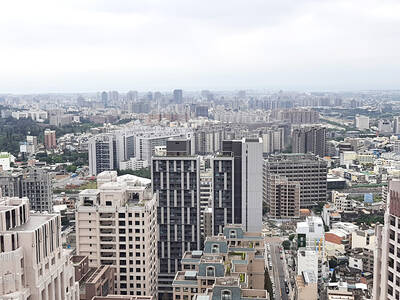
New apartments in Taiwan’s major cities are getting smaller, while old apartments are increasingly occupied by older people, many of whom live alone, government data showed. The phenomenon has to do with sharpening unaffordable property prices and an aging population, property brokers said. Apartments with one bedroom that are two years old or older have gained a noticeable presence in the nation’s six special municipalities as well as Hsinchu county and city in the past five years, Evertrust Rehouse Co (永慶房產集團) found, citing data from the government’s real-price transaction platform. In Taipei, apartments with one bedroom accounted for 19 percent of deals last
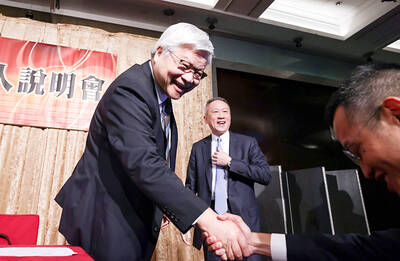
US CONSCULTANT: The US Department of Commerce’s Ursula Burns is a rarely seen US government consultant to be put forward to sit on the board, nominated as an independent director Taiwan Semiconductor Manufacturing Co (TSMC, 台積電), the world’s largest contract chipmaker, yesterday nominated 10 candidates for its new board of directors, including Ursula Burns from the US Department of Commerce. It is rare that TSMC has nominated a US government consultant to sit on its board. Burns was nominated as one of seven independent directors. She is vice chair of the department’s Advisory Council on Supply Chain Competitiveness. Burns is to stand for election at TSMC’s annual shareholders’ meeting on June 4 along with the rest of the candidates. TSMC chairman Mark Liu (劉德音) was not on the list after in December last


 RSS
RSS