


The greenback's decline deepened on Friday, with the euro breaching US$1.33 and the British pound hitting 14-year highs, after US manufacturing contracted last month.
The euro hit its highest levels since March last year to stand at US$1.3337 around 10pm GMT, compared with US$1.3241 in New York late on Thursday.
The European currency hit an all-time high of 154.11 to the Japanese yen.
The dollar fell to ?115.43 from ?115.77 late on Thursday.
Sterling surged to US$1.9802 from US$1.9657, striking its highest levels since the pound was ejected from Europe's Exchange Rate Mechanism in 1992.
The Institute for Supply Management's index of US manufacturing activity dropped to 49.50 from 51.2 in October, falling below the 50 mark to indicate contraction in the sector for the first time since April 2003.
IDEAGlobal currency strategist Divyang Shah said the fall below 50 was pivotal because it could end all remaining talk of further interest rate hikes from the Federal Reserve.
"The significance of this level comes from the fact that the Fed has never hiked interest rates when the ISM has been below 50.0, and thus dampens significantly concerns over the recent hawkish rhetoric from the Fed," he said.
Prior suffering
The dollar had already suffered prior to the ISM data release, owing to a report that suggested the European Central Bank is willing to tolerate sharp gains in the single currency's exchange rate.
Analysts cited a report quoting an unidentified ECB official as saying that the eurozone economy could sustain a much sharper rise in the euro's rate to US$1.40-US$1.45, with some suggesting it could go beyond US$1.50.
"They [the ECB] are not going to stand in the way, so it's all about how we get to higher ground and it's speed, as opposed to levels," Shah said.
The finance ministers of France and Spain have expressed caution about the euro's rally, worrying over the impact on European exports.
But Andrew Busch, global currency strategist at BMO Capital Markets, said many European officials "have given the distinct impression that they want a strong currency."
"This is the proverbial red cape to the euro currency bulls," he said. "If you tell them it's okay to buy euros and pounds, then they buy euros and pounds. It's not that hard to understand."
Among other currencies, the Australian dollar also hit a 20-month high against the US dollar of 0.7928.
The yen suffered on weak Japanese inflation data.
Below expectations
Japan's core consumer price index rose by 0.1 percent in October from a year earlier, below expectations for a 0.2 percent rise and supporting the view that the Bank of Japan will raise interest rates later rather than sooner.
Busch said the dollar's decline would intensify, reflecting a yawning US trade deficit and the end to a long run of Fed rate hikes.
Instead, he predicted, the US central bank was now set to cut borrowing costs by October next year.
"The expectations are that both the UK and the eurozone will have economic and inflation growth higher than the US in the coming months," Busch said.
"The eurozone interest rate market is pricing in a rate hike by the ECB next week and another one by October," he said.
The dollar traded at 1.1931 Swiss francs around 10pm GMT, from SF1.1977 late on Thursday.
The US dollar dropped against the New Taiwan dollar on Friday, losing NT$0.062 to close at NT$32.370.
A total of US$1.26 billion changed hands during the day's trading.
The US currency opened at the day's high of NT$32.432 and hit a low of NT$32.250.

Stephen Garrett, a 27-year-old graduate student, always thought he would study in China, but first the country’s restrictive COVID-19 policies made it nearly impossible and now he has other concerns. The cost is one deterrent, but Garrett is more worried about restrictions on academic freedom and the personal risk of being stranded in China. He is not alone. Only about 700 American students are studying at Chinese universities, down from a peak of nearly 25,000 a decade ago, while there are nearly 300,000 Chinese students at US schools. Some young Americans are discouraged from investing their time in China by what they see
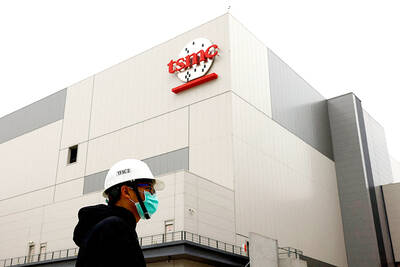
Taiwan Semiconductor Manufacturing Co (TSMC, 台積電), the world’s largest contract chipmaker, yesterday reported record sales for the first quarter, which analysts attributed to solid demand for emerging technologies. Consolidated revenue totaled NT$592.64 billion (US$18.51 billion) in the January-to-March period, up 16.5 percent from a year earlier, but down 5.26 percent from the previous quarter, TSMC said in a statement. The first-quarter revenue beat analysts’ average projection of NT$579.5 billion, Bloomberg News reported. That performance lends weight to expectations that the world’s most valuable chipmaker would return to solid growth this year after weathering a post-COVID-19-pandemic cratering of smartphone and computer sales. TSMC is budgeting

MAJOR DROP: CEO Tim Cook, who is visiting Hanoi, pledged the firm was committed to Vietnam after its smartphone shipments declined 9.6% annually in the first quarter Apple Inc yesterday said it would increase spending on suppliers in Vietnam, a key production hub, as CEO Tim Cook arrived in the country for a two-day visit. The iPhone maker announced the news in a statement on its Web site, but gave no details of how much it would spend or where the money would go. Cook is expected to meet programmers, content creators and students during his visit, online newspaper VnExpress reported. The visit comes as US President Joe Biden’s administration seeks to ramp up Vietnam’s role in the global tech supply chain to reduce the US’ dependence on China. Images on
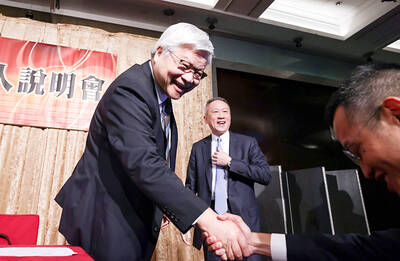
US CONSCULTANT: The US Department of Commerce’s Ursula Burns is a rarely seen US government consultant to be put forward to sit on the board, nominated as an independent director Taiwan Semiconductor Manufacturing Co (TSMC, 台積電), the world’s largest contract chipmaker, yesterday nominated 10 candidates for its new board of directors, including Ursula Burns from the US Department of Commerce. It is rare that TSMC has nominated a US government consultant to sit on its board. Burns was nominated as one of seven independent directors. She is vice chair of the department’s Advisory Council on Supply Chain Competitiveness. Burns is to stand for election at TSMC’s annual shareholders’ meeting on June 4 along with the rest of the candidates. TSMC chairman Mark Liu (劉德音) was not on the list after in December last


 RSS
RSS