


The Fair Trade Commission (FTC) said yesterday that Yahoo-Kimo Inc (雅虎奇摩), the nation's largest online auctioneer, did not violate any laws by charging sellers a handling fee for each transaction.
Yahoo-Kimo was accused by Internet users of abusing its dominance in the market after it began charging its sellers a transaction handling fee -- 3 percent of the closing price -- on top of a listing fee of NT$3 per item, beginning Sept. 1.
"We found Yahoo-Kimo auction is not a monopoly, and it did not engage in unfair competition by using its advantage," commission spokeswoman Chou Ya-shu (
DAILY LISTINGS
The commission found that on average there were 3.91 million daily postings on Yahoo-Kimo between May 2 and July. 24.
But the postings dropped 12.3 percent to 3.43 million items between Sept. 1 and Oct. 16.
The number of postings on a smaller online auction site run by a local portal PC Home Online (
NOT A MONOPOLY
While monopoly means a non-competition market, the existence of PChome eBay Co and two other auction sites shows that Yahoo-Kimo was not capable of eliminating other players, Chou said.
Taiwan's online auction market was worth NT$31.7 billion (US$959.3 million) last year, and Yahoo-Kimo took NT$22 billion, or 69.4 percent of the market, according to the commission.
Collecting transaction handling fees is one business model adopted in the world, and companies applying charges need to evaluate the business risk, Chou said.
Yahoo also charges its users in Japan a handling fee, that is 5 percent of the final sale price, Chou said.
Auction giant eBay collects a final value fee, 5.25 percent of closing price in the US, and 10 percent in South Korea, Chou said.
Yahoo-Kimo said yesterday that it was happy with the results of the commission's investigation and it would continue to enhance its service to sustain its business.
RESULTS
As for the declining postings, Yahoo-Kimo said the drop was within its expectations.
PChome eBay Co, however, said that its listings have increased more than expected.
It celebrated surpassing the 1 million mark last month, and thinks it will hit 2 million by next month, company chief executive Simon Yeh (葉奇鑫) said last month.
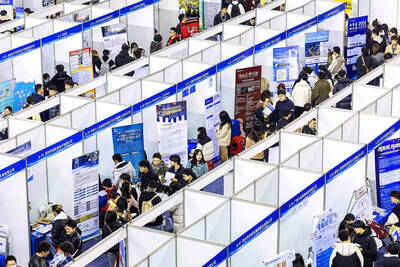
Stephen Garrett, a 27-year-old graduate student, always thought he would study in China, but first the country’s restrictive COVID-19 policies made it nearly impossible and now he has other concerns. The cost is one deterrent, but Garrett is more worried about restrictions on academic freedom and the personal risk of being stranded in China. He is not alone. Only about 700 American students are studying at Chinese universities, down from a peak of nearly 25,000 a decade ago, while there are nearly 300,000 Chinese students at US schools. Some young Americans are discouraged from investing their time in China by what they see
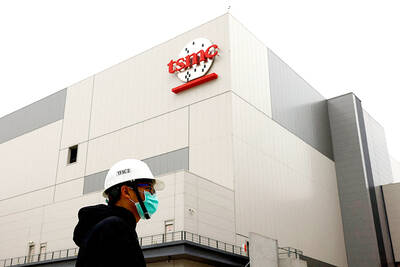
Taiwan Semiconductor Manufacturing Co (TSMC, 台積電), the world’s largest contract chipmaker, yesterday reported record sales for the first quarter, which analysts attributed to solid demand for emerging technologies. Consolidated revenue totaled NT$592.64 billion (US$18.51 billion) in the January-to-March period, up 16.5 percent from a year earlier, but down 5.26 percent from the previous quarter, TSMC said in a statement. The first-quarter revenue beat analysts’ average projection of NT$579.5 billion, Bloomberg News reported. That performance lends weight to expectations that the world’s most valuable chipmaker would return to solid growth this year after weathering a post-COVID-19-pandemic cratering of smartphone and computer sales. TSMC is budgeting
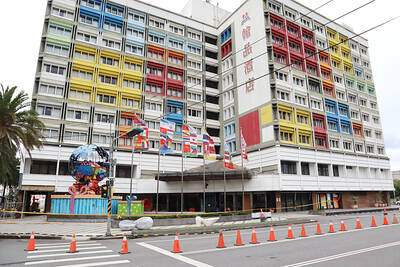
HUALIEN BRANCH: The company had been planning to rebuild the hotel before it was damaged in the quake and vowed to give affected employees the option to transfer The owner of Chateau de Chine Hualien (花蓮翰品酒店) is planning to lay off 86 workers after shutting down the hotel due to damage it sustained in a powerful earthquake on Wednesday last week, the Ministry of Labor said yesterday. The hotel has submitted a layoff report to the Hualien County Government and expects to let 69 workers go this month and 17 next month, the ministry said. LDC Hotels & Resorts Group (雲朗觀光集團), the owner of Chateau de Chine Hualien, confirmed the layoff plan in a statement yesterday. LDC said the hotel has been closed since Wednesday last week when the temblor occurred
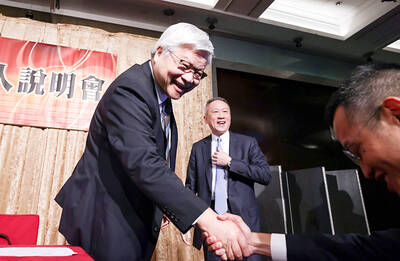
US CONSCULTANT: The US Department of Commerce’s Ursula Burns is a rarely seen US government consultant to be put forward to sit on the board, nominated as an independent director Taiwan Semiconductor Manufacturing Co (TSMC, 台積電), the world’s largest contract chipmaker, yesterday nominated 10 candidates for its new board of directors, including Ursula Burns from the US Department of Commerce. It is rare that TSMC has nominated a US government consultant to sit on its board. Burns was nominated as one of seven independent directors. She is vice chair of the department’s Advisory Council on Supply Chain Competitiveness. Burns is to stand for election at TSMC’s annual shareholders’ meeting on June 4 along with the rest of the candidates. TSMC chairman Mark Liu (劉德音) was not on the list after in December last


 RSS
RSS