


Despite a modest slowdown in global growth next year, the nation's economy is forecast to expand by 4.5 percent, up from an estimated 4.2 percent this year, according to a report released by Goldman Sachs last week.
Among Asia's "four little dragons," Singapore is forecast to take the lead with GDP growth of 6.2 percent next year, followed by Hong Kong's 5.5 percent, Taiwan's 4.5 percent and South Korea's 4.0 percent, Goldman Sachs said in a report dated last Wednesday.
The report, entitled A happy slowdown? forecast that the global economy would grow by a slower 3.9 percent next year, compared with a projected 4.6 percent growth this year, because of weaker US domestic demand, the report said.
Global inflation shall ease modestly in line with softer US domestic demand, helped by more stable energy prices, it said.
Despite the slowdown in US demand, further acceleration in domestic demand in Japan and the BRIC (Brazil, Russia, India and China) nations would help offset the impact, said Jim O'Neill, head of the firm's global economic research.
"As part of this happy scenario, we project that the contribution to world demand from Japan and from the BRICs will likely exceed that of the US from now through 2007," O'Neill wrote.
Goldman Sachs expects the BRIC economies to collectively expand by 7.9 percent next year, compared with a market consensus of 7.7 percent.
As a result, "both BRIC-denominated investment funds and multinationals with greatest exposure to the BRICs continue to constitute the best investment opportunities," as the US dollar will weaken over the next six months, the report suggested.
Goldman Sachs also aggressively projected that after the US Federal Reserve raised its funds rate by 25 basis points to 5.25 percent in late June, the next move by the US central bank might be a rate cut, though probably not until the spring of next year.
In another report released by Lehman Brothers on Sept. 1, the investment bank lowered its GDP projection for Taiwan to 3.5 percent, after it had trimmed the forecast to 4 percent in the middle of March. This placed Taiwan on the very bottom compared to its Asian peers, excluding Japan, in Lehman Brothers' list.
Rob Subbaraman, an economist at the equity research house, warned that the nation's "prolonged political uncertainty" could hurt investment, while the sharp increase in household debt, coupled with rising rates, is constraining consumption.
Last month, the nation's statistics bureau downgraded its GDP growth forecast for this year to 4.28 percent from the 4.31 percent it predicted in May owing to the negative impact of consumer loan defaults.
Subbaraman further pointed out that the nation's growth mix has become lopsided as it is driven mostly by exports, while domestic demand is lackluster.
The Ministry of Finance's figures showed that the nation's export growth last month slowed to 16.6 percent year-on-year from 21.2 percent in July.
The slower expansion was foreshadowed by weaker growth in export orders, which dropped from 26 percent year-on-year in May to 20.6 percent in June and 19.4 percent in July, the statistics showed.
In addition, since electronics products account for more than 30 percent of the country's exports, the recent drop in the US semiconductor equipment book-to-bill ratio -- 1.06 in July versus 1.14 in June -- suggests that Taiwan's exports may be negatively affected.
Recent signs of a slowdown in the US and Asia excluding Japan economies have likely had a negative impact as well, leading to a smaller trade surplus of US$1.21 billion last month, compared with the US$1.8 billion surplus in July.
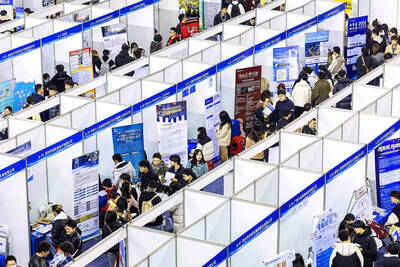
Stephen Garrett, a 27-year-old graduate student, always thought he would study in China, but first the country’s restrictive COVID-19 policies made it nearly impossible and now he has other concerns. The cost is one deterrent, but Garrett is more worried about restrictions on academic freedom and the personal risk of being stranded in China. He is not alone. Only about 700 American students are studying at Chinese universities, down from a peak of nearly 25,000 a decade ago, while there are nearly 300,000 Chinese students at US schools. Some young Americans are discouraged from investing their time in China by what they see
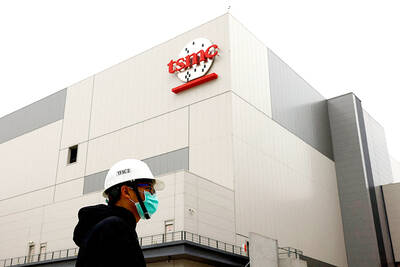
Taiwan Semiconductor Manufacturing Co (TSMC, 台積電), the world’s largest contract chipmaker, yesterday reported record sales for the first quarter, which analysts attributed to solid demand for emerging technologies. Consolidated revenue totaled NT$592.64 billion (US$18.51 billion) in the January-to-March period, up 16.5 percent from a year earlier, but down 5.26 percent from the previous quarter, TSMC said in a statement. The first-quarter revenue beat analysts’ average projection of NT$579.5 billion, Bloomberg News reported. That performance lends weight to expectations that the world’s most valuable chipmaker would return to solid growth this year after weathering a post-COVID-19-pandemic cratering of smartphone and computer sales. TSMC is budgeting
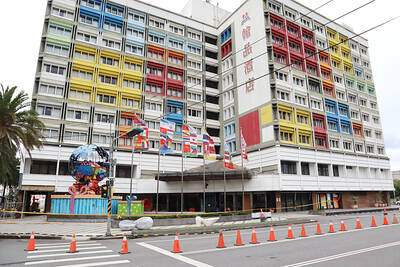
HUALIEN BRANCH: The company had been planning to rebuild the hotel before it was damaged in the quake and vowed to give affected employees the option to transfer The owner of Chateau de Chine Hualien (花蓮翰品酒店) is planning to lay off 86 workers after shutting down the hotel due to damage it sustained in a powerful earthquake on Wednesday last week, the Ministry of Labor said yesterday. The hotel has submitted a layoff report to the Hualien County Government and expects to let 69 workers go this month and 17 next month, the ministry said. LDC Hotels & Resorts Group (雲朗觀光集團), the owner of Chateau de Chine Hualien, confirmed the layoff plan in a statement yesterday. LDC said the hotel has been closed since Wednesday last week when the temblor occurred
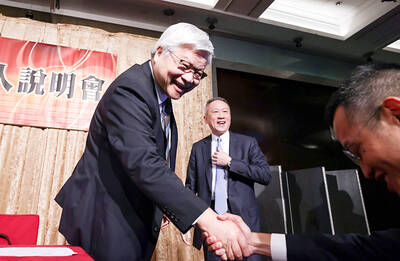
US CONSCULTANT: The US Department of Commerce’s Ursula Burns is a rarely seen US government consultant to be put forward to sit on the board, nominated as an independent director Taiwan Semiconductor Manufacturing Co (TSMC, 台積電), the world’s largest contract chipmaker, yesterday nominated 10 candidates for its new board of directors, including Ursula Burns from the US Department of Commerce. It is rare that TSMC has nominated a US government consultant to sit on its board. Burns was nominated as one of seven independent directors. She is vice chair of the department’s Advisory Council on Supply Chain Competitiveness. Burns is to stand for election at TSMC’s annual shareholders’ meeting on June 4 along with the rest of the candidates. TSMC chairman Mark Liu (劉德音) was not on the list after in December last


 RSS
RSS