


Riding on last year's achievement of launching the Alternative Minimum Tax (AMT) scheme, the Ministry of Finance plans to submit its inheritance and gift tax reform proposal in the next legislative session, which starts next month, finance minister Ho Chih-chin (
The proposal will include two parts: Lowering the maximum marginal rate for inheritance and gift taxes from the current 50 percent to 40 percent, and introducing an improved wealth transfer system in the mid-term, allowing taxpayers more flexibility to bestow assets to children.
Slashing the tax rate to 40 percent would reduce incentives for the well-heeled to place wealth abroad simply to avoid the high tax rate, and further lure capital back in the long run, Ho said during an exclusive interview.
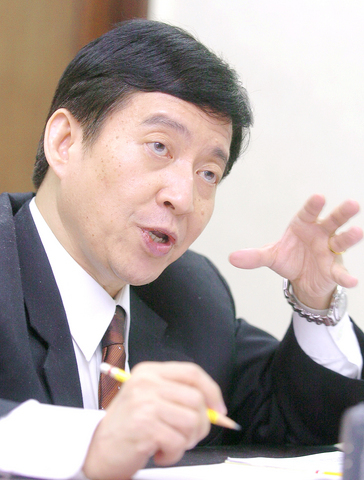
PHOTO: LIAO CHEN-HUEI, TAIPEI TIMES
Ho, who just took over the ministerial job on July 4, is a tax expert with eight years of experience as the senior economist at the US Internal Revenue Service (IRS) and another five years as the IRS' principal economist.
Inheritance taxes
He estimated that if the tax base remained unchanged, state coffers could lose around NT$6 billion (US$183 billion) annually when the maximum inheritance and gift tax rate is lowered to 40 percent.
Revenues from the two taxes amount to NT$30 billion per year, with NT$20 billion hailing from the inheritance tax and another NT$10 billion from the gift tax.
"Tax revenues might decrease for the first several years but the figure should climb back in the long term due to capital inflows," he said, adding that the ministry is still studying ways to offset local governments' losses.
During the transitional period, Ho also plans to introduce an improved wealth transfer system to allow moderately well-off households, or what he termed the "small rich," more flexibility in giving away their wealth to children.
The ministry just raised the tax-free threshold for gifts to NT$1.11 million this year, and that for inheritance to NT$7.99 million.
But unlike the present situation, in which the tax-free portion of inheritance is only applicable after a parent's death, taxpayers would be able to make use of the amount in advance.
Details such as whether the inheritance tax-free threshold will be further raised are open for discussion, he said.
Such reforms are expected to pave the way for unifying inheritance and gift taxes in order to ultimately establish a life-long wealth transfer system based on the US model, Ho said.
The implementation of the system would require close cooperation between the land administration, banking institutions, and depositary and clearing units to track down each taxpayer's wealth transfer records.
In the next legislative session, Ho also hopes to push for amendments to levy income taxes on military personnel and teachers.
It's "so close, yet so far," Ho said, referring to the ministry's repeated failure to push through the much-anticipated tax scheme.
"The Ministry of National Defense and the Ministry of Education have done their part. Now the finance ministry needs to give it a final push. But of course the decision is still in the hands of the Legislative Yuan," he said.
Value-added tax
However, the plan to reform consumption taxes in the second half of the year will have to be postponed due to political uncertainties and energy price markups, the minister said.
The Cabinet was instructed in 2003 to cancel commodity taxes on rubber tires, drinks, plate glass and electric appliances, as well as abolishing stamp and entertainment taxes.
To make up for tax-revenue losses, the Cabinet's financial reform committee suggested raising the value-added tax (VAT) by one to two percentage points from its current level of 5 percent.
Raising VAT by one percentage point would rake in an extra NT$40 billion of tax revenue, according to the ministry. However, manufacturers would be expected to transfer the extra burden onto consumers by raising retail prices.
"Commodity prices have seen significant changes recently. A new round of assessments is required and therefore the consumption tax reform should be postponed to next year," he said.
Government figures showed that the consumer price index (CPI) -- a key barometer of inflation -- rose 1.35 percent in the January-July period from a year ago. Although prices for tissues, flour and public transportation are also on the rise, the government still estimates that annual CPI growth can be kept under 2 percent.
Other issues
Reiterating his desire to serve this country, Ho said that tax reforms should be evaluated and programmed together, rather than fixing one piece here and another part there at different times.
Therefore, he said the ministry will review the 10-percent tax on companies' undistributed surplus earnings, the Statute for Upgrading Industries (
Ho vowed to bring the US systems of tax enforcement and tax schemes as a model for his native country.
"It's not that important whether a system is good or bad. It can be criticized any time. But it must be fair and enforced by reliable and consistent people, as with the example of the US Internal Revenue Service. Although it's a tax-collection agency, the IRS is widely respected in the US for its integrity," he said.
He said that the ministry is introducing a new tax inspection system modeled on one in the US to pursue fair taxation. Ho expects the new system, which will target the "big fish" who evade taxes, to inject an additional NT$30 billion into state coffers next year.
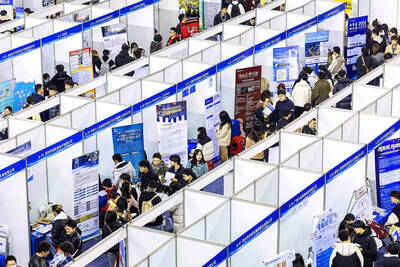
Stephen Garrett, a 27-year-old graduate student, always thought he would study in China, but first the country’s restrictive COVID-19 policies made it nearly impossible and now he has other concerns. The cost is one deterrent, but Garrett is more worried about restrictions on academic freedom and the personal risk of being stranded in China. He is not alone. Only about 700 American students are studying at Chinese universities, down from a peak of nearly 25,000 a decade ago, while there are nearly 300,000 Chinese students at US schools. Some young Americans are discouraged from investing their time in China by what they see

MAJOR DROP: CEO Tim Cook, who is visiting Hanoi, pledged the firm was committed to Vietnam after its smartphone shipments declined 9.6% annually in the first quarter Apple Inc yesterday said it would increase spending on suppliers in Vietnam, a key production hub, as CEO Tim Cook arrived in the country for a two-day visit. The iPhone maker announced the news in a statement on its Web site, but gave no details of how much it would spend or where the money would go. Cook is expected to meet programmers, content creators and students during his visit, online newspaper VnExpress reported. The visit comes as US President Joe Biden’s administration seeks to ramp up Vietnam’s role in the global tech supply chain to reduce the US’ dependence on China. Images on
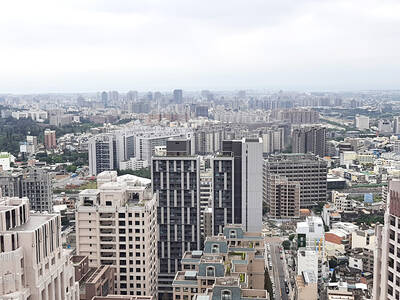
New apartments in Taiwan’s major cities are getting smaller, while old apartments are increasingly occupied by older people, many of whom live alone, government data showed. The phenomenon has to do with sharpening unaffordable property prices and an aging population, property brokers said. Apartments with one bedroom that are two years old or older have gained a noticeable presence in the nation’s six special municipalities as well as Hsinchu county and city in the past five years, Evertrust Rehouse Co (永慶房產集團) found, citing data from the government’s real-price transaction platform. In Taipei, apartments with one bedroom accounted for 19 percent of deals last
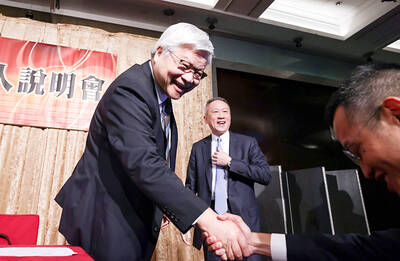
US CONSCULTANT: The US Department of Commerce’s Ursula Burns is a rarely seen US government consultant to be put forward to sit on the board, nominated as an independent director Taiwan Semiconductor Manufacturing Co (TSMC, 台積電), the world’s largest contract chipmaker, yesterday nominated 10 candidates for its new board of directors, including Ursula Burns from the US Department of Commerce. It is rare that TSMC has nominated a US government consultant to sit on its board. Burns was nominated as one of seven independent directors. She is vice chair of the department’s Advisory Council on Supply Chain Competitiveness. Burns is to stand for election at TSMC’s annual shareholders’ meeting on June 4 along with the rest of the candidates. TSMC chairman Mark Liu (劉德音) was not on the list after in December last


 RSS
RSS