


The Securities and Futures Bureau is planning to relax block trading rules as part of the government's efforts to develop Taiwan into a regional fundraising and asset management center, an official said yesterday.
"We are considering loosening the block trading regulations" to make the mechanism more accessible for institutional investors, Wu Tang-chieh (吳當傑), the bureau's director general, told reporters at the sidelines of a preparatory meeting of the Economic Sustainable Growth Conference yesterday.
Block trading refers to a large amount of securities being traded, typically at least 10,000 shares of stock. It is usually a privately negotiated transaction executed apart from the public auction market, either during or after the exchange's trading hours, by institutional investors.
The bureau is considering widening the daily trading limit on block trading to somewhere between the current 2 percent and the 7 percent ceiling on the public exchange, as well as lengthening the 10-minute trading time of each block trading session, Wu said. A total of three block trading sessions are held during and after the bourse's trading hours.
The bureau also plans to strengthen the bid and offer matching mechanism to ensure that the buyer and the seller can carry out the privately negotiated deal without third-party intervention, Wu said.
Investors may be granted one more day to settle their block trades, Wu said. They are currently required to pay on the same day that the transaction is completed.
The relaxation is expected to benefit foreign investors interested in forming strategic partnerships with local companies, as they often utilize block trading as a way of acquiring the target company's shares, Wu said.
The issue was raised by Sean Chen (
The proposed relaxation on block trading was one of the consensus issues reached at the meeting. Other proposals, including forming a more consistent policy governing taxation of financial products, strengthening corporate governance and supervision of capital markets to prevent financial crimes, also received a positive response in the financial group discussion.
As expected, proposals to ease the restriction on China-bound investments, currently capped at 40 percent of a company's net value, came under heavy debate.
Supporters of the lifting of the ban like People First Party Legislator Christina Liu (
Liu said that the number of companies that conducted IPOs in Taiwan shrank to 11 last year, only one-third of the number in 2004.
Meanwhile, opponents of the easing of the restriction, like Taiwan Solidarity Union Legislator Lo Chih-ming (
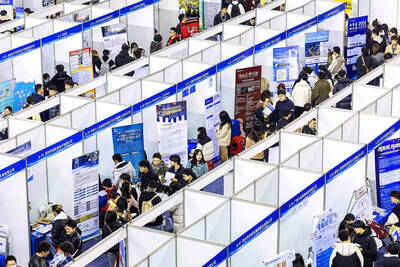
Stephen Garrett, a 27-year-old graduate student, always thought he would study in China, but first the country’s restrictive COVID-19 policies made it nearly impossible and now he has other concerns. The cost is one deterrent, but Garrett is more worried about restrictions on academic freedom and the personal risk of being stranded in China. He is not alone. Only about 700 American students are studying at Chinese universities, down from a peak of nearly 25,000 a decade ago, while there are nearly 300,000 Chinese students at US schools. Some young Americans are discouraged from investing their time in China by what they see

MAJOR DROP: CEO Tim Cook, who is visiting Hanoi, pledged the firm was committed to Vietnam after its smartphone shipments declined 9.6% annually in the first quarter Apple Inc yesterday said it would increase spending on suppliers in Vietnam, a key production hub, as CEO Tim Cook arrived in the country for a two-day visit. The iPhone maker announced the news in a statement on its Web site, but gave no details of how much it would spend or where the money would go. Cook is expected to meet programmers, content creators and students during his visit, online newspaper VnExpress reported. The visit comes as US President Joe Biden’s administration seeks to ramp up Vietnam’s role in the global tech supply chain to reduce the US’ dependence on China. Images on
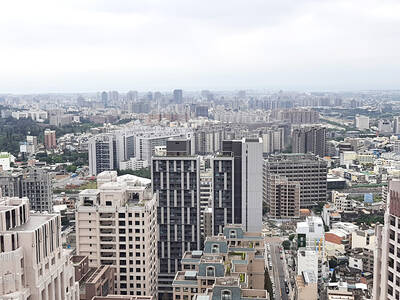
New apartments in Taiwan’s major cities are getting smaller, while old apartments are increasingly occupied by older people, many of whom live alone, government data showed. The phenomenon has to do with sharpening unaffordable property prices and an aging population, property brokers said. Apartments with one bedroom that are two years old or older have gained a noticeable presence in the nation’s six special municipalities as well as Hsinchu county and city in the past five years, Evertrust Rehouse Co (永慶房產集團) found, citing data from the government’s real-price transaction platform. In Taipei, apartments with one bedroom accounted for 19 percent of deals last
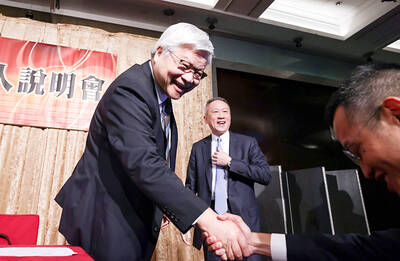
US CONSCULTANT: The US Department of Commerce’s Ursula Burns is a rarely seen US government consultant to be put forward to sit on the board, nominated as an independent director Taiwan Semiconductor Manufacturing Co (TSMC, 台積電), the world’s largest contract chipmaker, yesterday nominated 10 candidates for its new board of directors, including Ursula Burns from the US Department of Commerce. It is rare that TSMC has nominated a US government consultant to sit on its board. Burns was nominated as one of seven independent directors. She is vice chair of the department’s Advisory Council on Supply Chain Competitiveness. Burns is to stand for election at TSMC’s annual shareholders’ meeting on June 4 along with the rest of the candidates. TSMC chairman Mark Liu (劉德音) was not on the list after in December last


 RSS
RSS