


With the EU's law banning toxic substances in electrical and electronics products coming into force on Saturday, local manufacturers are ready to comply with the rule and secure their markets, a government official said yesterday.
"After over a year of efforts to assist small and medium-sized manufacturers, they are now all prepared for the rule," said Lin Yu-fen (
Starting on July 1, the EU will implement the Restriction on Hazardous Substances (RoHS) Directive that limits six substances -- lead, mercury, cadmium, hexavalent chromium and polybrominated biphenyl (PBB) and polybrominated diphenyl ether (PBDE) -- that would pose risks to health or the environment from electrical and electronic devices sold in the region.
Products that are found to violate the directive will be removed from the shelves immediately with the producers being fined depending on regulations of different countries.
Taiwanese companies exported NT$233.4 billion (US$7.15 billion) in products covered by the RoHS Directive to the EU last year, according to the bureau's statistics.
Companies seeking to keep their products on shelves in the EU or continue to be suppliers of major electronics vendors need to look for alternative substitutes for the six banned substances, redesign some products and upgrade manufacturing equipment and technologies.
Lin said that finding feasible replacement substances was not difficult, but that some of the key manufacturing equipment and technologies have been patented by international electronics giants such as Sony Corp, and therefore local companies have to pay to obtain the patent items.
The extra costs may be passed on and hike retail prices, though vendors refused to elaborate on the pricing of the environmentally friendly products.
By the end of last month, all public companies exporting their goods to the EU, including the top 60 exporters to the region, as well as their 5,000-strong suppliers were already, or prepared to ship RoHS-compliant products, Lin said, adding that the bureau has spent about NT$100 million in the project.
To help resource-poor small and medium sized manufacturers comply with the rule, the Ministry of Economic Affairs in May last year set up a service team consisting of related government departments, industry associations such as the Taiwan Electrical and Electronic Manufacturers Association (電電公會), and large electronics makers including Asustek Computer Inc (華碩電腦) and Acer Inc.
Lin noted that many companies will still run their original production lines producing non RoHS-complaint products for other markets, as the manufacturing costs for the green products are higher.
But the traditional manufacturing will be gradually eliminated and replaced by green supply chains amid a rise in environmental awareness all over the world, he said. China, for instance, will implement regulations similar to RoHS in March next year, while Japan has also announced new environmental rules, he said.
Taiwan is also in the process of developing laws to regulate hazardous substances.
The Department of Health is considering combining the current Waste Disposal
Act (廢棄物清理法) and Resource Recycling and Reuse Act (資源回收再利用法)
and adding regulations banning substances that would threaten health and
environment, Lin said.
The law is expected to be passed by the Legislature next year, he added.

Stephen Garrett, a 27-year-old graduate student, always thought he would study in China, but first the country’s restrictive COVID-19 policies made it nearly impossible and now he has other concerns. The cost is one deterrent, but Garrett is more worried about restrictions on academic freedom and the personal risk of being stranded in China. He is not alone. Only about 700 American students are studying at Chinese universities, down from a peak of nearly 25,000 a decade ago, while there are nearly 300,000 Chinese students at US schools. Some young Americans are discouraged from investing their time in China by what they see
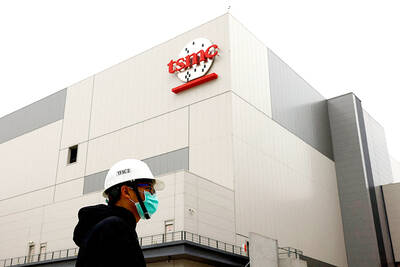
Taiwan Semiconductor Manufacturing Co (TSMC, 台積電), the world’s largest contract chipmaker, yesterday reported record sales for the first quarter, which analysts attributed to solid demand for emerging technologies. Consolidated revenue totaled NT$592.64 billion (US$18.51 billion) in the January-to-March period, up 16.5 percent from a year earlier, but down 5.26 percent from the previous quarter, TSMC said in a statement. The first-quarter revenue beat analysts’ average projection of NT$579.5 billion, Bloomberg News reported. That performance lends weight to expectations that the world’s most valuable chipmaker would return to solid growth this year after weathering a post-COVID-19-pandemic cratering of smartphone and computer sales. TSMC is budgeting

MAJOR DROP: CEO Tim Cook, who is visiting Hanoi, pledged the firm was committed to Vietnam after its smartphone shipments declined 9.6% annually in the first quarter Apple Inc yesterday said it would increase spending on suppliers in Vietnam, a key production hub, as CEO Tim Cook arrived in the country for a two-day visit. The iPhone maker announced the news in a statement on its Web site, but gave no details of how much it would spend or where the money would go. Cook is expected to meet programmers, content creators and students during his visit, online newspaper VnExpress reported. The visit comes as US President Joe Biden’s administration seeks to ramp up Vietnam’s role in the global tech supply chain to reduce the US’ dependence on China. Images on
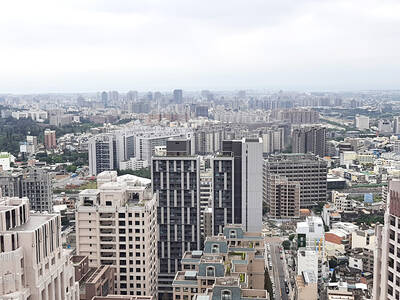
New apartments in Taiwan’s major cities are getting smaller, while old apartments are increasingly occupied by older people, many of whom live alone, government data showed. The phenomenon has to do with sharpening unaffordable property prices and an aging population, property brokers said. Apartments with one bedroom that are two years old or older have gained a noticeable presence in the nation’s six special municipalities as well as Hsinchu county and city in the past five years, Evertrust Rehouse Co (永慶房產集團) found, citing data from the government’s real-price transaction platform. In Taipei, apartments with one bedroom accounted for 19 percent of deals last


 RSS
RSS