


The outlook for the nation's banking industry remains stable, while deterioration in factors such as keen price competition in the fragmented sector could lead to a downgrade, Moody's Investors Service said yesterday.
"The outlook for the credit ratings of Taiwanese banks is generally stable," Moody's said in its annual report -- Asia Banking Outlook 2006 -- that surveyed the banking systems in 15 Asian countries, released yesterday.
The financial strengths of most Taiwanese banks should remain stable as the major banks continue to benefit from the economy's steady pace of growth, and an increased weighting in non-interest incomes, the report said.
Large private banks in particular ? with their flexible operations and group resources ? have improved their new product offerings and capital management, while the small private-sector banks continue to face severe challenges in maintaining revenue growth, asset quality control and profitability, it said.
Yet, competition remains strong in every business line due to the crowded nature of the market, Moody's said.
Any meaningful reduction in system capacity will probably be slow, as the government's efforts in privatization and consolidation have stalled. There were strong protests by employees at state-owned banks last year, it added.
Factors triggering a downgrade include accelerating price competition, increased risk-taking and expensive mergers and acquisitions that have resulted in increased financial burdens in the private sector, as well as franchise erosion due to slowness of reform in the government invested sector, the ratings firm said.
On the other hand, factors like improved market share and profitability from diversified revenue sources, improved risk and capital management, consolidation of weaker players, and the introduction of new management teams after privatization could also drive a ratings upgrade of Taiwan's banking sector, Moody's added.
Meanwhile, many Asian countries have passed laws allowing the establishment of financial holding companies following the repeal of the depression era Glass-Steagall Act in the US in 1999 that originally aimed at restoring confidence in the banking system by legislating a rigid separation of banks from other financial institutions.
Taiwanese banks, encompassed within 14 financial holding companies, were found to have benefited most from utilizing the crossover financial group structure that could provide a multitude of financial services via cross selling to a captive client base. Other countries like Japan and Korea have used the structure as an acquisition vehicle, Moody's said.
Further development of financial holding firms will require an efficient capital market for them to raise funds, proper sharing of customer information, and cross-selling and effective consolidated supervision by the regulators, it added.
Meanwhile, Intermediate-term risks for Asian banks overall are balanced by
the positions of stronger banks in economies that have grown more
diversified and more productive, according to Moody's.
“These banks' risk management and supervision, unified under Basel II, are
now much more robust,” said Wei Yen (嚴序緯), Managing Director for Moody's
Financial Institutions Group in Asia.
“Regional economies are now much more open and market oriented, and
government interference in economic affairs has diminished,” Yen said.
Despite difficulties in countries such as Taiwan and South Korea that saw
rapid build-ups of consumer debt, the consumer sector remains
under-penetrated and hence a future growth engine for bank's profits for
many years to come, the ratings agency said.
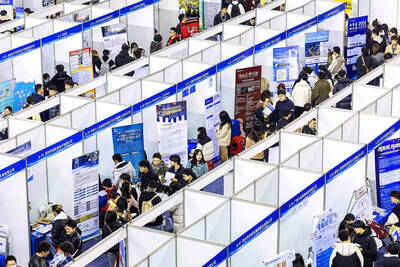
Stephen Garrett, a 27-year-old graduate student, always thought he would study in China, but first the country’s restrictive COVID-19 policies made it nearly impossible and now he has other concerns. The cost is one deterrent, but Garrett is more worried about restrictions on academic freedom and the personal risk of being stranded in China. He is not alone. Only about 700 American students are studying at Chinese universities, down from a peak of nearly 25,000 a decade ago, while there are nearly 300,000 Chinese students at US schools. Some young Americans are discouraged from investing their time in China by what they see

MAJOR DROP: CEO Tim Cook, who is visiting Hanoi, pledged the firm was committed to Vietnam after its smartphone shipments declined 9.6% annually in the first quarter Apple Inc yesterday said it would increase spending on suppliers in Vietnam, a key production hub, as CEO Tim Cook arrived in the country for a two-day visit. The iPhone maker announced the news in a statement on its Web site, but gave no details of how much it would spend or where the money would go. Cook is expected to meet programmers, content creators and students during his visit, online newspaper VnExpress reported. The visit comes as US President Joe Biden’s administration seeks to ramp up Vietnam’s role in the global tech supply chain to reduce the US’ dependence on China. Images on
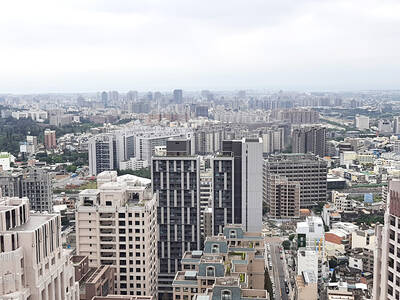
New apartments in Taiwan’s major cities are getting smaller, while old apartments are increasingly occupied by older people, many of whom live alone, government data showed. The phenomenon has to do with sharpening unaffordable property prices and an aging population, property brokers said. Apartments with one bedroom that are two years old or older have gained a noticeable presence in the nation’s six special municipalities as well as Hsinchu county and city in the past five years, Evertrust Rehouse Co (永慶房產集團) found, citing data from the government’s real-price transaction platform. In Taipei, apartments with one bedroom accounted for 19 percent of deals last
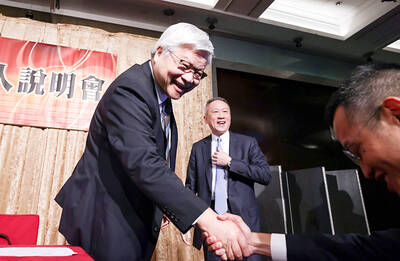
US CONSCULTANT: The US Department of Commerce’s Ursula Burns is a rarely seen US government consultant to be put forward to sit on the board, nominated as an independent director Taiwan Semiconductor Manufacturing Co (TSMC, 台積電), the world’s largest contract chipmaker, yesterday nominated 10 candidates for its new board of directors, including Ursula Burns from the US Department of Commerce. It is rare that TSMC has nominated a US government consultant to sit on its board. Burns was nominated as one of seven independent directors. She is vice chair of the department’s Advisory Council on Supply Chain Competitiveness. Burns is to stand for election at TSMC’s annual shareholders’ meeting on June 4 along with the rest of the candidates. TSMC chairman Mark Liu (劉德音) was not on the list after in December last


 RSS
RSS