


When Chinese firms like the state-owned oil company PetroChina Co (
But that's not what the Bank of China (
The IPO is part of a recent wave of Chinese firms that are skipping New York entirely. Hong Kong's new popularity for the mega IPOs is seen by some as the latest trend in globalization -- the rise of a new world with many financial capitals.

PHOTO: AP
"The fact that so much foreign money and institutional investment is placed in the Hong Kong stock market proves the confidence of international investors in our system," Hong Kong's Secretary for Financial Services Frederick Ma (
But skeptics argue that the Chinese firms -- called "red chips" and "H-shares" in local lingo -- don't dare list in the US because their finances are as murky as a bowl of sweet-and-sour soup. The critics say Hong Kong's less rigorous financial disclosure regulations mean fewer headaches for the firms.
David Webb, a retired investment banker and shareholder activist, said Hong Kong's stock exchange has some serious catching up to do with other global markets. He said new rules are needed to protect shareholders' rights and to require faster reporting.
"Hong Kong is the last market in Asia that doesn't require large companies to report quarterly. It's because of resistance from the tycoons. That can't last much longer," said Webb, who serves as an elected non-executive director of the Hong Kong Exchanges & Clearing Ltd, the listed firm that operates the stock exchange.
Webb said the rules also allow companies -- especially state-run Chinese firms -- to raise cash from a public listing and loan the money to an unlisted parent company or other related business in which the shareholder has no economic interest.
"So there's a risk that by co-mingling, by mixing up the money of the listed company and the parent, that you can end up with bad debt," he said.
Other issues critics say need to be addressed are:
One, companies can wait four months to report annual results when the international norm is 60 days.
Two, shareholders can't bring class action lawsuits in Hong Kong, so corporate collapses caused by wrongdoing rarely result in shareholder litigation.
Three, listing rules aren't statutory so a company's leaders can't be fined or jailed for breaking them.
But the exchange said in a statement that Hong Kong has adopted international accounting examples and its market is "open, fair, effective and transparent." The exchange added that it's also appealing to Chinese companies because of its proximity to the mainland and the large pool of investment bankers here.
"There are no foreign exchange controls. There is no capital gains tax," the statement said. "There is no withholding of income in respect of taxes."
Many of the Chinese firms have been scared away from US markets by the tough Sarbanes-Oxley anti-fraud law, said Steven Cheung (
The law went on the books in 2002 after a string of corporate scandals, including the Enron Corp meltdown. The measure's sweeping reforms require CEOs and chief financial officers to certify in sworn written statements the accuracy of the company's financial results -- with possible prison terms for signing statements they knew to be false.
"For these Chinese enterprises, it takes time to catch up with the latest developments in corporate governance practices," Cheung, said. "If they had to comply with the Sarbanes-Oxley act, I don't know how long it would take them."
Thirty-eight Chinese companies now trade on US stock exchanges, as do 19 companies with headquarters in Hong Kong, according to Associated Press data.
New York Stock Exchange (NYSE) chairman Marshall Carter testified before a congressional committee on April 26 that tougher regulations have hurt the exchange's pursuit of foreign IPOs.
Almost half of non-US companies going public did so on the NYSE or NASDAQ in 2000, but that number plunged to 5.7 percent last year because of "US regulatory rules and oversight," he said.
But the US won't relax its regulatory standards just to recapture any IPO business heading to foreign markets, Christopher Cox, chairman of the Securities and Exchange Commission, said April 25 in testimony to a Senate committee. He warned of "a race to the bottom" if the US were to do so.
Hong Kong ranked No. 5 in the world last year in share issuance, raising HK$292.5 billion (US$37 billion), after the New York Stock Exchange, Euronext (the Paris, Amsterdam, Brussels and Lisbon exchanges), the London Stock Exchange and Toronto's TSX Group, said the exchange, citing the World Federation of Exchanges.
Ma said those who only focus on governance and transparency issues don't understand the numerous other factors that make Hong Kong appealing to Chinese companies -- including the fact that professional and underwriting fees in the US are double the cost in Hong Kong.
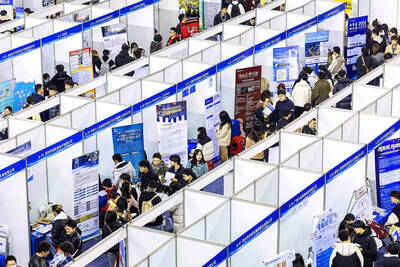
Stephen Garrett, a 27-year-old graduate student, always thought he would study in China, but first the country’s restrictive COVID-19 policies made it nearly impossible and now he has other concerns. The cost is one deterrent, but Garrett is more worried about restrictions on academic freedom and the personal risk of being stranded in China. He is not alone. Only about 700 American students are studying at Chinese universities, down from a peak of nearly 25,000 a decade ago, while there are nearly 300,000 Chinese students at US schools. Some young Americans are discouraged from investing their time in China by what they see
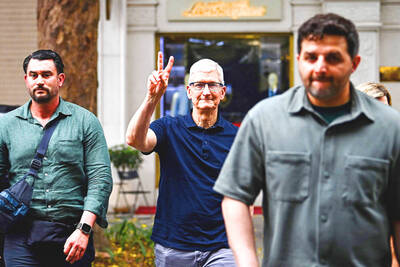
MAJOR DROP: CEO Tim Cook, who is visiting Hanoi, pledged the firm was committed to Vietnam after its smartphone shipments declined 9.6% annually in the first quarter Apple Inc yesterday said it would increase spending on suppliers in Vietnam, a key production hub, as CEO Tim Cook arrived in the country for a two-day visit. The iPhone maker announced the news in a statement on its Web site, but gave no details of how much it would spend or where the money would go. Cook is expected to meet programmers, content creators and students during his visit, online newspaper VnExpress reported. The visit comes as US President Joe Biden’s administration seeks to ramp up Vietnam’s role in the global tech supply chain to reduce the US’ dependence on China. Images on
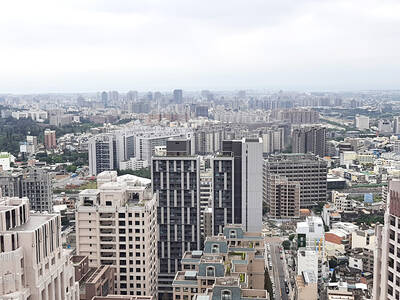
New apartments in Taiwan’s major cities are getting smaller, while old apartments are increasingly occupied by older people, many of whom live alone, government data showed. The phenomenon has to do with sharpening unaffordable property prices and an aging population, property brokers said. Apartments with one bedroom that are two years old or older have gained a noticeable presence in the nation’s six special municipalities as well as Hsinchu county and city in the past five years, Evertrust Rehouse Co (永慶房產集團) found, citing data from the government’s real-price transaction platform. In Taipei, apartments with one bedroom accounted for 19 percent of deals last
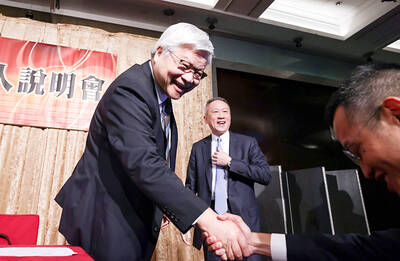
US CONSCULTANT: The US Department of Commerce’s Ursula Burns is a rarely seen US government consultant to be put forward to sit on the board, nominated as an independent director Taiwan Semiconductor Manufacturing Co (TSMC, 台積電), the world’s largest contract chipmaker, yesterday nominated 10 candidates for its new board of directors, including Ursula Burns from the US Department of Commerce. It is rare that TSMC has nominated a US government consultant to sit on its board. Burns was nominated as one of seven independent directors. She is vice chair of the department’s Advisory Council on Supply Chain Competitiveness. Burns is to stand for election at TSMC’s annual shareholders’ meeting on June 4 along with the rest of the candidates. TSMC chairman Mark Liu (劉德音) was not on the list after in December last


 RSS
RSS