


Nigeria said on Friday that it had paid the last of its US$30 billion debt to the Paris Club of creditor nations.
"Nigeria will not owe anybody in the Paris Club one kobo," Nigerian President Olusegun Obasanjo said in a statement earlier this week, referring to a Nigerian unit of currency much like the penny.
Nigeria reached a deal last October with the Paris Club, which includes the US, Germany, France and other wealthy nations, that allowed it to pay off about US$30 billion in accumulated debt for about US$12 billion, an overall discount of about 60 percent.
The government said that it paid a final installment of US$4.5 billion on Friday, Reuters reported. It plans to use the money it saves to develop the country and reduce poverty.
Nigeria committed to using foreign reserves, salted away as oil prices soared, to cancel its debt, which had been racked up during decades of military rule.
The repayment is the latest sign that Nigeria's economy, long hobbled by corruption and dominated by a single product -- oil -- is on the rebound. The banking sector, which was crowded with small banks of questionable reliability, was recently consolidated to form about two dozen banks with stronger capitalization.
Earlier this year, two credit-rating agencies rated Nigeria's credit as BB-minus, which is below investment grade but puts it on a par with developing nations like Turkey, Ukraine, and Brazil.
Debt relief has become a central issue in the fight against poverty. Nigeria, which owed about US$36 billion in overall debt, is one of the most indebted nations in the world. With a population of about 130 million, it has more impoverished citizens than any other African nation; per capita gross domestic product stands at roughly US$1,000 a year.
Yet Nigeria had not been among the nations that have received write-offs or discounts on their debts, as several poor countries have. In part, that is because of its reputation for corruption, earned by a succession of military governments that plundered the state treasury, and because Nigeria, with its oil wealth, is seen as being able to pay.
Groups that have campaigned for debt cancellation said that the debt Nigeria owed was accumulated under military rulers, and that the current Nigerian government, which was democratically elected and has made fighting corruption a priority, should not be forced to pay. But Nigeria's debt was largely accumulated under civilian governments, and left unpaid by military rulers.
Nigeria's vast oil reserves make it one of the world's largest oil producers. Recent political violence in the Niger Delta, an oil-rich region where militants are fighting for greater autonomy, has reduced output by 20 percent.
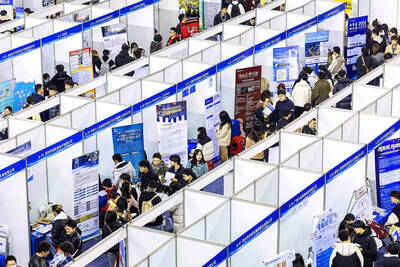
Stephen Garrett, a 27-year-old graduate student, always thought he would study in China, but first the country’s restrictive COVID-19 policies made it nearly impossible and now he has other concerns. The cost is one deterrent, but Garrett is more worried about restrictions on academic freedom and the personal risk of being stranded in China. He is not alone. Only about 700 American students are studying at Chinese universities, down from a peak of nearly 25,000 a decade ago, while there are nearly 300,000 Chinese students at US schools. Some young Americans are discouraged from investing their time in China by what they see
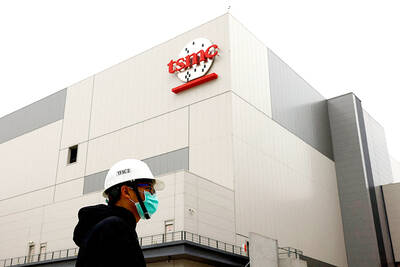
Taiwan Semiconductor Manufacturing Co (TSMC, 台積電), the world’s largest contract chipmaker, yesterday reported record sales for the first quarter, which analysts attributed to solid demand for emerging technologies. Consolidated revenue totaled NT$592.64 billion (US$18.51 billion) in the January-to-March period, up 16.5 percent from a year earlier, but down 5.26 percent from the previous quarter, TSMC said in a statement. The first-quarter revenue beat analysts’ average projection of NT$579.5 billion, Bloomberg News reported. That performance lends weight to expectations that the world’s most valuable chipmaker would return to solid growth this year after weathering a post-COVID-19-pandemic cratering of smartphone and computer sales. TSMC is budgeting

MAJOR DROP: CEO Tim Cook, who is visiting Hanoi, pledged the firm was committed to Vietnam after its smartphone shipments declined 9.6% annually in the first quarter Apple Inc yesterday said it would increase spending on suppliers in Vietnam, a key production hub, as CEO Tim Cook arrived in the country for a two-day visit. The iPhone maker announced the news in a statement on its Web site, but gave no details of how much it would spend or where the money would go. Cook is expected to meet programmers, content creators and students during his visit, online newspaper VnExpress reported. The visit comes as US President Joe Biden’s administration seeks to ramp up Vietnam’s role in the global tech supply chain to reduce the US’ dependence on China. Images on
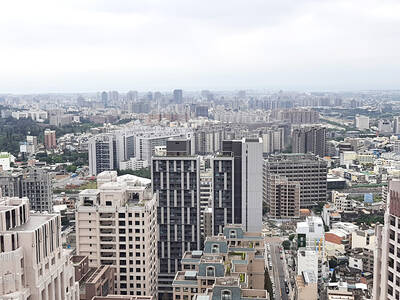
New apartments in Taiwan’s major cities are getting smaller, while old apartments are increasingly occupied by older people, many of whom live alone, government data showed. The phenomenon has to do with sharpening unaffordable property prices and an aging population, property brokers said. Apartments with one bedroom that are two years old or older have gained a noticeable presence in the nation’s six special municipalities as well as Hsinchu county and city in the past five years, Evertrust Rehouse Co (永慶房產集團) found, citing data from the government’s real-price transaction platform. In Taipei, apartments with one bedroom accounted for 19 percent of deals last


 RSS
RSS