


The nation's electronics industry could lose up to 10 percent of its output value to the EU as many manufacturers have yet to comply with the EU's new environmental regulations, which come into effect in July, according to a recent estimate by the Industrial Development Bureau.
Starting on July 1, the EU will implement its Restriction on Hazardous Substances (RoHS) Directive, which effectively bans six substances, including cadmium, mercury, hexavalent chromium and lead, from electrical and electronics products.
Among the 972 companies listed in Taiwan that export their goods to the region, 164 of them were still unprepared for the new rules, the bureau said, without specifying which companies.
Taiwan exported nearly NT$250 billion (US$7.7 billion) of electrical and electronics goods to the EU last year. Should these companies remain unable to meet the requirement when the directive comes into effect, orders worth about NT$25 billion may disappear each year, the bureau estimated.
To help these manufacturers, in particular small and medium-sized ones with limited financial resources, the Ministry of Economic Affairs has launched two initiatives -- the "Green Project" and the "GP User Group" -- to help establish a management system for electronics makers to build green supply chains in order to comply with the directive.
As the six substances banned by RoHS, especially lead, are widely used in products such as printed circuit boards, motherboards and power cords, companies need to find feasible and affordable replacement substances. But alternative substances, along with new technology and equipment, will significantly increase production costs.
Environmental awareness has also spread outside the EU, so that countries including the US and China are pushing through legislation similar to the RoHS act. Major multinational electronics companies such as Sony Corp, Dell Inc and Hewlett-Packard Co have set up their own green procurement standards.
"We are still working with these companies to help them meet the standard, and hope to complete the process by the end of April," said a bureau official who declined to be named. "To win orders from these big companies, local companies must build their own green supply chains."
Companies devoted to environmentally friendly manufacturing and related businesses have been reaping the benefits as the introduction of the new rules has approached.
Integrated Service Technology Inc (宜特科技), a lead-free reliability verification services provider, reported that pre-tax earnings for the first two months of the year grew by 72 percent to NT$21.34 million from a year ago, or NT$0.55 per share. Its shares were up by the 7 percent limit to NT$61.7 at the close of the market yesterday.
Shenmao Technology Inc (昇貿科技), whose lead-free soldering material has
obtained certification from both Dell and HP, saw margins grow up to 25
percent for the first two months from 21.8 percent last year. Shares of
Shenmao advanced 3.55 percent to NT$131.5 yesterday.

Taiwan Transport and Storage Corp (TTS, 台灣通運倉儲) yesterday unveiled its first electric tractor unit — manufactured by Volvo Trucks — in a ceremony in Taipei, and said the unit would soon be used to transport cement produced by Taiwan Cement Corp (TCC, 台灣水泥). Both TTS and TCC belong to TCC International Holdings Ltd (台泥國際集團). With the electric tractor unit, the Taipei-based cement firm would become the first in Taiwan to use electric vehicles to transport construction materials. TTS chairman Koo Kung-yi (辜公怡), Volvo Trucks vice president of sales and marketing Johan Selven, TCC president Roman Cheng (程耀輝) and Taikoo Motors Group

Among the rows of vibrators, rubber torsos and leather harnesses at a Chinese sex toys exhibition in Shanghai this weekend, the beginnings of an artificial intelligence (AI)-driven shift in the industry quietly pulsed. China manufactures about 70 percent of the world’s sex toys, most of it the “hardware” on display at the fair — whether that be technicolor tentacled dildos or hyper-realistic personalized silicone dolls. Yet smart toys have been rising in popularity for some time. Many major European and US brands already offer tech-enhanced products that can enable long-distance love, monitor well-being and even bring people one step closer to
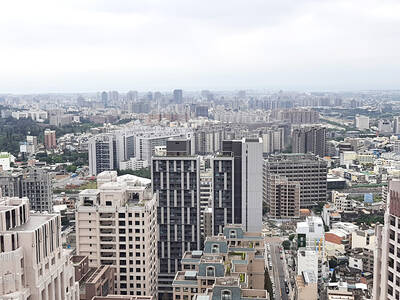
New apartments in Taiwan’s major cities are getting smaller, while old apartments are increasingly occupied by older people, many of whom live alone, government data showed. The phenomenon has to do with sharpening unaffordable property prices and an aging population, property brokers said. Apartments with one bedroom that are two years old or older have gained a noticeable presence in the nation’s six special municipalities as well as Hsinchu county and city in the past five years, Evertrust Rehouse Co (永慶房產集團) found, citing data from the government’s real-price transaction platform. In Taipei, apartments with one bedroom accounted for 19 percent of deals last
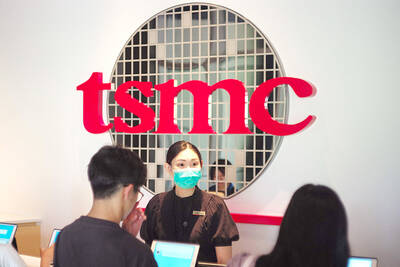
RECORD-BREAKING: TSMC’s net profit last quarter beat market expectations by expanding 8.9% and it was the best first-quarter profit in the chipmaker’s history Taiwan Semiconductor Manufacturing Co (TSMC, 台積電), which counts Nvidia Corp as a key customer, yesterday said that artificial intelligence (AI) server chip revenue is set to more than double this year from last year amid rising demand. The chipmaker expects the growth momentum to continue in the next five years with an annual compound growth rate of 50 percent, TSMC chief executive officer C.C. Wei (魏哲家) told investors yesterday. By 2028, AI chips’ contribution to revenue would climb to about 20 percent from a percentage in the low teens, Wei said. “Almost all the AI innovators are working with TSMC to address the


 RSS
RSS