


Proposed amendments to the Civil Law (
The controversial proposals, an attempt to bail out debt-ridden credit and cash card abusers, would, however, seriously dent local banks' profitability and affect foreign investors' view of the local bourse, which is already threatened by rising political risks, analysts warned.
The legislature's Judiciary Committee approved two versions of amendments to Article 205 of the Civil Law proposed by lawmakers, which would lower the cap of annual interest rates to 12 percent and 10 percent, respectively, down from a current regulatory level of 20 percent.
In the initial stage of the second reading process, the two proposals will be put up for party negotiations.
The proposed interest rate cap would apply to all kinds of lending -- including unsecured loans, credit and cash card loans, car loans and housing mortgages -- if it should pass the final reading and take effect.
Lawmakers made the proposal in a bid to bail out the nation's estimated 500,000 card abusers who bear debts of more than NT$500,000 (US$15,385) each.
"It is inappropriate to reduce the universal cap [just to relieve indebted cardholders]," Minister of Justice Morley Shih (
The Ministry of Justice is the authority that governs amendments to the Civil Law.
The ministry is drafting a chapter in the Civil Law that specifically regulates credit and cash card lending and will tender the amendment to the legislature for review by the end of next month, Shih said.
The ministry's proposed amendments could cap the annualized interest rate of credit and cash card lending, inclusive of all fee charges, at around 12 percent to 13 percent, according to Lin Chau-song (林朝松), head of the ministry's legal affairs department.
The cap is variable, based on the central bank's floating lending rate, which is currently around 3.9 percent, plus a fixed rate of between 5 percent and 8 percent, Lin said.
Under current practices, cash and credit card interest rates can approach the regulatory 20 percent level.
The amendments proposed by legislators would significantly dent banks' profitability and reduce interest revenue by NT$45 billion to NT$75 billion a year, bringing down finance stocks' return on equity by between 3 percent and 5 percent, Jesse Wang (
This could cast a shadow on the stock market due to foreign investors' growing concern over political risks and an uncertain regulatory environment, Wang warned.
In response, the Financial Supervisory Commission said that an overly low interest rate ceiling could lead to a credit crunch for banks, forcing an estimated 1.5 million people in need of cash to resort to the services of loan sharks, which would in turn create further problems such as exploitation and illegal debt collection activities.
"This also violates Taiwan's efforts to liberalize interest rates in the past 10 years" in compliance with free market mechanisms, said FSC chairman Kong Jaw-sheng (
What really matters is that interest rates are transparent so that there are no hidden charges for lenders, Kong said, warning also that the potential credit crunch could weaken consumption and decrease economic growth.

Stephen Garrett, a 27-year-old graduate student, always thought he would study in China, but first the country’s restrictive COVID-19 policies made it nearly impossible and now he has other concerns. The cost is one deterrent, but Garrett is more worried about restrictions on academic freedom and the personal risk of being stranded in China. He is not alone. Only about 700 American students are studying at Chinese universities, down from a peak of nearly 25,000 a decade ago, while there are nearly 300,000 Chinese students at US schools. Some young Americans are discouraged from investing their time in China by what they see

MAJOR DROP: CEO Tim Cook, who is visiting Hanoi, pledged the firm was committed to Vietnam after its smartphone shipments declined 9.6% annually in the first quarter Apple Inc yesterday said it would increase spending on suppliers in Vietnam, a key production hub, as CEO Tim Cook arrived in the country for a two-day visit. The iPhone maker announced the news in a statement on its Web site, but gave no details of how much it would spend or where the money would go. Cook is expected to meet programmers, content creators and students during his visit, online newspaper VnExpress reported. The visit comes as US President Joe Biden’s administration seeks to ramp up Vietnam’s role in the global tech supply chain to reduce the US’ dependence on China. Images on
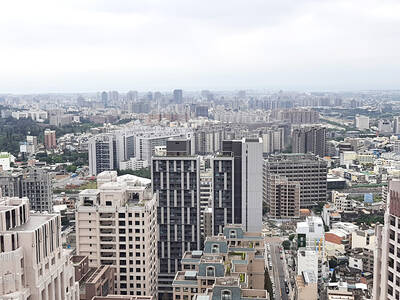
New apartments in Taiwan’s major cities are getting smaller, while old apartments are increasingly occupied by older people, many of whom live alone, government data showed. The phenomenon has to do with sharpening unaffordable property prices and an aging population, property brokers said. Apartments with one bedroom that are two years old or older have gained a noticeable presence in the nation’s six special municipalities as well as Hsinchu county and city in the past five years, Evertrust Rehouse Co (永慶房產集團) found, citing data from the government’s real-price transaction platform. In Taipei, apartments with one bedroom accounted for 19 percent of deals last

US CONSCULTANT: The US Department of Commerce’s Ursula Burns is a rarely seen US government consultant to be put forward to sit on the board, nominated as an independent director Taiwan Semiconductor Manufacturing Co (TSMC, 台積電), the world’s largest contract chipmaker, yesterday nominated 10 candidates for its new board of directors, including Ursula Burns from the US Department of Commerce. It is rare that TSMC has nominated a US government consultant to sit on its board. Burns was nominated as one of seven independent directors. She is vice chair of the department’s Advisory Council on Supply Chain Competitiveness. Burns is to stand for election at TSMC’s annual shareholders’ meeting on June 4 along with the rest of the candidates. TSMC chairman Mark Liu (劉德音) was not on the list after in December last


 RSS
RSS