


Taiwan Semiconductor Manufac-turing Co (TSMC,
TSMC is using a machine made by ASML Holding NV, Europe's largest producer of machines to make semiconductors, in its tests, spokesman Tzeng Jinn-haw (曾晉皓) said yesterday.
Lithography machines project lines on wafers, the thin silicon slices on which integrated circuits are etched.
The company is seeking ways to get more compact features on chips used in mobile phones and MP3 players. That forces suppliers such as ASML, the world's largest maker of lithography machines, to develop machines that allow smaller features to be projected on chips. In chip production, lithography machines are the most expensive devices.
The "immersion lithography program has produced test wafers well within acceptable parameters for volume manufacturing," TSMC said in a statement.
The company aims to be able to project 45 nanometer features on chips. A nanometer is a millionth of a millimeter.
Tzeng, however, declined to say when the world's largest made-to-order chip supplier will start 45-nanometer production.
Separately, Powerchip Semiconductor Corp (
Powerchip board approved plans to sell as much as US$200 million of bonds convertible to the company's stock and a maximum 300 million new shares overseas, the company said in separate filings to the Taiwan Stock Exchange yesterday.
The proposed sales may raise up to US$393 million, based on the stock's closing price yesterday.
Powerchip plans to start building two 12-inch wafer plants in this quarter in central Taiwan, which will start production in the middle of next year, chairman Frank Huang (
Capital spending this year will exceed NT$60 billion (US$1.8 billion), compared with NT$40 billion last year, Huang said.

Among the rows of vibrators, rubber torsos and leather harnesses at a Chinese sex toys exhibition in Shanghai this weekend, the beginnings of an artificial intelligence (AI)-driven shift in the industry quietly pulsed. China manufactures about 70 percent of the world’s sex toys, most of it the “hardware” on display at the fair — whether that be technicolor tentacled dildos or hyper-realistic personalized silicone dolls. Yet smart toys have been rising in popularity for some time. Many major European and US brands already offer tech-enhanced products that can enable long-distance love, monitor well-being and even bring people one step closer to

Malaysia’s leader yesterday announced plans to build a massive semiconductor design park, aiming to boost the Southeast Asian nation’s role in the global chip industry. A prominent player in the semiconductor industry for decades, Malaysia accounts for an estimated 13 percent of global back-end manufacturing, according to German tech giant Bosch. Now it wants to go beyond production and emerge as a chip design powerhouse too, Malaysian Prime Minister Anwar Ibrahim said. “I am pleased to announce the largest IC (integrated circuit) Design Park in Southeast Asia, that will house world-class anchor tenants and collaborate with global companies such as Arm [Holdings PLC],”
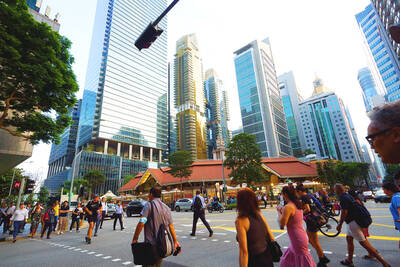
Thousands of parents in Singapore are furious after a Cordlife Group Ltd (康盛人生集團), a major operator of cord blood banks in Asia, irreparably damaged their children’s samples through improper handling, with some now pursuing legal action. The ongoing case, one of the worst to hit the largely untested industry, has renewed concerns over companies marketing themselves to anxious parents with mostly unproven assurances. This has implications across the region, given Cordlife’s operations in Hong Kong, Macau, Indonesia, the Philippines and India. The parents paid for years to have their infants’ cord blood stored, with the understanding that the stem cells they contained

Sales in the retail, and food and beverage sectors last month continued to rise, increasing 0.7 percent and 13.6 percent respectively from a year earlier, setting record highs for the month of March, the Ministry of Economic Affairs said yesterday. Sales in the wholesale sector also grew last month by 4.6 annually, mainly due to the business opportunities for emerging applications related to artificial intelligence (AI) and high-performance computing technologies, the ministry said in a report. The ministry forecast that retail, and food and beverage sales this month would retain their growth momentum as the former would benefit from Tomb Sweeping Day


 RSS
RSS