


After car sales broke a 10-year record last year, the nation's auto industry is unlikely to achieve the same brisk results this year, market watchers said.
A saturated market and declining vehicle-replacement demand are likely to result in a 4.8 percent decline in the local auto market this year, slowing to 2 percent next year, according to a report released by Merrill Lynch yesterday.
The report predicts total car sales will drop to 490,411 units this year and 480,156 next year.
Last year, the nation's auto sales passed 500,000 units, smashing a 10-year-old record, stimulated by automakers' aggressive zero-percent financing programs and growth in demand for recreational and utility vehicles. Auto sales for last year stood at 514,626 units, up 6.3 percent from 484,286 units in 2004, according to statistics compiled by the Ministry of Transportation and Communications.
"Market demand this year will slide, as a portion of the new car market has been substituted by second-hand cars. The market is also constrained by limited roadway, population growth, as well as industrial migration to China," said Albert Hsu (
The slowdown in the auto market means that vendors who debut new models of superior quality will quickly increase their domestic market share, he said.
Among the listed makers, the US investment-research firm sketched a promising outlook for the leading manufacturer, Hotai Motor Co (
"Hotai Motor could gain market share in the next two years, as it will launch one new and one revamped model this year, followed by two revamped models next year," Hsu said.
China Motor will also be able to make slight gains in market share, as it is set to unveil two new models this year, and two more next year, he said.
The export market offers another new growth engine, Hsu added.
"As the design and manufacturing capabilities of some Taiwanese automakers are approved by their technology partners, the latter will leverage the strengths of local manufacturers to supply to other countries," Hsu said.
According to Merrill Lynch, China Motor will be the first to benefit, and possibly reap the most gains from the exporting trend.
China Motor, the most aggressive player in branching out into the export sector, intends to double the revenue contribution of its export business to 40 percent, aiming for revenue of NT$20 billion in three years' time.
Last month, the company exported 50 of its Grunder sedans to the Philippines, making it the first company to bring out locally assembled high-end cars overseas.
Meanwhile, the report said that if oil prices continue to climb, soaring fuel prices would drive up sales of smaller passenger cars with displacements of up to 1.5 liters. The market share of these cars increased from 6.6 percent in 2001 to 12.7 percent in 2004, although it dropped slightly to 11.6 percent last year.
Sales of hybrid vehicles, which save gasoline by switching between an electric motor and a conventional engine, will not live up to the hype over the near few years, according the report.
"Manufacturers already expect volumes of their hybrid vehicles to be low in the near term, as it is still too expensive for consumers to replace current vehicles with electric ones," it added.
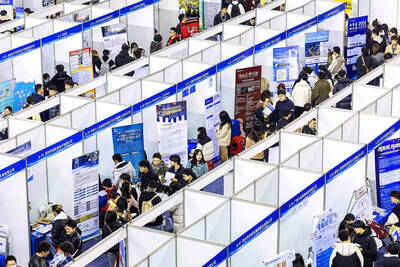
Stephen Garrett, a 27-year-old graduate student, always thought he would study in China, but first the country’s restrictive COVID-19 policies made it nearly impossible and now he has other concerns. The cost is one deterrent, but Garrett is more worried about restrictions on academic freedom and the personal risk of being stranded in China. He is not alone. Only about 700 American students are studying at Chinese universities, down from a peak of nearly 25,000 a decade ago, while there are nearly 300,000 Chinese students at US schools. Some young Americans are discouraged from investing their time in China by what they see
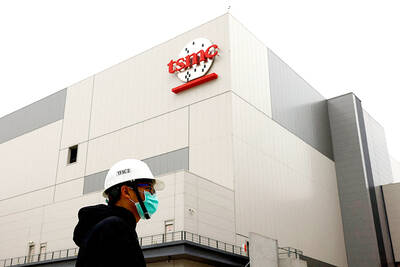
Taiwan Semiconductor Manufacturing Co (TSMC, 台積電), the world’s largest contract chipmaker, yesterday reported record sales for the first quarter, which analysts attributed to solid demand for emerging technologies. Consolidated revenue totaled NT$592.64 billion (US$18.51 billion) in the January-to-March period, up 16.5 percent from a year earlier, but down 5.26 percent from the previous quarter, TSMC said in a statement. The first-quarter revenue beat analysts’ average projection of NT$579.5 billion, Bloomberg News reported. That performance lends weight to expectations that the world’s most valuable chipmaker would return to solid growth this year after weathering a post-COVID-19-pandemic cratering of smartphone and computer sales. TSMC is budgeting

MAJOR DROP: CEO Tim Cook, who is visiting Hanoi, pledged the firm was committed to Vietnam after its smartphone shipments declined 9.6% annually in the first quarter Apple Inc yesterday said it would increase spending on suppliers in Vietnam, a key production hub, as CEO Tim Cook arrived in the country for a two-day visit. The iPhone maker announced the news in a statement on its Web site, but gave no details of how much it would spend or where the money would go. Cook is expected to meet programmers, content creators and students during his visit, online newspaper VnExpress reported. The visit comes as US President Joe Biden’s administration seeks to ramp up Vietnam’s role in the global tech supply chain to reduce the US’ dependence on China. Images on
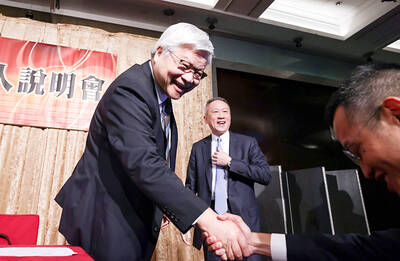
US CONSCULTANT: The US Department of Commerce’s Ursula Burns is a rarely seen US government consultant to be put forward to sit on the board, nominated as an independent director Taiwan Semiconductor Manufacturing Co (TSMC, 台積電), the world’s largest contract chipmaker, yesterday nominated 10 candidates for its new board of directors, including Ursula Burns from the US Department of Commerce. It is rare that TSMC has nominated a US government consultant to sit on its board. Burns was nominated as one of seven independent directors. She is vice chair of the department’s Advisory Council on Supply Chain Competitiveness. Burns is to stand for election at TSMC’s annual shareholders’ meeting on June 4 along with the rest of the candidates. TSMC chairman Mark Liu (劉德音) was not on the list after in December last


 RSS
RSS