


With the milestone alternative minimum tax (AMT) legislation set to take effect next year, the Ministry of Finance (MOF) said there's room to lower the highest consolidated income tax rate, although it did not specify a timeframe.
The highest rate of consolidated income tax could be reduced in the near future," Minister of Finance Lin Chuan (林全) said.
"The passage of the AMT bill is a good starting point to rationalize the people's tax burden. The main purpose is not to increase tax revenues," he said during a press briefing.
The Basic Income Tax Code (
The government is hoping to use the increased tax revenues to plug its budget deficit, which hit NT$337.3 billion (US$10 billion) this year.
Considering the wide gap between the highest consolidated income tax rate at 40 percent and the business income tax ceiling of 25 percent, Lin vowed to gradually narrow the two.
This gradual reduction will eventually lead to the removal of the disputed 10-percent tax on the "undistributed surplus earnings" of companies.
When the unified tax system was adopted in 1998, the government began to levy an additional income tax on profits derived from surplus earnings that are not distributed by a for profit enterprise.
High-price stocks lost ground yesterday as investors worried that the earnings of such firms' would be affected by the new tax law, since their employee bonus shares will be priced at par value instead of market value.
Shares of Computer Corp (
Analysts have said the implementation of the new law, commonly known as "the rich man's tax," will have short-term impact on technonolgy firms but will have a positive impact on the nation's taxation system.
They said it will also help rationalize the tech sector in the long run.
Lin said implementation of the AMT bill will push the high-income individuals and enterprises who have paid disproportionately low taxes or even none to pay a certain amount of basic taxes.
In the future, he said, the government can take steps to lower the consolidated income tax from 40 percent as a way of rewarding honest taxpayers and to stay up to date with international taxation practices.
But the ministry has not yet set a timetable for such changes.
"This will `rob the rich and help the rich,' which involves redistributing wealth among well-heeled people. It will draw less criticism," Lin said.
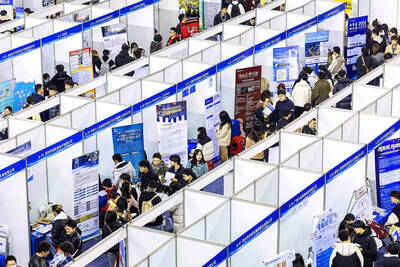
Stephen Garrett, a 27-year-old graduate student, always thought he would study in China, but first the country’s restrictive COVID-19 policies made it nearly impossible and now he has other concerns. The cost is one deterrent, but Garrett is more worried about restrictions on academic freedom and the personal risk of being stranded in China. He is not alone. Only about 700 American students are studying at Chinese universities, down from a peak of nearly 25,000 a decade ago, while there are nearly 300,000 Chinese students at US schools. Some young Americans are discouraged from investing their time in China by what they see
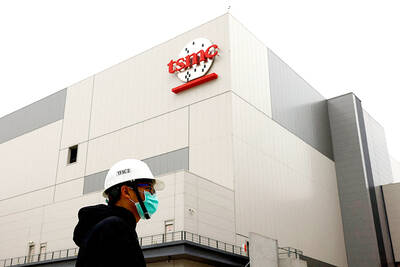
Taiwan Semiconductor Manufacturing Co (TSMC, 台積電), the world’s largest contract chipmaker, yesterday reported record sales for the first quarter, which analysts attributed to solid demand for emerging technologies. Consolidated revenue totaled NT$592.64 billion (US$18.51 billion) in the January-to-March period, up 16.5 percent from a year earlier, but down 5.26 percent from the previous quarter, TSMC said in a statement. The first-quarter revenue beat analysts’ average projection of NT$579.5 billion, Bloomberg News reported. That performance lends weight to expectations that the world’s most valuable chipmaker would return to solid growth this year after weathering a post-COVID-19-pandemic cratering of smartphone and computer sales. TSMC is budgeting

MAJOR DROP: CEO Tim Cook, who is visiting Hanoi, pledged the firm was committed to Vietnam after its smartphone shipments declined 9.6% annually in the first quarter Apple Inc yesterday said it would increase spending on suppliers in Vietnam, a key production hub, as CEO Tim Cook arrived in the country for a two-day visit. The iPhone maker announced the news in a statement on its Web site, but gave no details of how much it would spend or where the money would go. Cook is expected to meet programmers, content creators and students during his visit, online newspaper VnExpress reported. The visit comes as US President Joe Biden’s administration seeks to ramp up Vietnam’s role in the global tech supply chain to reduce the US’ dependence on China. Images on
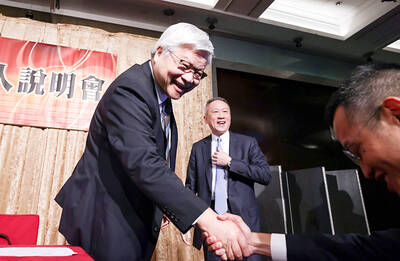
US CONSCULTANT: The US Department of Commerce’s Ursula Burns is a rarely seen US government consultant to be put forward to sit on the board, nominated as an independent director Taiwan Semiconductor Manufacturing Co (TSMC, 台積電), the world’s largest contract chipmaker, yesterday nominated 10 candidates for its new board of directors, including Ursula Burns from the US Department of Commerce. It is rare that TSMC has nominated a US government consultant to sit on its board. Burns was nominated as one of seven independent directors. She is vice chair of the department’s Advisory Council on Supply Chain Competitiveness. Burns is to stand for election at TSMC’s annual shareholders’ meeting on June 4 along with the rest of the candidates. TSMC chairman Mark Liu (劉德音) was not on the list after in December last


 RSS
RSS