


Elpida Memory Inc, Japan's largest maker of memory chips used in computers and electronics, raised its projected market share to 20 percent from its previous forecast of 15 percent in the fiscal year starting April 2006.
President Yukio Sakamoto, 57, made the forecast at the company's chip plant in Hiroshima, Japan, saying he expects demand for personal computers and consumer digital electronics may start rising in February.
He said the company currently has an 8 percent share of the market for dynamic random access memory (DRAM).
The Winter Olympics in Torino, Italy, and soccer's World Cup tournament in summer 2006 will likely drive up demand for digital cameras, DVD recorders and other equipment that uses chips Elpida makes, Sakamoto said.
Elpida is raising capital investment and increasing production to counter price declines for chips that contain more circuits.
The company last month cut its full-year profit forecast to between ?5 billion (US$42 million) and ?10 billion , from an earlier estimate of ?14 billion, citing costs of starting a new production line and falling prices.
Elpida ranked fifth in the global DRAM market as of the three months ended June 30, according to market researcher iSuppli Corp. Samsung Electronics Co dominates the market with more than a third of total revenue.
Elpida last month raised capital investment for this year to ?190 billion from its April forecast of ?143.6 billion to increase production of 90 nanometer chips. A nanometer is a billionth of a meter and measures the distance between transistors in a chip.
consolidation
Sakamoto today predicted competition will drive one or more of its rivals out of business.
He spoke at a ceremony marking the opening of the 300mm wafer production line at its Hiroshima factory, which uses 90-nanometer technology.
"Looking into the future, one or two companies will drop out from the industry," Sakamoto said.
"The winners will be determined by who can and cannot make 90 nanometer chips," he said.
For the year ending March 2006, Elpida expects sales to be between ?240 billion and ?250 billion, compared with an earlier estimate of ?260 billion, citing a bigger-than-expected decline in chip prices and a production delay in its 90-nanometer and 100-nanometer chips.
The chips are outsourced to Semiconductor Manufacturing International Corp (中芯), China's biggest made-to-order chip supplier.
Semiconductor Manufacturing, based in Shanghai, is expected to start producing chips for Elpida from the first quarter of 2006, Elpida said last month.
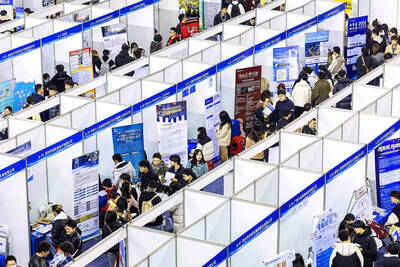
Stephen Garrett, a 27-year-old graduate student, always thought he would study in China, but first the country’s restrictive COVID-19 policies made it nearly impossible and now he has other concerns. The cost is one deterrent, but Garrett is more worried about restrictions on academic freedom and the personal risk of being stranded in China. He is not alone. Only about 700 American students are studying at Chinese universities, down from a peak of nearly 25,000 a decade ago, while there are nearly 300,000 Chinese students at US schools. Some young Americans are discouraged from investing their time in China by what they see
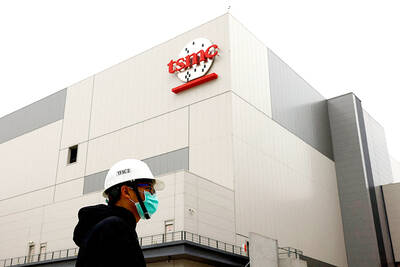
Taiwan Semiconductor Manufacturing Co (TSMC, 台積電), the world’s largest contract chipmaker, yesterday reported record sales for the first quarter, which analysts attributed to solid demand for emerging technologies. Consolidated revenue totaled NT$592.64 billion (US$18.51 billion) in the January-to-March period, up 16.5 percent from a year earlier, but down 5.26 percent from the previous quarter, TSMC said in a statement. The first-quarter revenue beat analysts’ average projection of NT$579.5 billion, Bloomberg News reported. That performance lends weight to expectations that the world’s most valuable chipmaker would return to solid growth this year after weathering a post-COVID-19-pandemic cratering of smartphone and computer sales. TSMC is budgeting
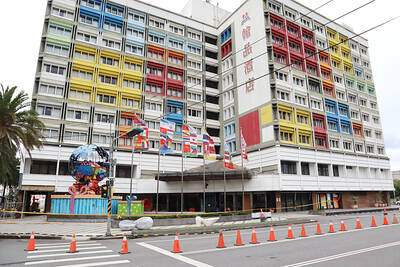
HUALIEN BRANCH: The company had been planning to rebuild the hotel before it was damaged in the quake and vowed to give affected employees the option to transfer The owner of Chateau de Chine Hualien (花蓮翰品酒店) is planning to lay off 86 workers after shutting down the hotel due to damage it sustained in a powerful earthquake on Wednesday last week, the Ministry of Labor said yesterday. The hotel has submitted a layoff report to the Hualien County Government and expects to let 69 workers go this month and 17 next month, the ministry said. LDC Hotels & Resorts Group (雲朗觀光集團), the owner of Chateau de Chine Hualien, confirmed the layoff plan in a statement yesterday. LDC said the hotel has been closed since Wednesday last week when the temblor occurred
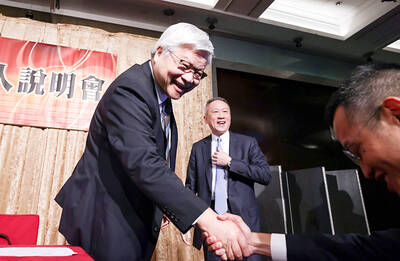
US CONSCULTANT: The US Department of Commerce’s Ursula Burns is a rarely seen US government consultant to be put forward to sit on the board, nominated as an independent director Taiwan Semiconductor Manufacturing Co (TSMC, 台積電), the world’s largest contract chipmaker, yesterday nominated 10 candidates for its new board of directors, including Ursula Burns from the US Department of Commerce. It is rare that TSMC has nominated a US government consultant to sit on its board. Burns was nominated as one of seven independent directors. She is vice chair of the department’s Advisory Council on Supply Chain Competitiveness. Burns is to stand for election at TSMC’s annual shareholders’ meeting on June 4 along with the rest of the candidates. TSMC chairman Mark Liu (劉德音) was not on the list after in December last


 RSS
RSS