


After strong gains propelled Wall Street to its best levels in more than four years, analysts are pondering whether the market is ready to extend the rally or is setting up for a correction.
After five weeks of rises, two of the three main indexes sat at their best levels since mid-2001 and the third is within a few points of a fresh high.
The Dow Jones Industrial Average climbed 1.53 percent in the holiday-shortened week to Friday to close at 10,931.62, less than 10 points from its highest level since June 2001 and within striking distance of the key 11,000 level.
The broad-market Standard and Poor's 500 broad-market index added 1.6 percent to 1,268.25, holding at its highest point since 2001 after marking seven days of gains. Also at a four-and-a-half-year high, the tech-heavy NASDAQ composite rallied 1.61 percent to 2,263.01.
The strong gains came as the market entered the Thanksgiving-to-Christmas season that is traditionally the strongest of the year.
"Stocks are benefiting from positive seasonal trends, in-place momentum, oil under US$60 per barrel, higher-than-expected consumer sentiment, and signs that some Fed members are concerned that interest rates might go too high," Al Goldman at AG Edwards said.
Yet some market watchers are questioning whether the heady gains of recent weeks -- 11 percent for the NASDAQ and 7.7 percent for the S&P 500 since the middle of last month -- are setting up the market for a fall.
"There is increased concern that the market is getting ahead of itself," said Robert Pavlik, chief investment officer at Oaktree Asset Management.
"We've come so far so fast and the market has not had a chance to consolidate. The question for next week is whether we will get a continuation of the rally or a selloff," he said.
Some say that the rally is being fueled by too much speculation on a year-end rally, which may be self-fulfilling but unsustainable.
"Buoyed by the stock market's rebound in recent weeks, sentiment has grown overly positive, and I expect the market to disappoint investors between now and year-end," Byron Wien at Morgan Stanley said.
Others say the market rally has legs because of an improvement in the economic outlook and still relatively attractive prices for stocks after a long period of stagnation on Wall Street.
Joseph Abate at Lehman Brothers said that notwithstanding gloomy forecasts after Hurricane Katrina, "recent data suggest the economy has more momentum than reckoned. Consumer spending has not cooled much despite higher energy prices."
Eugene Peroni at Claymore Research dismisses concerns about a market "melt-up" fueled by speculative fever, saying that the economic backdrop has allowed for a broad-based rally.
"The stock market has not attracted high concentrations of capital into any one sector over a longer-term period," Peroni said.
"It is this impressive, wide sector participation that I believe augurs well for the market's longer-term upside with minimal risk of a melt-up that could produce an undesirable speculative froth and a climactic conclusion of the recovery," he said.
Bonds firmed over the past week. The yield on the 10-year bond fell to 4.474 percent on Friday from 4.502 percent a week earlier and the 30-year bond fell to 4.664 percent after 4.692 percent. Bond yields and prices move in opposite directions.
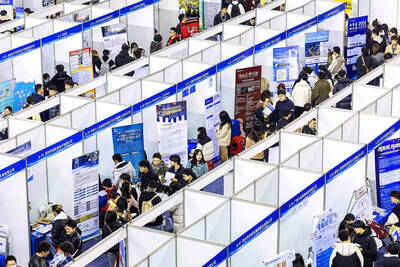
Stephen Garrett, a 27-year-old graduate student, always thought he would study in China, but first the country’s restrictive COVID-19 policies made it nearly impossible and now he has other concerns. The cost is one deterrent, but Garrett is more worried about restrictions on academic freedom and the personal risk of being stranded in China. He is not alone. Only about 700 American students are studying at Chinese universities, down from a peak of nearly 25,000 a decade ago, while there are nearly 300,000 Chinese students at US schools. Some young Americans are discouraged from investing their time in China by what they see

MAJOR DROP: CEO Tim Cook, who is visiting Hanoi, pledged the firm was committed to Vietnam after its smartphone shipments declined 9.6% annually in the first quarter Apple Inc yesterday said it would increase spending on suppliers in Vietnam, a key production hub, as CEO Tim Cook arrived in the country for a two-day visit. The iPhone maker announced the news in a statement on its Web site, but gave no details of how much it would spend or where the money would go. Cook is expected to meet programmers, content creators and students during his visit, online newspaper VnExpress reported. The visit comes as US President Joe Biden’s administration seeks to ramp up Vietnam’s role in the global tech supply chain to reduce the US’ dependence on China. Images on
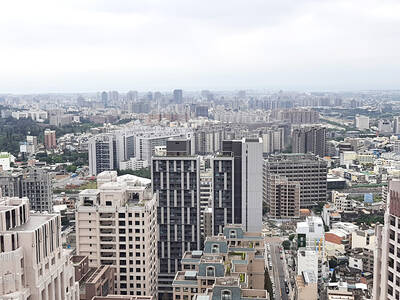
New apartments in Taiwan’s major cities are getting smaller, while old apartments are increasingly occupied by older people, many of whom live alone, government data showed. The phenomenon has to do with sharpening unaffordable property prices and an aging population, property brokers said. Apartments with one bedroom that are two years old or older have gained a noticeable presence in the nation’s six special municipalities as well as Hsinchu county and city in the past five years, Evertrust Rehouse Co (永慶房產集團) found, citing data from the government’s real-price transaction platform. In Taipei, apartments with one bedroom accounted for 19 percent of deals last
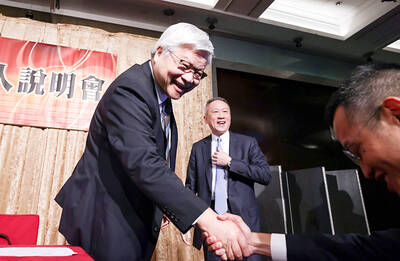
US CONSCULTANT: The US Department of Commerce’s Ursula Burns is a rarely seen US government consultant to be put forward to sit on the board, nominated as an independent director Taiwan Semiconductor Manufacturing Co (TSMC, 台積電), the world’s largest contract chipmaker, yesterday nominated 10 candidates for its new board of directors, including Ursula Burns from the US Department of Commerce. It is rare that TSMC has nominated a US government consultant to sit on its board. Burns was nominated as one of seven independent directors. She is vice chair of the department’s Advisory Council on Supply Chain Competitiveness. Burns is to stand for election at TSMC’s annual shareholders’ meeting on June 4 along with the rest of the candidates. TSMC chairman Mark Liu (劉德音) was not on the list after in December last


 RSS
RSS