


Lawmakers and academics yesterday remained divided over the government's banking reforms, with some championing a free-market mechanism while others insisted that strong enforcement of corporate governance is key to addressing the public's concerns.
"The problem with Taiwan's finance sector is not overbanking but a lack of elastic exit and entry systems ... resulting in low differentiation and the prolonged existence of unhealthy banks," Chi Schive (薛琦), president of the Taiwan Academy of Banking and Finance (金融研訓院), told a forum yesterday.
The government should adopt the so-called "prompt correction" action being used in the US and demand that banks with a capital adequacy ratio of less than 2 percent must seek bailout funds or be voluntarily taken over within 90 days, after which their licenses will be invalidated, Schive said.
The enforcement of the Basel II advanced internal ratings approach would also help banks with good assets to acquire those being plagued by poor risk management, Schive said, adding that these rules could effectively stimulate spontaneous consolidation activities without government intervention.
The government has vowed to push forward the consolidation of the banking sector by halving the number of state banks to six by the end of the year, and reducing the number of financial holdings firms to seven by the end of next year, hoping to make the country a regional financial-services hub.
"Sole dependence on market mechanisms will be too slow," Council for Economic Planning and Development Chairman Hu Sheng-cheng (
This is why the government should have a hand in the reforms, especially with competition from regional economies like South Korea, Hu said.
However, People First Party Legislator Christina Liu (劉憶如) questioned the legitimacy and rationality of the government's policymaking process, citing a survey by the US Journal of Banking and Finance in 22 countries that indicated privatization without prior democratic and open discussion to decide the targets and orders could lead to corruption and chaos, as was the case in Chile and other Latin American countries from the 1970s until the 1990s.
Liu also cited a report by the US financial regulator stating it was not in favor of giant financial holding firms, because of the possible risk to the entire economy if such banks fail.
Expressing support for the government's plan, Ko Chen-en (柯承恩), president of the Chung-Hua Institute for Economic Research, said economies like those of the Netherlands, Switzerland and Singapore each have only two or three large, internationally competitive financial institutions.
"Corporate governance is the key," Ko said, adding that the proposed regulatory seats reserved for independent directors should be increased from one-fifth of the number of board seats to at least one-third, to satisfy the requirements for internal supervision and transparency.
Taiwan Solidarity Union Legislator Lo Chih-ming (羅志明) questioned whether the reforms would only benefit the rich families which between them control six financial holding firms worth NT$10 trillion, or more than 60 percent of all financial holding firms' assets.
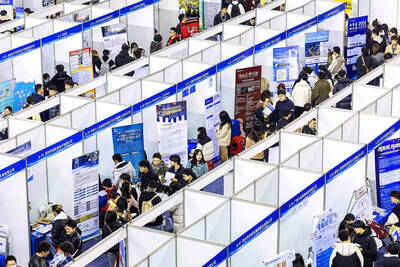
Stephen Garrett, a 27-year-old graduate student, always thought he would study in China, but first the country’s restrictive COVID-19 policies made it nearly impossible and now he has other concerns. The cost is one deterrent, but Garrett is more worried about restrictions on academic freedom and the personal risk of being stranded in China. He is not alone. Only about 700 American students are studying at Chinese universities, down from a peak of nearly 25,000 a decade ago, while there are nearly 300,000 Chinese students at US schools. Some young Americans are discouraged from investing their time in China by what they see

MAJOR DROP: CEO Tim Cook, who is visiting Hanoi, pledged the firm was committed to Vietnam after its smartphone shipments declined 9.6% annually in the first quarter Apple Inc yesterday said it would increase spending on suppliers in Vietnam, a key production hub, as CEO Tim Cook arrived in the country for a two-day visit. The iPhone maker announced the news in a statement on its Web site, but gave no details of how much it would spend or where the money would go. Cook is expected to meet programmers, content creators and students during his visit, online newspaper VnExpress reported. The visit comes as US President Joe Biden’s administration seeks to ramp up Vietnam’s role in the global tech supply chain to reduce the US’ dependence on China. Images on
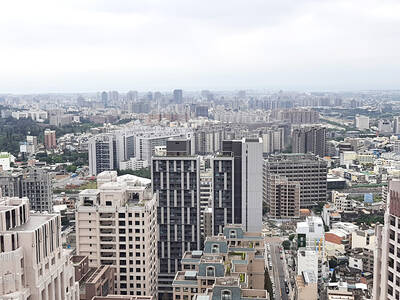
New apartments in Taiwan’s major cities are getting smaller, while old apartments are increasingly occupied by older people, many of whom live alone, government data showed. The phenomenon has to do with sharpening unaffordable property prices and an aging population, property brokers said. Apartments with one bedroom that are two years old or older have gained a noticeable presence in the nation’s six special municipalities as well as Hsinchu county and city in the past five years, Evertrust Rehouse Co (永慶房產集團) found, citing data from the government’s real-price transaction platform. In Taipei, apartments with one bedroom accounted for 19 percent of deals last
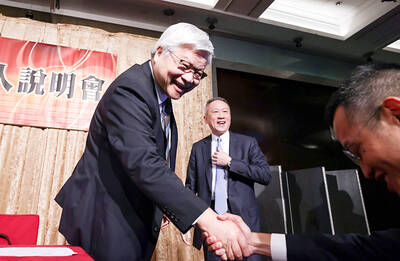
US CONSCULTANT: The US Department of Commerce’s Ursula Burns is a rarely seen US government consultant to be put forward to sit on the board, nominated as an independent director Taiwan Semiconductor Manufacturing Co (TSMC, 台積電), the world’s largest contract chipmaker, yesterday nominated 10 candidates for its new board of directors, including Ursula Burns from the US Department of Commerce. It is rare that TSMC has nominated a US government consultant to sit on its board. Burns was nominated as one of seven independent directors. She is vice chair of the department’s Advisory Council on Supply Chain Competitiveness. Burns is to stand for election at TSMC’s annual shareholders’ meeting on June 4 along with the rest of the candidates. TSMC chairman Mark Liu (劉德音) was not on the list after in December last


 RSS
RSS